Get Full Government Meeting Transcripts, Videos, & Alerts Forever!
Get email alerts on the Local History topic
No spam. Unsubscribe anytime.
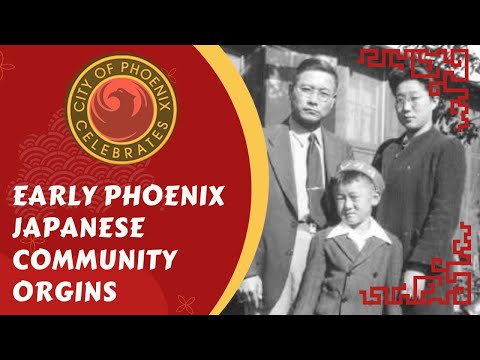
Presentation recounts early Japanese community at Third Avenue and Indian School in Phoenix
Summary
A meeting presenter described how Japanese residents established a separate community around Third Avenue and Indian School in the early 1900s, including a 10‑acre community center, a school, and two churches.
A presenter at a meeting described how Japanese residents in Phoenix established a separate community near Third Avenue and Indian School in the early 1900s, creating a 10-acre community center and a school that served 230 students and 8 teachers, the presenter said.
The account placed early Japanese settlement outside central Phoenix, saying residents “chose to move way out of town, establish a community here at 40 Third Avenue and Indian School.” The speaker said that relocation allowed the group to “have their own recreation, their own businesses, their own school.”
The presentation detailed institutions that grew from that relocation. “They set up a community center on 10 acres. They set up a school soon after with 230 students and 8 teachers,” the presenter said. The speaker also said religious buildings followed: “The Japanese Free Methodist Church was built on the Northeast Corner of 40 Third Avenue and Indian School,” and, the presenter added, in 1935 about half of the community “built a Buddhist church on the Southeast Corner of 40 Third Avenue.”
The presenter characterized the early community as largely separate from the rest of Phoenix, saying, “For years, the Japanese were a completely separate community from Phoenix.” The speaker concluded by noting that this separation “is no longer true and has not been true for a long time,” and that “The Japanese have played a key role in the ongoing development of our city.”
The remarks provided a brief historical summary of one neighborhood’s institutions and religious life; the presenter did not identify any formal actions, preservation proposals, or funding measures during the portion of remarks captured in the transcript.