Get Full Government Meeting Transcripts, Videos, & Alerts Forever!
Get email alerts on the Disaster Recovery topic
No spam. Unsubscribe anytime.
Port Richey resident asks CRA for help removing storm-killed trees; agency says grants rarely reimburse after the fact
Summary
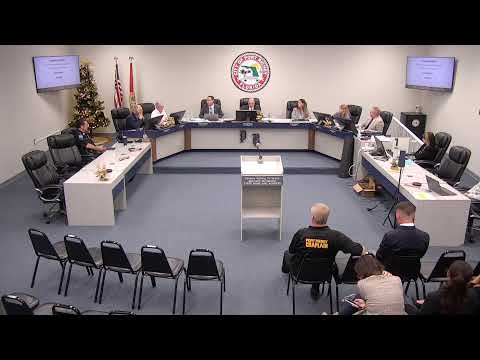
Bill Suhockey, a Port Richey resident, told the Port Richey Community Redevelopment Agency on Tuesday that saltwater flooding after recent storms killed trees on Mallard Drive and left him and neighbors with thousands of dollars in cleanup bills.
Bill Suhockey, a Port Richey resident, told the Port Richey Community Redevelopment Agency on Tuesday that saltwater flooding after recent storms killed trees on Mallard Drive and left him and neighbors with thousands of dollars in cleanup bills.
The request prompted a discussion about the limits of the CRA residential grant program and whether the agency can reimburse after-the-fact work. City Manager Matthew Cobler said the residential grant can provide up to $5,000 for eligible projects but that "we usually don't allow after the fact, grants to do that." He warned that making exceptions could expose the city to litigation.
Why it matters: The CRA's residential grant is one of the few local funding tools that can reduce out-of-pocket costs for homeowners after storm damage. Residents who pay contractors before receiving approval generally do not qualify for reimbursement under the current policy, and CRA staff cited a recent denial of a $5,000 request where the project began without prior approval.
During public comment, Suhockey described the financial and safety consequences for his block: "My expense was $18,000," he said, describing large trees that had to be felled, cut and removed after saltwater damage. He said he helped several neighbors and urged the CRA to consider reimbursement or other relief for similar cases.
Cobler and other CRA members said the program historically requires preapproval, three quotes for work and compliance with program rules. One CRA member warned that reopening the program to retroactive reimbursement would "set a precedent" that could lead others to claim reimbursement and could expose the city to lawsuits.
The board agreed there was community need and a desire to improve communications about recovery resources. CRA members asked staff to accept individual applications under the existing rules and to prepare options for the board to consider, including possible policy changes to allow limited after-the-fact assistance in declared emergencies. Cobler said staff would bring back information at a future meeting and add storm cleanup processes to the next CRA agenda.
The CRA did not approve any retroactive reimbursements at the meeting; no vote to change policy took place during the session.