Get Full Government Meeting Transcripts, Videos, & Alerts Forever!
Get email alerts on the Tree Ordinance topic
No spam. Unsubscribe anytime.
University Heights committee agrees draft changes to tree ordinance, debates arborist role and mitigation fees
Summary
A joint committee meeting of University Heights City Council members reviewed a comprehensive rewrite of the city's tree ordinance, approving several wording and procedural changes, debating creation and staffing of a Tree Commission and a city arborist definition, and discussing tree-replacement fees and when the rules apply.
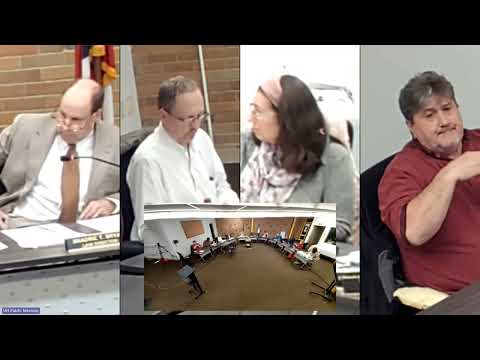
A joint meeting of the University Heights City Council's Service & Utilities and Building & Housing committees on April 15 focused exclusively on proposed revisions to the city's tree ordinance, including a new Tree Commission, how the city will identify and work with an arborist, requirements for tree replacement or mitigation payments, and rules for notifying residents before tree removals.
Committee members said the draft will be edited to clarify who has administrative authority and to add practical details on staffing and implementation. Council members signaled agreement to several wording changes (for example, replacing the phrase that the council "delegates the authority" with language that "authorizes the City Service Director" to act under the chapter) and asked staff to add a definition for "city arborist" or to require a "certified arborist" so the code remains flexible if the city uses a contracted professional. Council members also agreed the director should "ensure" trimming and removal are carried out rather than literally perform the physical work.
Why it matters: the draft touches both public trees (street and park trees) and the city's role when private properties are redeveloped. The committee debated where the ordinance should bind private owners, how the city should notify residents when a tree is slated for removal, and whether mitigation fees and replacement rules should be imposed as part of permit review. Those choices affect property owners' costs, developer timelines and the city's ability to preserve or grow canopy cover.
Most significant outcomes and next steps
- Definitions and arborist role: Committee members asked staff to add a clear definition of "city arborist," and several members recommended wording that would allow either a contracted or a city-employed certified arborist. The committee agreed to change references to "city arborist" to "certified arborist" where that protects the city if no in-house arborist is on staff. The committee also added a sentence permitting the service director to "consult with and avail himself of the expertise of the city arborist/certified arborist." (administrative direction)
- Tree Commission membership and duties: The draft sets the commission at five appointed members (plus two nonvoting ex officio seats for the service director and the arborist), requires at least four meetings per year, and calls for an annual meeting schedule to be submitted in December. The commission would be advisory and could, subject to available funds, undertake outreach, help renew the city's Tree City USA designation, review canopy assessments and provide recommendations on ordinance and inventory matters. The committee preserved language making these duties permissive ("may undertake") rather than mandatory.
- Meetings, minutes and staffing: Committee members were explicit that minutes and public-record duties must be handled by a paid city employee. The committee asked that the Clerk of Council's office or another designated paid staffer be responsible for producing and maintaining minutes and public records for the commission.
- Notification and contractor practice: The administration reported future contracts will require contractors to notify residents whose trees are scheduled for removal. Committee discussion suggested a minimum notification window of about one to two weeks before removal; staff said the preconstruction meeting and bid schedule typically create a lead time of one to several weeks.
- Tree replacement and mitigation fees: The draft requires owners removing protected trees as a condition of certain building permits to replace them or pay a mitigation fee. The draft calculation in committee discussion used a mitigation rate of $20 per inch of diameter at breast height (DBH) with a minimum mitigation fee of $175. Committee members asked staff to clarify whether the fee must be paid before permit issuance, and to add explicit language that unpaid mitigation assessments may be placed on the property tax roll/assessment (as a collection mechanism similar to other abatement/assessment practices).
- Applicability to private development: Committee members and staff examined cross-references to other code sections (14-66 and 14-68) and noted those provisions apply primarily to larger development or earth-disturbing projects (the draft references projects of about one acre or larger). Members requested the ordinance explicitly state that tree-preservation and replacement requirements apply to redevelopment parcels meeting that threshold so single-lot residential projects are generally exempt unless otherwise specified.
Key points of debate and clarifications requested
- Scope on private property: Several members said education and outreach about private trees is appropriate but expressed reluctance to broadly restrict private owners' removal of trees on their property. Members repeatedly asked staff to clarify when the ordinance would apply to typical residential permits versus large redevelopments.
- Commission workload and capacity: Some members raised concerns that asking volunteer commissioners to perform tasks like a comprehensive tree inventory or detailed program implementation would be onerous; staff and others countered that the language is permissive and intended to allow the commission to assist when feasible. The draft retains the commission's advisory role rather than giving it enforcement authority.
- Relationship with the arborist: Members emphasized the city's reliance on a certified arborist (the city has historically used a contracted arborist) and cautioned against repeated second-guessing of professional recommendations in ways that could discourage an arborist from contracting with the city. At the same time, members asked for a better notification process so residents are given advance notice when a contractor will remove a tree.
Authorities and code references considered
Committee discussion repeatedly referenced internal code sections and administrative labels in the draft ordinance, including section numbers and areas of the codified ordinance (example references in the discussion included 1072.01'1072.08 and cross-references to existing development code sections 14-66 and 14-68). The committee also discussed the city's Tree City USA designation and the Arbor Day Foundation recognition process as implementation context for a Tree Commission and urban forestry outreach.
Meeting context and next steps
The joint committee spent the session working through definitions, membership, duties, meeting scheduling, recordkeeping, contractor notification and fee provisions; it did not finalize a full, final ordinance at the meeting. Staff were directed to refine language (definitions, explicit cross-references to other code sections and mitigation-fee procedural details), to add the certified-arborist language, to propose clear timing for the mitigation fee (at permit issuance or added as an assessment if unpaid), and to draft the commission's annual schedule and minute-taking responsibilities for the next meeting. The committee set a follow-up meeting to continue the draft and then move to the weeds-and-grass agenda item at a later date.
Ending
No formal votes on the ordinance text were recorded at the meeting; the session concluded with a motion to adjourn that was seconded and approved. The committee will reconvene to complete the ordinance revisions and return recommended language to the full council for consideration.