Fiscal court approves KYTC rural‑secondary FY26 plan, authorizes $148,749 flex fund use on KY‑974
Loading...
Summary
Clark County fiscal court voted to concur with the Kentucky Transportation Cabinet’s fiscal‑year 2026 rural‑secondary resurfacing recommendation and to allow the cabinet to apply $148,749 in county flex funds toward a KY‑974 paving project, after a discussion about resurfacing cycles, traffic loads and prior-year balances.
Clark County’s fiscal court approved the Kentucky Transportation Cabinet (KYTC) recommendation for the FY‑26 rural secondary resurfacing program and agreed to allow the cabinet to apply $148,749 in county flex funds to extend paving on Kentucky 974.
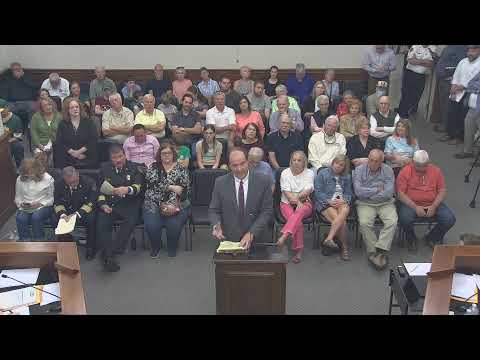
The decision came during a presentation by Casey Smith of KYTC District 7, who detailed the county’s rural secondary allocation, resurfacing cycle and project recommendations for FY‑26. Smith said the county’s projected flexible balance was $148,749 and that the recommended primary rural‑secondary project for FY‑26 is resurfacing 3.894 miles of Kentucky 974 from Kentucky 89 to Pine Creek Road at an estimated $488,000; combined with the flex balance this produces a program total of about $637,517.
Smith explained the program’s basis: “The rural secondary program allocates 22.2% of the motor fuel tax to address maintenance needs on rural secondary road lists,” and said Clark County’s maintenance rating places it in a 21–29 year resurfacing cycle on many rural secondary roads. He told the court projected FY‑26 numbers are preliminary until final figures are posted closer to the July start of the fiscal year.
Court members questioned resurfacing history, traffic loading and how flex funds are typically applied. One magistrate noted the county historically kept flex funds to spread work across several short segments; that magistrate said, “I don’t think we’ve ever applied the flex funds to that…we typically keep the flex funds and use them,” while another member favored completing a continuous corridor rather than piecemeal segments. Smith replied that flex funds may only be used where the requested work meets full‑width resurfacing criteria and that some restrictions exist on flex usage.
Magistrates also raised operational questions about notice and packet materials; one member said the map and project list were handed out at the meeting and requested follow‑up on several routes, including Belmont/Colby Road and an intersection near McLuhor Valley. Smith said KYTC’s traffic section and small urban area study will evaluate growing corridors, including the bypass and western Winchester approaches.
After discussion, the court voted to approve KYTC’s FY‑26 rural secondary plan for Clark County and to authorize the County Judge/Executive to sign the agreement allowing KYTC to apply the $148,749 of county flex funds to the FY‑26 paving program on KY‑974. The court’s vote carried; members who spoke against using flex funds did not block the motion.
Implementation notes: the recommended resurfacing project and flex allocation are subject to final KYTC funding numbers when the fiscal year begins in July; previously authorized FY‑25 projects (Kid Hill Road, Shoalsville Road, Neste Road) remain in KYTC’s authorization and will proceed on typical KYTC scheduling. The court requested KYTC follow up with details about several local routes and the Red River Road bridge, which is managed through KYTC’s central office.