Get Full Government Meeting Transcripts, Videos, & Alerts Forever!
Get email alerts on the Local Taxation topic
No spam. Unsubscribe anytime.
Committee hears preliminary briefing on grocery tax replacement options after state change; staff to return with analysis
Summary
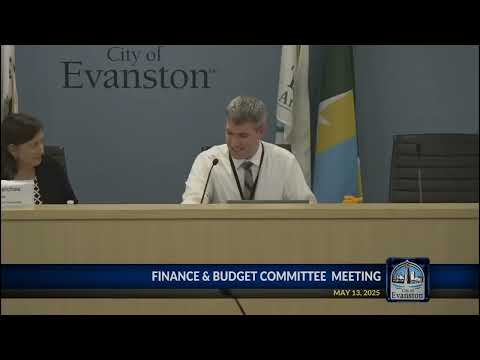
Following a state-level change that removed a state grocery tax, Evanston staff briefed the Finance & Budget Committee on options to replace about $2.5 million in lost revenue and announced an October 1 deadline to adopt a local replacement for a January 1 effective date; the committee asked staff to return with more data next month.
Staff briefed the Finance & Budget Committee about state action that eliminated a state-level grocery tax and the local options available to recover roughly $2.5 million in annual revenue.
Finance staff said municipalities have the option to adopt a local sales-tax-based grocery tax to replace lost revenue, to increase other local taxes such as the home-rule sales tax, or to identify alternate budget reductions. Staff noted over 60 municipalities were considering or had already adopted local measures and reminded the committee of an October 1 local-adoption deadline for an option that would be effective January 1.
Committee members asked for additional data on where Evanston residents purchase groceries and on the distributional impact of various options. The committee directed staff to return next month with a fuller analysis to inform a deliberative decision.
Why it matters: The $2.5 million gap is material to the city’s structural budget shortfall and the committee will need to weigh revenue options, program cuts or other budget changes before the October deadline.
Next steps: Staff will prepare a briefing next month with more detailed revenue and distributional analysis and examples of approaches other municipalities have taken.