Get Full Government Meeting Transcripts, Videos, & Alerts Forever!
Get email alerts on the Facilities And Buildings topic
No spam. Unsubscribe anytime.
Houston County committee approves transfer of Building 9 use to UT, discusses fire alarms, furniture and budget tweaks
Summary
The Houston County building committee voted to transfer use of Building 9 to UT and discussed fire-safety upgrades, furniture provision, a $10,000 renovation request, and ongoing issues with a county trailer and cleaning responsibilities.
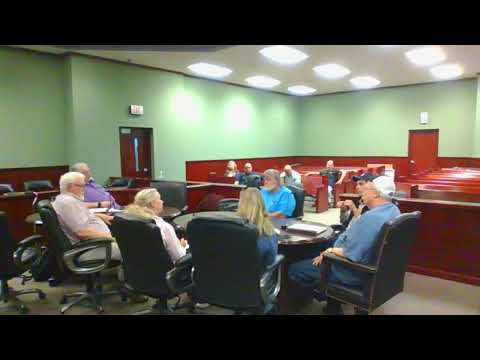
The Houston County Building Committee voted to approve transferring use of Building 9 to UT, a move proponents said will include new furniture provided by UT and leave certain renovation items off the county budget. Motion to transfer the space was offered by William and seconded by Glenn; the committee chair announced the motion carried.
Committee members and staff discussed safety and occupancy issues for the building, including that the facility currently has only battery-operated smoke detectors and no carbon monoxide detectors. A county representative said the building does not exceed an occupancy of 300 and noted the conference room would be limited to about 50 people. Staff estimated a permanent fire-protection and alarm system that transmits to dispatch could cost in the range of $5,000 to $30,000, though no formal bid was presented at the meeting.
Committee members described a county trailer used by staff that has a water leak, mold and mice; they said the trailer’s condition makes continued use problematic and that staff are looking at using Building 9’s larger kitchen and training areas instead. Committee participants said UT had offered to buy furniture for offices in Building 9; the group discussed removing a previously proposed $10,000 renovation request for the downstairs area from the budget because UT would supply furniture and the county would not occupy the same way as originally planned.
Officials clarified operational responsibilities if the county retains occupancy of parts of Building 9: county staff will handle routine cleaning and trash removal, and the county will maintain its own phone system. Committee members said they will order carbon monoxide detectors and consider additional standalone smoke detectors, but they did not approve a specific contract for the alarm system at this meeting.
The committee also discussed the role of the fire marshal and whether the marshal’s office would require a full fire-protection system if the state (UT) reimburses the county or occupies the building without paying rent. Committee comments noted that if an outside agency pays rent or otherwise has a formal occupancy arrangement, the marshal could assert jurisdiction; participants said UT was not paying rent, and that affects the agency’s jurisdictional reach. No formal action on alarm installation funding or procurement was taken; those costs and who will pay them were left to be resolved in subsequent staff work and potential bids.
Less-critical operational details covered included relocation of administrative offices into available space, reusing two kitchen areas for training, and coordination about which garage areas would be affected by moves. The committee did not adopt a construction or procurement schedule for Building 9 during the meeting, and staff were directed to follow up on cleaning, ordering CO detectors, and coordinating furniture delivery with UT.