Get Full Government Meeting Transcripts, Videos, & Alerts Forever!
Get email alerts on the Securities Dispute topic
No spam. Unsubscribe anytime.
American CryptoFed and Secretary of State clash over whether a token issuance is a security; court action pending
Summary
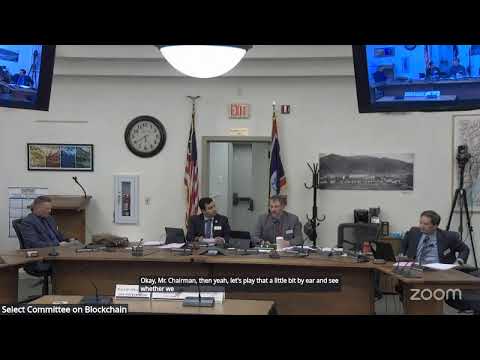
Organizers of American CryptoFed told the select committee the state's actions chilled their project; the Secretary of State said the office repeatedly warned the group the token looked like a security and sought a court injunction after the group announced an intended issuance.
Organizers of American CryptoFed and the Wyoming Secretary of State presented sharply different accounts to the select committee about whether the group’s proposed “lock” token is a security under Wyoming law and whether the state properly provided regulatory clarity before seeking a court injunction.
Xiaoming Zhou, an organizer for American CryptoFed, told the committee the secretary’s office “insisted… the Secretary of State office does not require the Secretary of State office to answer our questions” and said letters and shifting enforcement raised constitutional due-process concerns. “They did not follow through and they switched,” Zhou said, describing the state’s posture as arbitrary and claiming the action created a chilling effect for the project.
Secretary of State Chuck Gray said his office repeatedly advised American CryptoFed that the group’s proposed distribution and associated LLC-style interests resembled securities under Wyoming law and that, after the group announced an imminent issuance, the state — through the attorney general’s office — petitioned a Wyoming court to enjoin the issuance. “We did not feel that we could [issue a no-action letter] because we believe that under Wyoming state law, they were a security,” Gray told the committee. He said the office first issued written and verbal concerns in 2023 and then filed a petition to enjoin issuance on Dec. 17, 2024.
Why it matters: The dispute raises questions about how state regulators should answer project inquiries, how state and federal securities frameworks intersect, and how fast-moving token projects should proceed when state-level guidance and enforcement are unresolved.
Points of law and contention: American CryptoFed pointed to federal litigation trends, including the SEC vs. Ripple decisions on secondary-market sales, as supportive of their position that some token distributions are not securities. The secretary emphasized Wyoming statute and the different test used under state law for certain LLC interests. The parties are engaged in active litigation, and both the attorney general’s office and the secretary’s office said they are pursuing state enforcement options.
Committee response: Lawmakers heard both sides but took no formal action apart from noting active litigation. Chairman Singh asked staff to track the matter; committee members said they wanted to preserve their ability to review statutory clarity on token definitions and entity interests if litigation produces guidance.
Ending: The legal dispute will likely produce precedents or guidance the committee will monitor; the committee declined to act while court proceedings continue.