Get Full Government Meeting Transcripts, Videos, & Alerts Forever!
Get email alerts on the Data Center Proposal topic
No spam. Unsubscribe anytime.
Developers present plan for Union Township data center; residents, officials raise health, noise and water concerns
Summary
QTS Data Centers on Thursday presented a concept plan for a proposed Union Township data center and related PUD to a Porter County informational neighborhood meeting, outlining a multibuilding campus the company says could represent roughly $2 billion in investment and 125–175 full‑time jobs while generating an estimated $10 million in annual tax revenue at full build‑out.
QTS Data Centers on Thursday presented a concept plan for a proposed Union Township data center and related PUD to a Porter County informational neighborhood meeting, outlining a multibuilding campus the company says could represent roughly $2 billion in investment and 125–175 full‑time jobs while generating an estimated $10 million in annual tax revenue at full build‑out.
The company’s presentation focused on the PUD process required by the Porter County Unified Development Ordinance and Indiana Code 36‑7‑4‑600, proposed site design elements and community mitigation measures; more than three hours of public comment followed, with many residents, parents, school and environmental advocates urging the county to move the project to a fully industrial location rather than beside homes and Wheeler High School.
Why it matters: QTS’s concept would change the use of large tracts of mostly agricultural and residential land near Wheeler High School and recreation fields, potentially altering traffic, utility load and local viewsheds. Planning staff and residents emphasized the application is at the concept and rezoning stage and that the planning commission is advisory; the final decision, if the project advances, rests with the Porter County Board of Commissioners and — if adopted as an ordinance — would require two readings.
QTS officials said the proposal would be submitted as two separate PUD cases treated as a single presentation but independently decided. Nick Blessing, who identified himself as QTS’s head of policy and economic development, told the meeting QTS operates national facilities and intends “to be thoughtful partners” in the community. Chris Capper, QTS development lead, described site constraints and said the company plans to request the I‑1 zoning district as a baseline with PUD modifications that could permit up to 75 feet in building height (a 50 percent modification under the county code) and large landscaped buffers. Capper said the applicant proposes setbacks of about 100 feet from agricultural/nonresidential land, 200 feet from residential parcels and a 500‑foot setback from the school property line; he said aerial images show the nearest school building would be roughly 2,000 feet from the proposed southerly development area and about 1,000 feet from the nearest ball field.
Developers’ mitigations and technical commitments described at the meeting included: a 20–32 foot‑wide planting berm, an aggressive tree and shrub planting program intended to screen views within about 10 years of planting, a closed‑loop cooling approach that QTS said would not draw groundwater for operational cooling, and an acoustic study to be made part of the PUD application. QTS also told attendees that on‑site emergency generators would be used only as fail‑safes and for periodic testing (monthly checks and an annual run), and that emissions from those generators are capped by permitting rules. The company said it publishes an annual environmental, sustainability and governance report and pursues 1‑for‑1 tree replanting in host communities.
Porter County planning staff and the meeting chair reiterated process limits: this neighborhood meeting is informational, not a public hearing, and no votes would be taken. Staff described the PUD review sequence (concept plan and rezoning, detailed plan, final PUD), the county’s role in checking ordinance standards, and that the Plan Commission makes recommendations to the Porter County Board of Commissioners.
Supporters and economic context: Several local economic‑development speakers and trade organizations urged the county to consider potential benefits. Rex Richards, president of the Valparaiso Chamber of Commerce, complimented the county process and urged use of outside experts where appropriate; Lisa Doherty of the Center of Workforce Innovations said a typical, illustrated scenario could include a modest number of direct facility jobs and larger numbers of indirect jobs and increased local earnings, and Heather Ennis of the Northwest Indiana Forum urged civil engagement and warned that hostile reaction could discourage future investment. Union trades representatives said large construction phases typically use local union labor.
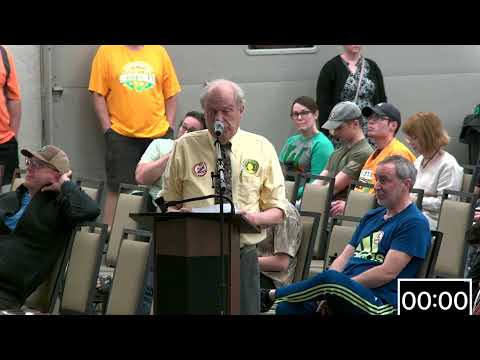
Opposition and resident concerns: The meeting’s public comment period was dominated by opposition from residents, parents, school leaders and nearby farmers. Speakers voiced a range of concerns, often tied to the project’s proximity to Wheeler High School and athletic fields: potential noise and low‑frequency vibration, generator emissions and fuel storage, electromagnetic fields, groundwater and runoff impacts, long‑term effects on property values, increased traffic during construction and operation, threats to wildlife and bees, and uncertainty about who would bear the costs of utility upgrades.
Several speakers asked technical questions that they said remained unanswered at the meeting: whether the proposed cooling would use immersion or evaporative systems (which have different water demands), the classification and handling of any coolant or recycled water that leaves the site, the number and siting of backup generators and fuel storage, and the potential need for new transmission and generation capacity. John Halkaitis and other residents noted recent public hearings on NIPSCO rate increases and asked whether expanded power demand for data centers could affect local electricity costs; Rick Kalinski, representing NIPSCO, said NIPSCO has discussed options to separate costs for large new customers and that the company does not intend to compromise reliability or affordability for existing customers, mentioning a pending Indiana Utility Regulatory Commission filing that NIPSCO says would shield existing customers from some costs associated with new generation and transmission investments.
Process notes and what’s next: No formal application decision was taken at the meeting. Planning staff said the PUD concept and any rezoning would go through public hearings before the Plan Commission and, if recommended, to the Porter County Board of Commissioners for ordinance readings and a final decision. Attendees were directed to the county’s project web page and a QTS URL/QR code to submit questions and receive project updates.
Speakers on the record at the meeting included: Mike Jabo, executive director, Department of Planning, Development and Stormwater Management (Porter County planning staff); Nick Blessing, head of policy and economic development, QTS Data Centers; Chris Capper, development lead, QTS; Rick Kalinski, director of economic development and public affairs, NIPSCO; Rex Richards, president, Valparaiso Chamber of Commerce; Lisa Doherty, CEO, Center of Workforce Innovations; Heather Ennis, president and CEO, Northwest Indiana Forum; Lee Barnes, incoming superintendent, Union Township Schools; and many Union Township residents and students who spoke during public comment. (Quotes in this article are drawn from remarks made at the neighborhood meeting.)
The meeting made clear the application remains at the concept stage and that public input will continue. Residents and school officials urged county decisionmakers to weigh school safety, public‑health and environmental issues and to consider alternative industrial sites; developers urged the community to use the formal review process to vet technical studies (noise, air, water and traffic) the company plans to submit as part of a PUD application.
For the record: the planning commission emphasized that it is an advisory body and that final zoning and ordinance decisions are made by the Porter County Board of Commissioners. The county website and the applicant’s posted contact information were identified as the primary means for the public to submit questions and evidence for the record.