Get Full Government Meeting Transcripts, Videos, & Alerts Forever!
Get email alerts on the Utility Billing Water topic
No spam. Unsubscribe anytime.
West Miami to cut water consumption charge 4% after digital-meter conversion and leak repairs
Summary
City says new digital meters and recent water projects revealed higher actual consumption; commissioners voted 5-0 to lower the consumption portion of utility bills by 4% and to continue monitoring billing accuracy.
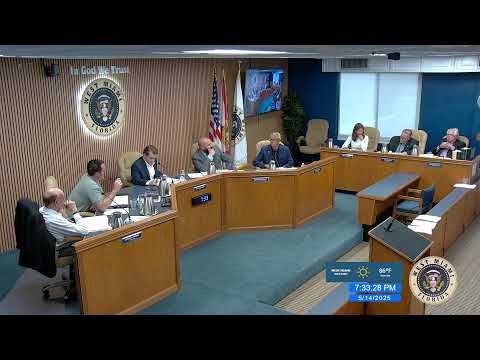
The City of West Miami voted unanimously to reduce the water consumption portion of its utility bill by 4% after officials said a recent digital‑meter conversion and repair work revealed previously hidden consumption and billing issues.
City Manager told commissioners the city changed to digital metering, fixed significant waterline leaks and discovered long-running meter-reading problems that had left many accounts estimated and under-billed. The commission voted 5-0 to approve the 4% reduction, with staff saying the cut will be conservative while the city collects additional data from the new meters.
“This budget that we’re currently on is a second budget that we have been awarded a GFOA award on,” the City Manager said during his report, and he described the city’s reserves and recent infrastructure projects that reduced system loss. Cody McCall, the city’s newly introduced finance director, said the audit is proceeding without expected findings and that the city has been coordinating with the governor’s office on related reporting.
“Just for context … we do not generate our own water. Our water comes from the county. We are bulk buyers,” the City Manager said, explaining that the city purchases water from Miami‑Dade County and then resells it. He told the commission that after repairs and better meter reads, staff concluded they could begin reducing the consumption charge and would continue to refine the rate as more accurate data arrive.
Manager and commissioners asked for plain-language notices in English and Spanish explaining the metering conversion, what caused billing differences, delinquent-account totals and the 4% reduction. Manager’s figures presented at the meeting: as of May 9, 2025 the city had collected about $13,000,000 (87% of projected revenues) and spent roughly $9,400,000 (55% of projections). The manager also said the city has approximately $600,000 in delinquent water accounts and roughly $233,000 in delinquent sanitation accounts; commissioners asked staff to include those figures in outreach materials.
Commissioners approved the 4% reduction by a 5-0 vote and directed staff to continue monitoring consumption data and communicate the change and its reasons to customers.