Get Full Government Meeting Transcripts, Videos, & Alerts Forever!
Get email alerts on the Traffic And Parking topic
No spam. Unsubscribe anytime.
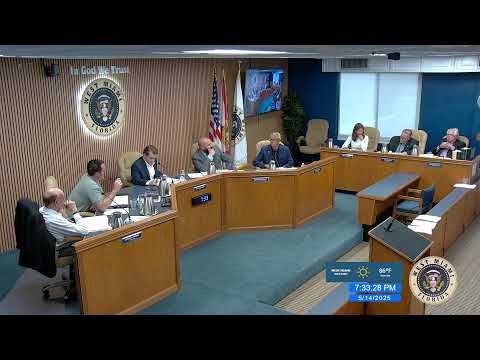
West Miami tables neighborhood traffic plan after residents raise parking and safety concerns
Summary
City commissioners approved first readings of parking restrictions and a false-alarm fine ordinance but tabled a proposed traffic-calming plan after residents of the SW 20th Street/60th Avenue area said the measures would shift traffic and worsen safety where they live.
West Miami commissioners approved two ordinances on first reading — restricting parking on specified residential swales and penalizing repeated false fire-alarm activations — but voted to table a separate traffic-calming plan after sustained resident opposition.
The measures approved on first reading would restrict nonresident parking on swales on streets near Southwest 20th Street and surrounding blocks and would allow fines for three or more false fire-alarm activations by a permitted holder within any six-month period. Both passed 5-0. The traffic-calming resolution — to install a traffic circle at Southwest 60th Avenue and 20th Street and related measures — was tabled for further resident outreach after commissioners said neighbors had not reached a consensus.
“This will not benefit people outside the community,” Mayor Eric Diaz Padron said during discussion of items D, E and J, adding that the changes were resident-driven. City Manager said staff initially believed there was neighborhood consensus but recommended additional community meetings after strong comments at the meeting.
Residents who spoke at the meeting told commissioners they feared the plan would reroute traffic onto smaller residential streets. “All you’re doing is taking it off of one street … and you’re putting it on a street that does cut across,” Anna Maria Lozada said, giving her address and describing how the proposed routing would increase traffic through her block and reduce parking for long-time residents. Jose Fuentes and Edgar Delgado made similar points about speed, double parking and safety; Delgado urged officials to “think of us when you approve these projects.”
Resident Vanessa Herro, who lives on Twentieth Street, supported testing traffic calming but urged a short trial: “If it’s putting a [calming device] and testing it out, I say go for it … give it 90 days, give it however long you guys think would warrant it, and see if it makes a difference,” she said. Commissioner Juan Blanes described brief counts he made during morning peak hours—“From 07:00 to 08:00, I counted 46 cars. Another time I counted 52.”—to illustrate commuter cut-through volumes.
Commissioners said they want a holistic plan. “If we are gonna change something on one part, it might totally change how one traffic device works,” Vice Mayor Ivan Chavez Jr. said. In response, the commission voted 5-0 to table the traffic-calming resolution and ask staff to hold additional meetings with neighborhood residents before bringing a consolidated proposal back.
The parking and fire-alarm ordinances passed first reading 5-0 and will return for second reading and public hearing on June 4. The commission asked staff to schedule further community outreach on the traffic-calming measures before setting a return date.
Two technical notes recorded during discussion: staff said the county has an interlocal agreement that allows the city to install certain traffic-calming devices and that some proposed treatments (paver textures at paseo crossings, chicanes) are intended to slow drivers visually and physically. The commission emphasized enforcement and resident consent would be considered before final installation.