Get Full Government Meeting Transcripts, Videos, & Alerts Forever!
Get email alerts on the Medical Humanities topic
No spam. Unsubscribe anytime.
Institute of Medicine and Humanities aims to bring 'humanness' back to clinical care; Ridge Library collection to open in Missoula
Summary
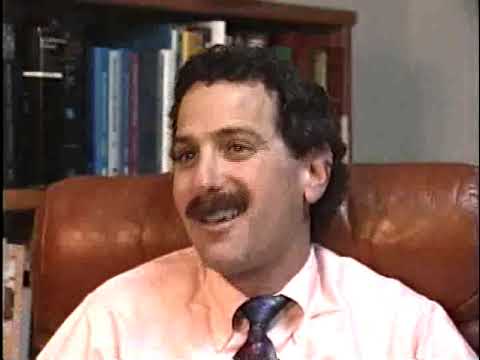
A speaker described an Institute of Medicine and Humanities collaboration between the University of Montana and Saint Patrick's Hospital, saying a Ridge Library medical-humanities collection will open this spring or summer in Missoula to support clinicians, scholars and the public.
An unidentified presenter at a meeting described the Institute of Medicine and Humanities partnership between the University of Montana and Saint Patrick's Hospital and said the Ridge Library, a specialized medical‑humanities collection made possible by a donation, will open "this spring, this summer" in Missoula to provide resources for clinicians, scholars and the public.
The presenter said the institute aims to "bring together the art and science of medicine" and to return "some degree of humanness" to clinical practice by connecting medical training with literature, philosophy and other humanities disciplines. "Illness is the night sight of life. Everyone who is born holds dual citizenship in the kingdom of the well and in the kingdom of the sick," the presenter said.
Why it matters: The speaker framed the institute as a way to broaden clinicians' perspectives beyond the purely scientific approach to disease, arguing that technological advances can improve treatment of disease without addressing the whole patient. The speaker cited infectious disease practice and resistant strains of tuberculosis as examples where returning to broader historic and literary knowledge may inform care and societal understanding.
During the presentation the speaker recounted educational offerings and reading groups organized by the institute, including a course on sickness and healing in Russian literature and a series on literature and plague run by "Dr. Wilms." The presenter said they read "over 12,000 pages" in one quarter while taking an elective on Tolstoy and called "The Death of Ivan Ilyich" especially powerful for illuminating patients' experiences near death.
The presenter credited several campus and community partners for the institute's formation, saying interest came from "the professionals themselves" and from Saint Patrick's Hospital as "a major provider in this community." The presenter named Dean Jim Fleitner as one of the primary movers in establishing the institute and said the effort brought together faculty from classics, humanities and philosophy with hospital staff and clinicians.
On the Ridge Library, the presenter said the planned collection will assemble books, journals and media on medical humanities in a way that, they argued, "is not available, has not been put together, for the most part, outside of medical schools." The presenter added that the nearest comparable collection is "probably 500 to 550 miles away," and said the Ridge Library would open access to scholars and the public and could become a model for other small communities.
The presentation emphasized dialogue across disciplines as a core value. "One of the most important things that the experience of the institute does is the experience of being in a class with other health care professionals," the presenter said, describing how classes allow clinicians to talk about values and patient experience outside the pressures of the workday.
No formal motions, votes or policy actions were reported during the session; the item was a presentation and discussion. The presenter described hopes for scholarship, community access to the Ridge Library collection and the possibility that the institute could influence job satisfaction and the practice of care, but offered no timetable beyond saying the Ridge Library would open "this spring, this summer."