Get Full Government Meeting Transcripts, Videos, & Alerts Forever!
Get email alerts on the Public Television topic
No spam. Unsubscribe anytime.
Missoula workshop: speakers call for public role, transparency in building Montana public-television system
Summary
At a Missoula workshop on “Montana Media Beyond Access,” speakers said Montana lacks an institutionalized public-television system, urged clearer public participation and transparency about funding and private-sector ties, and cited recent federal and state policy decisions as complicating factors.
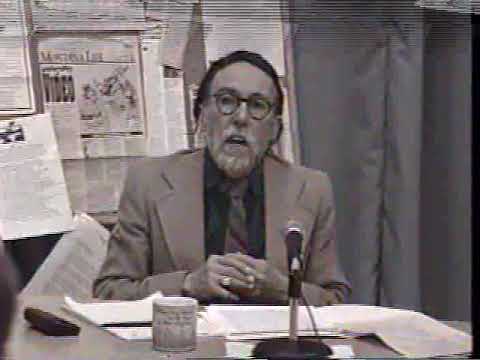
Speakers at a Missoula workshop on “Montana Media Beyond Access” said Montana still lacks a fully institutionalized public-television system and urged more open public participation in shaping one.
“Public television in Montana…is a controversial issue of public importance,” McCarthy Coyle, reporter and editor of The Independent, said, adding that he has “heard almost nothing” about who is doing what and where the money is coming from. “I see a major responsibility not being met by present telecommunications providers.”
Workshop organizer Mary (MCAT host) and Coyle framed the problem as one of access to information about institutional plans for public television. Coyle described public television broadly — from commercial licensees who must “serve in the public interest” to institutional public broadcasting associated with the Corporation for Public Broadcasting (CPB) and the Public Broadcasting Service (PBS) — and said Montana has struggled for years to develop a statewide institutional system.
Speakers raised three recurring concerns: the lack of regular, clear communication from universities and public broadcasters about timelines and budgets; the influence of private cable companies on planning and funding; and the limited opportunities for independent producers to learn how and when their work will be distributed on statewide outlets.
Coyle cited a recent controversy — a senator’s hold on CPB funding after a program about grazing drew complaints — as an example of how programming questions can trigger policy and funding debates. He also pointed to a 1989 special-session law that, he said, provided substantial tax relief to cable, radio and television interests and reduced local tax revenues by about 44 percent in some communities; he said that loss of local funds reduced resources that might otherwise support local programming and infrastructure.
Speakers suggested structural alternatives, including joint licensing arrangements between universities and community groups, more active outreach to independent producers, and bolder state-level pilot projects that would combine cable, public-education links and low-power stations to pursue “universal service.” Coyle and others urged regular, public consultation during planning and noted that past planning efforts — which they said have consumed state and federal dollars over many years — often reflected institutional visions rather than broad community input.
The workshop did not produce formal motions or decisions. Instead, presenters urged Montanans to press institutions and elected officials for clearer timelines, budget detail and opportunities for independent producers to participate in programming decisions.