Get Full Government Meeting Transcripts, Videos, & Alerts Forever!
Get email alerts on the Federal Funding And Advocacy topic
No spam. Unsubscribe anytime.
Spokane officials flag federal grant terminations and proposed cuts that could raise local borrowing costs and stall infrastructure projects
Summary
Federal and federal‑policy risks — including paused grants, potential reductions in state revolving funds and proposals to curtail tax‑exempt municipal bonds — were discussed with the city's federal lobbyists; board members were urged to track appropriations and support federal advocacy.
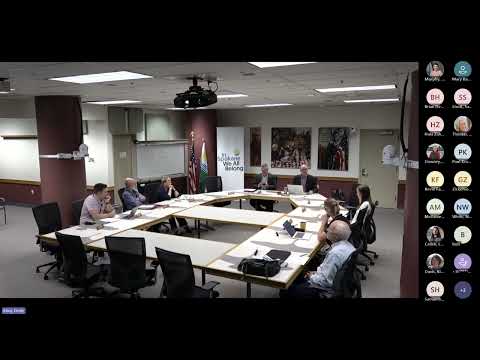
The Climate Resilience and Sustainability Board heard from the city’s federal lobbyists and staff about growing federal‑level risks to Spokane’s funding pipeline, including recent pauses and terminations of federal grants, proposed reductions in federal support for water and wastewater state revolving funds, and a threatened change to the tax status of municipal bonds that could sharply increase borrowing costs.
Brian Christiansen of Desimone Consulting Group, the city’s federal lobbyist, briefed the board on the ongoing congressional budget and reconciliation processes and warned that a range of federal proposals could affect Spokane. "There's a lot of threats out there," Christiansen said, urging vigilance and coalition building with other cities and national organizations.
Board members and staff highlighted three federal risks discussed in the meeting:
- Grant terminations and reimbursements: The board was told that several federal grants, including the Community Change Grant discussed earlier in the meeting, had been paused or terminated in recent weeks; some previously paused grants (such as an urban‑forestry grant and a Safe Streets for All grant) later began to provide reimbursements, producing cautious optimism. City staff said officials are engaging with delegations and the administration to seek reimbursements where possible.
- Proposed limits on tax‑exempt municipal bonds: Presenters warned that proposals to curtail or remove federal tax‑exempt status for municipal bonds would increase local borrowing costs substantially; staff cited analyses showing increases in borrowing costs by 30%–40% in hypothetical scenarios and noted King County/Seattle estimates where loss of tax‑exemption could raise costs by billions on long‑range programs.
- Cuts to the Drinking Water and Clean Water State Revolving Funds: The presentation noted a proposal in the federal budget narrative to reduce annual capitalization for state revolving funds (which provide low‑interest loans for water and wastewater projects) from approximately $2.7 billion to levels as low as $300 million — a reduction that, if enacted, would materially constrain funding for local utility upgrades.
Lobbyists described the timing and mechanics of federal budget work: reconciliation and tax discussions were expected to be active the following week, while fiscal‑year 2026 appropriations work is beginning and could stretch late into the year. The city said it has submitted appropriations requests for specific projects — notably design funding for Latah (Latah/Spokane) Street Bridge and a Smart Teams/transportation request — and that Spokane officials are meeting with delegation staff in Washington, D.C., to press those priorities.
Next steps: city lobbyists asked the board and partners to support coalition advocacy and track appropriations and reconciliation activity as proposals move through committees; the city will continue to press for targeted project funding and monitor any federal rule or budget changes that affect grants and municipal finance.