Get Full Government Meeting Transcripts, Videos, & Alerts Forever!
Get email alerts on the Nonconforming Use topic
No spam. Unsubscribe anytime.
Kingston board approves Camp Lincoln’s request for two accessible 'base camp' cabins
Summary
The Zoning Board granted Camp Lincoln (Southern District YMCA) a variance to add two small 'base camp' cabins and approved an ADA‑compliant bathroom renovation, finding the work will not expand the nonconforming day‑camp use or affect neighborhood property values.
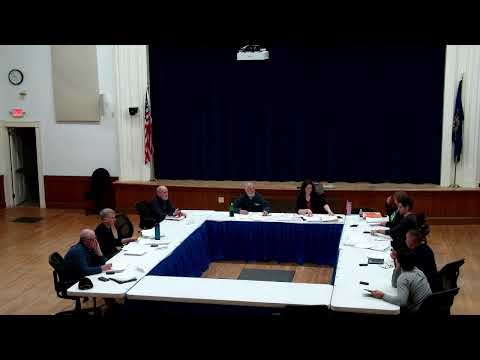
KINGSTON — The Kingston Zoning Board of Adjustment granted a variance to Article 103.2 on Tuesday to allow the Southern District YMCA’s Camp Lincoln to add two "base camp" cabins and to proceed with an ADA bathroom renovation, finding the additions will not expand the camp’s nonconforming day‑camp use.
The board voted that the proposed construction — two one‑story cabins totaling about 642 square feet and replacement of an existing bathroom complex — will not increase the number of campers, will be located in the center of the 66.9‑acre camp property, and will not be visible to abutting property owners.
Michael Sanchez, who identified himself as representing the construction operations group hired by the Southern District YMCA, told the board the structures would provide shelter on rainy days, improve camper staging areas and increase accessibility. "They're also going to be accessible," said Reid Bencoolen, who identified himself as YMCA staff. The new cabin ramps and the renovated bathroom are intended to improve ADA access for campers who use wheelchairs.
Planning board members had reviewed the proposal and recommended that Camp Lincoln not be forced into residential conformity; the planning board’s amended motion said the camp "should not be forced to come into conformity as a residential zone at any time and will continue to exist as a day camp." The planning board then referred the applicant to the Zoning Board because the property is a preexisting nonconforming use in a single‑family residential district.
During deliberation the zoning board found the five variance criteria were met: the change would not be contrary to the public interest, the spirit of the ordinance would be observed because the camp would continue as a day camp, granting the variance supported substantial justice by improving safety and accessibility for campers, surrounding property values would not be diminished and literal enforcement of the ordinance would create an unnecessary hardship given the site’s existing nonconforming status. Several board members noted the additions are small relative to the site size and will not increase overnight use or permanent residential occupancy.
The applicant said construction would be simple and that, if approved, the goal was to have the facilities in place before camp opening in mid‑June. The board cautioned that the decision can be appealed within 30 days and advised the applicant not to begin construction until the appeal period expires; a written notice of decision will be issued within five days.
The board’s approval covers the Article 103.2 variance for the two cabins; any future, substantive change such as renewed overnight operations or an expansion of the camp’s use would require additional review.