
Cumberland County backs letter supporting childcare and preschool teachers for regional high‑priority occupations list
Get AI-powered insights, summaries, and transcripts
Subscribe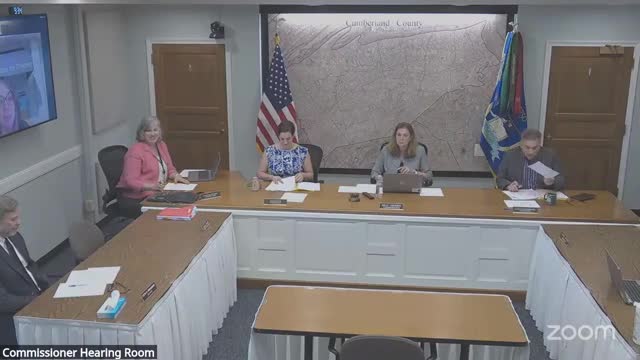
Summary
The Cumberland County Board of Commissioners approved a letter of support for adding child care workers and preschool teachers to a regional high‑priority occupations list after a presentation from Community Connections for Children and a discussion about the formal application process with the regional workforce board.
Cumberland County commissioners approved a letter of support May 1 asking that child care workers and preschool teachers be included on the South Central Pennsylvania Investment Board high‑priority occupations list, after hearing that the county faces a shortfall in early childhood educators.
Christy Rangelian, executive director of Community Connections for Children, told the board the early‑childhood workforce is “the workforce that all others are dependent upon,” and presented local and state data she said show the scale of the shortage. Rangelian said a recent Pennsylvania study showed about $6.6 billion in economic impact tied to the state childcare workforce shortage and that in Cumberland County roughly 70 job vacancies in early childhood education could allow care for about 700 more children if filled. She said 81% of local programs reported teacher shortages, 95% reported recruitment problems and 67% reported retention challenges, and that eight programs in the county had closed this year because of staffing problems.
The nut graf: Commissioners said they support the county signing a letter to accompany a formal application to the regional workforce board but pressed for wording that asks for fair consideration rather than language that could be read as lobbying to add occupations directly. Commissioners also recommended briefing the regional workforce board so county data are included in the formal review.
Rangelian said Community Connections for Children is submitting a formal application through established channels and that letters of support are part of the application package. She described local partnerships intended to strengthen the pipeline, including work with institutions of higher education, vocational schools and apprenticeship efforts in York County and coordination with the Office of Child Development and Early Learning to help workers earn CDA, associate and bachelor credentials.
During discussion commissioners asked about the formal process for adding occupations to the high‑priority list and said the letter should align with that process. Board members suggested inviting Jesse McCree, the regional workforce investment board executive director identified in the meeting, to brief the commissioners and to consider county‑specific data as part of the formal application process. The board agreed the draft letter could be revised to request fair consideration and to reflect the county’s view without attempting to substitute for the regional board’s data‑driven decision.
A motion to approve the letter of support was moved and seconded; the board voted in favor and the motion carried (ayes recorded). The commissioners directed staff and the applicant to coordinate revised wording for the letter and follow the formal application process outlined by the regional workforce board.
The county presentation and the vote occurred during the commissioners’ regular agenda; Rangelian presented the data during the public agenda item and commissioners discussed the county’s next steps during the same item. No funding or ordinance changes were proposed or adopted as part of the vote.