Get Full Government Meeting Transcripts, Videos, & Alerts Forever!
Get email alerts on the Public Safety Substance Use topic
No spam. Unsubscribe anytime.
Somersworth police chief asks council to reallocate grant-funded post to fight opioid, stimulant crisis
Summary
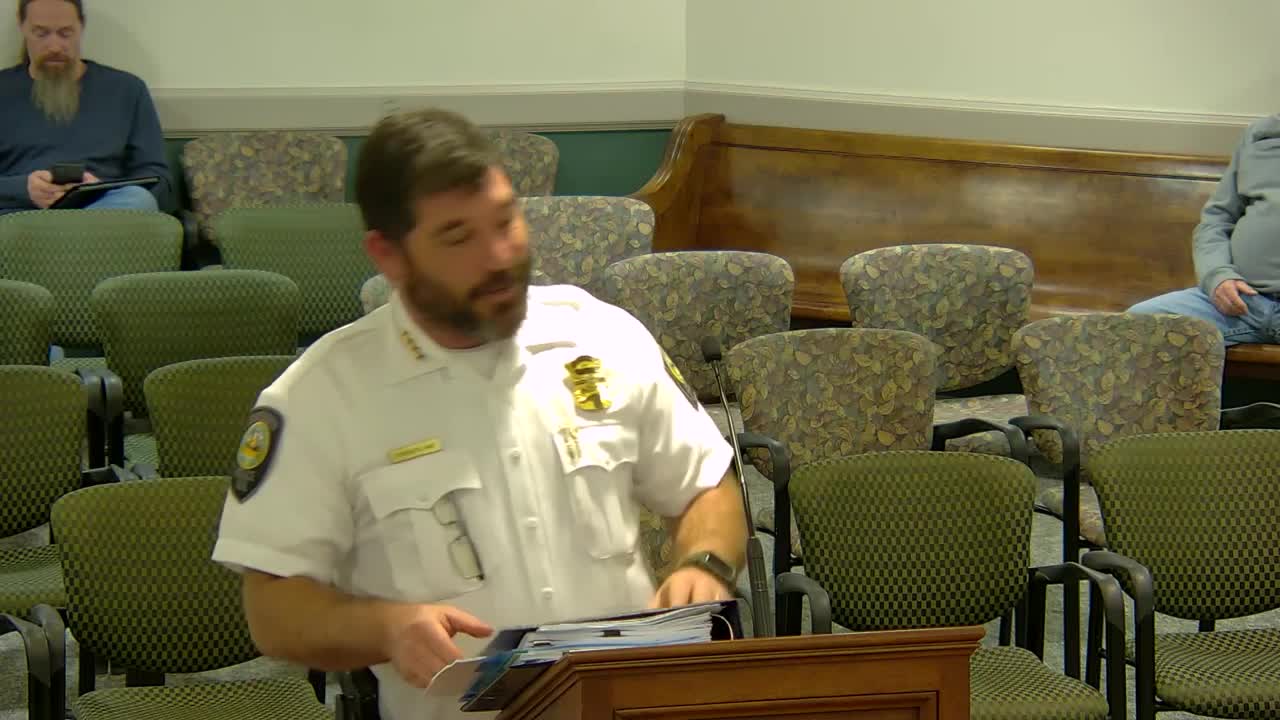
Chief John Sunderland, Somersworth’s police chief, asked the City Council on May 5 to reallocate a previously funded community policing position to create a Prevention, Enforcement and Treatment (PETA) officer focused on opioid, stimulant and substance-use response.
Chief John Sunderland, Somersworth’s police chief, asked the City Council on May 5 to reallocate a previously funded community policing position to create a Prevention, Enforcement and Treatment (PETA) officer focused on opioid, stimulant and substance-use response.
Sunderland said the city previously held a COPS grant-funded community policing post and that the department received a COSAP grant — the Comprehensive Opioid, Stimulant and Substance Abuse Program — to target the local drug epidemic. “What I come to you with is two things,” he told the council, including a recommendation “that we take that community oriented policing position that the city got in 2019 and reallocate that position to what’s called PETA, or prevention, enforcement, and treatment.”
The request followed data Sunderland presented showing nonfatal and fatal overdoses over five-year snapshots and an increase in nonfatal overdoses so far this year; he said the grant was written originally to fund limited overtime for a trained officer but argued the problem cannot be addressed part time.
Why it matters: Councilors and Public Safety Committee members described the proposal as a grant-funded opportunity to connect people with treatment, build relationships in the community and retain an enforcement option when needed. Councilor Witham asked for examples of other New Hampshire municipalities running similar programs; Sunderland said “at least nine other communities” have versions of these programs and they “appear to be making a difference.”
Committee vote, staffing and funding: Councilors on the Public Safety Committee reported a 3–0 vote to implement the program. City staff said the department currently has five open sworn slots; the city manager indicated, absent direction to the contrary, it was within the chief’s and manager’s operational authority to recruit for the position. The council did not take a formal roll-call vote on a council ordinance or resolution at the May 5 meeting.
Training and operations: Councilors asked about training and whether the grant covers training and fringe benefits. Sunderland said the grant will fund the position’s hours where possible, and a councilor noted the grant covers fringe benefits if the officer’s time is fully grant-funded but that the city would pay the hours if the officer is redirected to other duties. Sunderland said he already has a lead candidate who is a recovery coach and has relevant training.
Next steps: Staff said they will pursue the COSAP grant funding and recruit for the position under the department’s hiring authority; Public Safety Committee materials and a city-provided map showing incident locations are available to councilors.
Ending: Councilors expressed broad support for trying the new approach while urging caution that grants sometimes lapse and local funding may be required in future years. No final council ordinance or binding contract was approved on May 5.