Get Full Government Meeting Transcripts, Videos, & Alerts Forever!
Get email alerts on the Education Math topic
No spam. Unsubscribe anytime.
Monongalia County math coaches say student performance has rebounded; highlight coaching, state supports and new courses
Summary
On the Motivation and Momentum podcast, Monongalia County Schools math coaches described gains that they said bring many students back to pre‑COVID performance, and outlined district and state supports including coaching, PLCs, the Third Grade Success Act, Unite with Numeracy, and new high school courses and tutoring.
Monongalia County Schools’ math coaches said students’ performance has largely returned to pre‑COVID levels and that classroom coaching, professional learning communities and state programs are helping sustain gains.
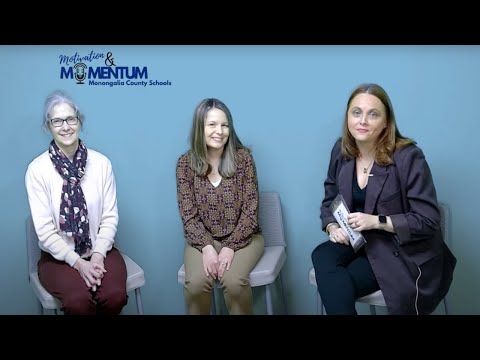
On the Motivation and Momentum podcast, Amanda Cosner, elementary math coach for Monongalia County Schools, and Kelly Ann Allen, secondary math coach for Monongalia County Schools, described recent test‑score trends and the supports behind them. “At the secondary level, the high schools are showing that math is pretty much back to where it was pre COVID,” Allen said. Cosner added that several county elementary schools are scoring among the state’s top performers: “I think we had maybe 5 elementary schools score in the top 10 in the state.”
The coaches attributed improvement to students returning to in‑person instruction and changes in classroom practice. “Working more hands on with the students, asking them more to explain the reasoning, their thinking, how did they get to those spots,” Allen said. Cosner said the district is emphasizing conceptual understanding so students “aren’t just learning a way to do it and just repeat that, but they are actually thinking and understanding what they’re doing.”
State and district initiatives provide additional support. Allen and Cosner described the Third Grade Success Act as a focus that previously emphasized reading but is now accompanied by state hiring of regional math specialists and online resources for teachers. The coaches said the state program Unite with Numeracy and a district initiative previously called More Math have provided sustained professional development and cross‑grade conversations among teachers. “We did pause this year because we had a new adoption,” Cosner said of the More Math meetings; she said the county focused this year on professional development tied to a newly adopted curriculum and expects the collaboration to resume.
Coaches described how their roles work in practice. Cosner said she attends grade‑level professional learning community (PLC) meetings, models classroom lessons, visits teachers individually and sometimes assesses students to help teachers pinpoint needs. “Really just anything that the teachers need as far as math instruction, I’m there to support them,” she said. Allen described similar work at the secondary level and noted that PLCs enable teachers to share activities and pacing across grades.
The county has added several high‑school course options this year that coaches said connect math to real‑world uses. Allen listed applied statistics and a course she called IMEI — “introduction to mathematical applications in quantitative reasoning” — as classes intended to show why students use particular math skills. Cosner and Allen also said free after‑school tutoring is available and is provided by math teachers. “So that parents know that that’s there,” Allen said.
Both coaches offered advice for parents and teachers: talk about math in everyday activities, let children use strategies that make sense to them, and encourage productive struggle. “Math hasn’t changed. But the way we’re teaching it has,” Cosner said. On how teachers or colleagues should request support, Cosner recommended email as the most common and useful way to reach coaches: “Usually, email probably — email is the most common. It’s my favorite thing.”
The coaches praised local educators’ engagement. Cosner and Allen described frequent PLC work, teachers requesting classroom visits, and examples of effective instruction they had recently observed, including an applied statistics lesson by Wendy Trump and collaborative work at a school the coaches referred to as North.
The podcast episode closed with the coaches noting the county’s momentum and the district’s plans for continued professional development and course offerings.