Get Full Government Meeting Transcripts, Videos, & Alerts Forever!
Get email alerts on the Urban Forestry topic
No spam. Unsubscribe anytime.
Boston hearing spotlights low tree canopy in District 2; city outlines planting, cooling and pilot plans
Summary
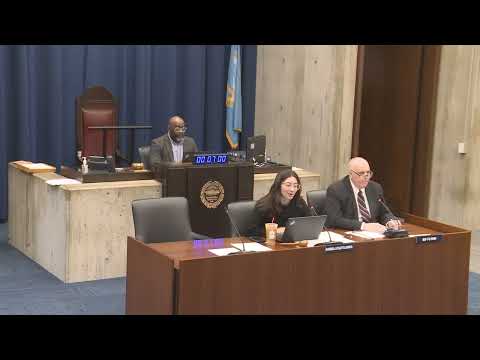
Boston City Council members and city officials said at a May 9 Committee on Environmental Justice, Resiliency and Parks hearing that expanding the urban tree canopy in District 2 will require both new plantings and sustained maintenance as the city tests pilots for hard-to-plant neighborhoods.
Boston City Council members and city officials said at a May 9 Committee on Environmental Justice, Resiliency, and Parks hearing that expanding the urban tree canopy in District 2 will require both new plantings and sustained maintenance as the city tests pilots for hard-to-plant neighborhoods.
The hearing, convened by Councilor Abriela Colletta Zapata, chair of the Council Committee on Environmental Justice, Resiliency and Parks, and Councilor Ed Flynn, focused on low canopy pockets in Chinatown, the Leather District, South Boston, Fort Point and parts of downtown. Advocates and city agencies described current planting totals, pilot strategies for narrow sidewalks and parking-dense blocks, and shortfalls in federal grant funding the city and nonprofit partners had been relying on.
Why it matters: speakers said the lack of trees contributes to higher summer temperatures, worse air quality and fewer safe, shaded public spaces in neighborhoods with large numbers of seniors, people of color and low-income residents. The issue intersects with multiple agencies’ jurisdictional limits — including state and federal properties — and with dense built infrastructure that limits where trees can be planted or take root.
Key facts and outcomes
- Multiple witnesses cited canopy statistics for District 2 and Chinatown. Councilor Ed Flynn said, “As of 2019, South Boston only had 8% tree coverage, and Chinatown only had 7% compared to the city average of 27%.” Angela Soohoo of the Asian Community Development Corporation said Chinatown has “8% tree canopy compared to 27% citywide” and noted the neighborhood’s density of roughly 7,000 residents in about 0.2 square miles.
- The Boston Parks and Recreation Department reported recent planting and staffing figures for District 2. Todd Miesdor, director of urban forestry for Boston Parks and Recreation, said the city planted nearly 200 trees in District 2 in 2023, 276 in 2024 and had plans to plant 62 trees in the spring of 2025. He said the Urban Forestry Division has expanded to about 15 staff, including four arborists.
- City pilot work for tight urban sites: Parks officials described above-ground planters and potted-tree pilots for Chinatown and other constrained spots where underground utilities, narrow sidewalks or other infrastructure preclude standard tree pits. Chris Cook, executive director of the Rose Kennedy Greenway Conservancy, urged more potted trees, shaded walkways and water features on the Greenway’s Chinatown segment.
- Cooling and outreach: Zoe Davis, senior climate resilience project manager in the Office of Climate Resilience, said the city deploys pop-up misting tents and standing misters through the Office of Emergency Management; officials told the committee there are about 30 misting tents and three standing misters available for public events and community requests. Davis confirmed the BCYF (Boston Centers for Youth & Families) Chinatown site will be available as a cooling center this summer.
- Funding and federal grant disruption: advocates described both new and lost funding. David Meshulam, executive director of Speak for the Trees, said recent federal grant terminations removed roughly $750,000 in planned funds for urban forestry programs. City staff and the mayor’s cabinet said the city nonetheless received an $11.4 million IRA (Inflation Reduction Act) grant for urban and community forestry work covering tree care/maintenance, workforce development and the Boston Tree Alliance program; the Parks Department and partner groups will administer portions of those funds.
- Legislation and policy: witnesses and officials urged state and city policy changes to support planting on non‑city land. Advocates described a proposed Municipal Reforestation Act at the state level that would create funding for municipal and nonprofit tree work. City staff noted the council’s recent public-tree ordinance (extending Chapter 87 protections locally) and discussed how a private-tree ordinance or other tools might help preserve mature trees on private property.
What city agencies are doing
- Parks and Recreation: Todd Miesdor described the Urban Forest Plan (city policy, adopted 2022) as a 20‑year framework with short-, mid- and long-term strategies. He emphasized protecting existing mature trees, block pruning and contracting to water and maintain young trees through a two‑year warranty.
- Office of Climate Resilience (OCR): Zoe Davis described heat-resilience programming, the city’s 2022 heat plan and partnerships that produced standing misters and mobile cooling tents for community and emergency use.
- Mayor’s cabinet / grants: Jessica Morris, chief of staff for the mayor’s Cabinet on Environment, Energy and Open Space, summarized cabinet coordination across Parks, OCR and other departments and noted the administration’s grant and pilot efforts.
Community concerns and constraints
Residents and neighborhood groups raised several recurring hurdles: limited sidewalk space and subsurface utilities that block standard tree pits; competing priorities in dense development; the cost of advanced infrastructure such as Silva Cells (which the Parks Department said can cost roughly $30,000 per tree compared with an estimated $1,500 per standard planted tree including warranty and watering); truck traffic and curb configurations that damage young trees; and jurisdictional limits where land is owned by MassDOT, Massport, the US Postal Service or other non‑city entities.
Speakers urged a mix of short- and long-term responses: protect mature trees already providing the most canopy; plant resilient species (for example, ginkgo were mentioned as tolerant species); expand tree‑care contracts and block‑pruning programs; pilot above‑ground planters and potted trees where in‑ground planting is infeasible; and pursue state and federal partnerships to secure additional planting and maintenance funds.
Public testimony
More than a dozen residents and community organizations testified, including Donna Brown of the South Boston Neighborhood Development Corporation, Tom Reddy of the Fort Point Neighborhood Association, Anita Yip (artist and Chinatown resident), Catherine Friedman of the Leather District Neighborhood Association and Tufts researcher Mizon Choo, who summarized the Chinatown HEROES (Heat Equity and Resilience in Open Spaces) study showing very high surface temperatures on asphalt sites and elevated fine particulate readings adjacent to busy roadways.
Formal outcome
The committee kept docket 0252 (the order for a hearing on expanding the urban tree canopy in District 2) in committee for further work and follow up. The hearing produced multiple requests for follow-up information from city staff on misting tent availability, budget figures for Parks planting and maintenance, and details on state and federal funding opportunities.
What’s next
Council members and advocates said they will continue working with Parks, the Office of Climate Resilience, the Office of Emergency Management and community groups to refine pilots (including above‑ground planters and potted trees), track grant funding, push for state-level support such as the Municipal Reforestation Act, and prioritize cooling resources — especially in Chinatown and other environmental-justice neighborhoods. The Parks Department said updated canopy mapping (data collected in 2024) is under analysis and will be released as the next comparison point to the 2014/2019 baseline used in the Urban Forest Plan.
Reporting note: quotes and attributions are drawn from the committee hearing transcript. Direct quotes are attributed only to speakers who appeared in the hearing record.