Get Full Government Meeting Transcripts, Videos, & Alerts Forever!
Get email alerts on the Indigent Health topic
No spam. Unsubscribe anytime.
Indigent health office reports fewer prescriptions costs, new partnerships reduce county expenses
Summary
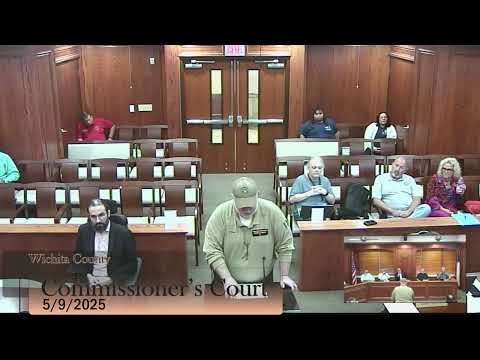
At the Wichita County Commissioners Court on May 9, the county’s indigent health office presented its monthly activity report, highlighting partnerships and operational changes that staff said have reduced county prescription and burial costs.
At the Wichita County Commissioners Court on May 9, the county’s indigent health office presented its monthly activity report, highlighting partnerships and operational changes that staff said have reduced county prescription and burial costs.
Indigent health staff said the office serves roughly 91 active clients in the regular program and estimated a total caseload near 96 as of the reporting date. The office reported seven clients on an IEP track that does not cover prescriptions or specialty care. Staff said tighter eligibility checks, better outreach and new vendor relationships have lowered county spending in recent years: reimbursements for burial and cremation that averaged about $39,000 per year in 2021 are projected to be closer to $30,000 by year-end, the staff reported.
To reduce prescription spending, staff described two main strategies: partnering with Saint Vincent de Paul, a mail-order pharmacy that provides free prescriptions for eligible clients, and coordinating with United Regional’s financial-assistance programs. Staff said Saint Vincent de Paul will fill 300–500 prescriptions at no cost to the county for clients who meet application rules and have a valid mailing address. The county also uses a voucher program, America's Best Eyeglasses, which staff said saves roughly $135 per case by providing free exams and glasses through local agencies and mission partners.
The office told commissioners it has lowered the county prescription ceiling for assistance from previously higher amounts to a $500 per-prescription cap and now leans on external providers for expensive or specialty medications. “We have been able to utilize a lot more of whether that’s going through a different burial process, being donated, making sure that the assets and resources are actually being maintained for the county,” the presenter said. Staff also noted they have begun recouping payments from client estates when assets are available after probate; those funds revert to the county after one year.
Staff credited outreach and coordination with local partners, including United Regional and Saint Vincent de Paul, as key reasons prescription assistance numbers have fallen since 2017. They also said the office has tightened re-enrollment and six-month reassessments to reduce improper enrollments and cut waste. Commissioners praised the staff’s outreach and recommended continued networking with providers, and one commissioner flagged mental health needs as an ongoing area to monitor.
No formal vote was recorded; commissioners asked staff to include prescription and out-of-county medical costs in future expense reports so the court can monitor those lines.