Get Full Government Meeting Transcripts, Videos, & Alerts Forever!
Get email alerts on the Homelessness Housing topic
No spam. Unsubscribe anytime.
Students urge Housing First, permanent units and service access amid rising unsheltered count
Summary
Cambridge High School students presented point‑in‑time counts and recommended Housing First, expanded permanent housing and service access, citing a small decline in overall homelessness but a rise in unsheltered people in Metro Nashville.
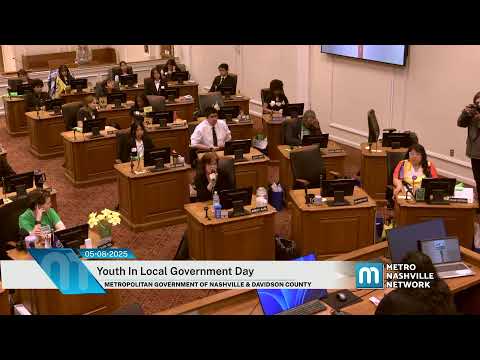
Students from Cambridge High School told Metro Nashville elected officials Thursday that homelessness in the city requires a strategic, housing‑first response and improved access to services after the students reviewed recent point‑in‑time data.
Presenters said the 2024 point‑in‑time (PIT) count identified 2,094 people experiencing homelessness in Nashville on the night of Jan. 25, 2024, a 1.6 percent decline from 2,129 in 2023, but noted the unsheltered population rose by 135 people (about 23 percent) in that period.
Students described barriers to accessing benefits and services, including lack of internet access, difficulty keeping identity documents and transportation constraints. “Unsheltered individuals lack access to these things, and documentation is a low priority for many of them,” student Jasmine Muni Vogue said. Presenters also noted hospitals and service providers face capacity and process limits when addressing spiking and assault cases, and they referenced the U.S. Department of Housing and Urban Development definition used for PIT counts.
Cambridge students recommended adopting Housing First principles, which the presenters described as providing housing without preconditions and offering voluntary supportive services. They said other cities’ programs have shown substantial reductions: the students cited Salt Lake City’s work, Austin’s permanent supportive‑housing creation, and Houston’s use of Housing First, which the students said reduced homelessness by as much as 63 percent and helped house tens of thousands of people in some programs.
Students proposed a mix of federal grant matching, redirecting local tourism tax revenue and repurposing vacant or rundown buildings in Davidson County (they named Madison and Antioch as examples) to create more affordable units. They said Tennessee receives federal funding through the Continuum of Care and suggested matching those funds with local tax incentives.
School‑board member Dr. Bertina (as identified in the transcript) praised the students for centering people with lived experience and said the interviews the students conducted with unhoused people added valuable perspective. Students also played recorded interviews and summarized recurring needs: transportation access, hygiene, rehabilitation services and strategies to reduce barriers to benefits such as the Supplemental Nutrition Assistance Program.
Students noted implementation questions remain, including financing, coordination among local agencies and the need for long‑term, permanent housing rather than short‑term “band‑aid” fixes. They suggested follow‑up meetings with council members and relevant departments to explore grant use and targeted local investments. No formal vote or council motion resulted from the presentation, but several members offered to continue working with students and school and city staff to pursue the ideas.
The presentation referenced the Supreme Court case Johnson v. Grant’s Pass in the context of local authority to limit encampments on public property; presenters used it to explain legal constraints local governments face when regulating camping on public land.
Students recommended that any local strategy include reduced administrative barriers to benefits, tailored supportive services, and a coordinated plan to convert grants and tax revenues into permanent, affordable housing.