Get Full Government Meeting Transcripts, Videos, & Alerts Forever!
Get email alerts on the Transportation Roads topic
No spam. Unsubscribe anytime.
ODOT presents County Line road-diet plan for Fostoria; council asked to consent to contracts
Summary
ODOT representatives described a planned safety project that would convert portions of County Line Road from four travel lanes to a three‑lane cross section with a center two‑way left‑turn lane, add bike lanes and ADA curb ramps, and change several traffic signals to stop control.
ODOT representatives described a planned safety project that would convert portions of County Line Road from four travel lanes to a three‑lane cross section with a center two‑way left‑turn lane, add bike lanes and ADA curb ramps, and change several traffic signals to stop control. The presentation said federal and state safety funds would cover up to $2,285,000 for design and construction and that the city would need to agree to responsibilities before federal dollars begin to be spent.
The project is the outcome of a local safety study Fostoria requested in May 2020 and additional analysis that ODOT and consultant Barge Design Solutions completed; ODOT said the systemic safety application was approved in May 2022. ODOT said the corridor study identified about 308 crashes from 2017 through 2024, with roughly 26% involving injuries and one fatality, and that safety measures at similar sites reduced average total crashes by about 13% in ODOT district reviews.
"This is safety funding," an ODOT representative said, and the agency urged the council to confirm its willingness to proceed with design so federal funds could be used. The presenters emphasized that if the city accepts federal design funds and later withdraws, the city could be required to reimburse ODOT for design costs. "We have 2,200,000 to do it with," one presenter summarized when discussing the funding envelope.
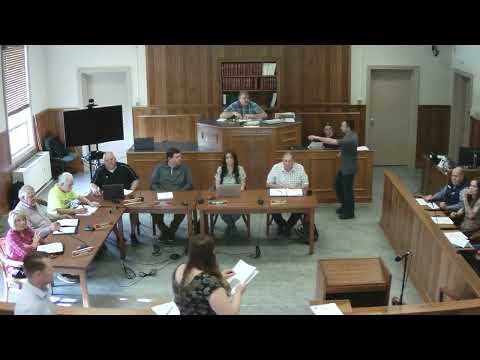
Council members, the fire chief and members of the public pressed ODOT on specific changes and operational impacts. Concerns included: whether signals that currently face heavy truck turning movements should be removed; the safety of striping bike lanes adjacent to large trucks; maintenance and snow‑plow impacts if physical delineators were installed; how much delay all‑way stops would add at intersections that now have signals; and how long construction and right‑of‑way acquisitions might take. The fire chief described County Line as a key response corridor and said pull‑off areas for emergency vehicles were important. ODOT said construction would likely occur in 2027 or 2028 and estimated that the in‑street work could be completed in a single construction season.
ODOT said alternatives to bike lanes remain possible where the funding manager asks for more than paint, including on‑street parking or localized curb bumpouts, but those options raise costs. "The safer thing to do would be to include [delineators]," an ODOT presenter said, while also noting maintenance challenges: "You're gonna hit them" with snowplows.
Council did not take final action on the road design at this meeting; an ordinance on the agenda that would grant the mayor authority to enter into contracts with the Ohio Department of Transportation for described road‑diet projects received a first reading but no final vote. ODOT staff said they will follow up with the city to present options to the ODOT funding manager and to provide any additional study or design details council members request.
The council and presenters agreed to keep discussing specific design choices, particularly at intersections with heavy truck traffic and at the curve that requires concrete replacement, and requested follow‑up on whether paint‑only lanes could meet the funding manager's requirements.