Get Full Government Meeting Transcripts, Videos, & Alerts Forever!
Get email alerts on the Construction Law Venue topic
No spam. Unsubscribe anytime.
Committee Hears Fix to Construction‑contract Venue Rule After Court Ruling; Contractors Back Bill
Summary
House Bill 2960 would amend the Business and Commerce Code to declare venue and choice‑of‑law provisions in construction contracts void as against public policy, reversing a court ruling that allowed such provisions to be enforced; subcontractor groups and construction trade lawyers testified in favor
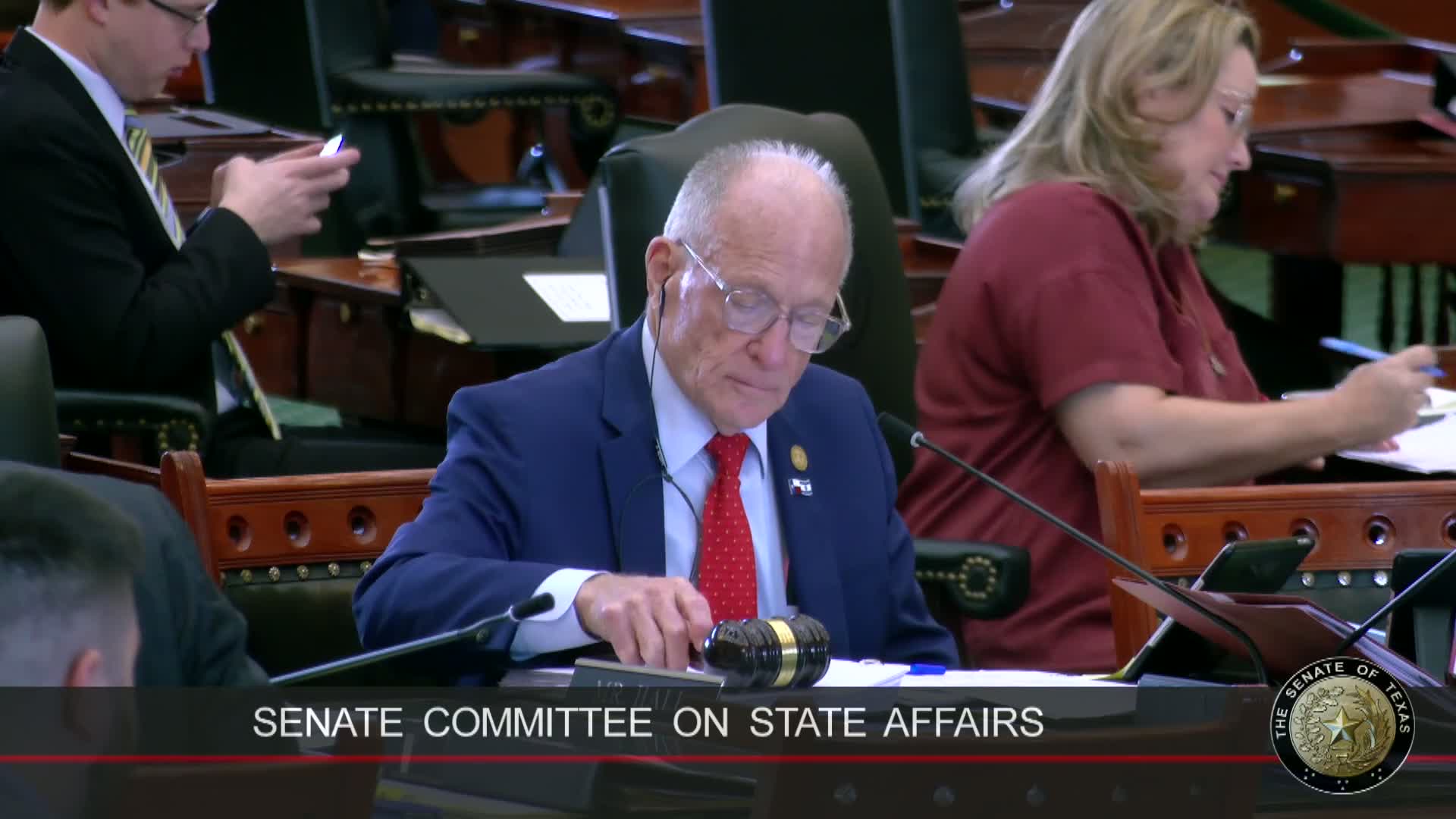
The Committee on State Affairs heard testimony on House Bill 2960, a bill intended to restore longstanding protections for Texas contractors by clarifying venue and choice‑of‑law rules in construction contracts.
Chairman Hughes explained that a 2023 court of appeals decision had held that contractors could waive the state’s venue protections, undermining Texas policy that construction disputes be litigated where the project is located. He said the bill would amend the Business and Commerce Code to make such venue and choice‑of‑law provisions void as against public policy, require disputes to be litigated in the county where the project is located and align venue rules with lien‑filing requirements.
Jennifer Fagan, testifying for the Texas Construction Association, said the association represents roughly 3,000 subcontractors and supports HB 2960 as a correction of the court ruling. “From a subcontractor perspective, the court's opinion allows a completely different entity to waive one of our rights,” she said, describing how a general contractor’s contract with an owner can incorporate out‑of‑state provisions into subcontracts.
Bill Irwin, a board‑certified construction lawyer and registered architect, also testified in support, saying the ruling created complexity and that the bill would be a “simple clarification” to make venue consistent with statutory protections such as lien rules.
The committee opened public testimony, received comments from construction stakeholders and left the bill pending for committee consideration.
Ending: Supporters said the bill restores predictable, local venue for construction disputes and protects smaller subcontractors from contract provisions that shift litigation to distant jurisdictions. No committee vote was taken at the hearing.