Get Full Government Meeting Transcripts, Videos, & Alerts Forever!
Get email alerts on the State Investment Security topic
No spam. Unsubscribe anytime.
Committee Hears Bill to Bar State Funds from Investing in Companies Tied to China, Russia, Iran, North Korea
Summary
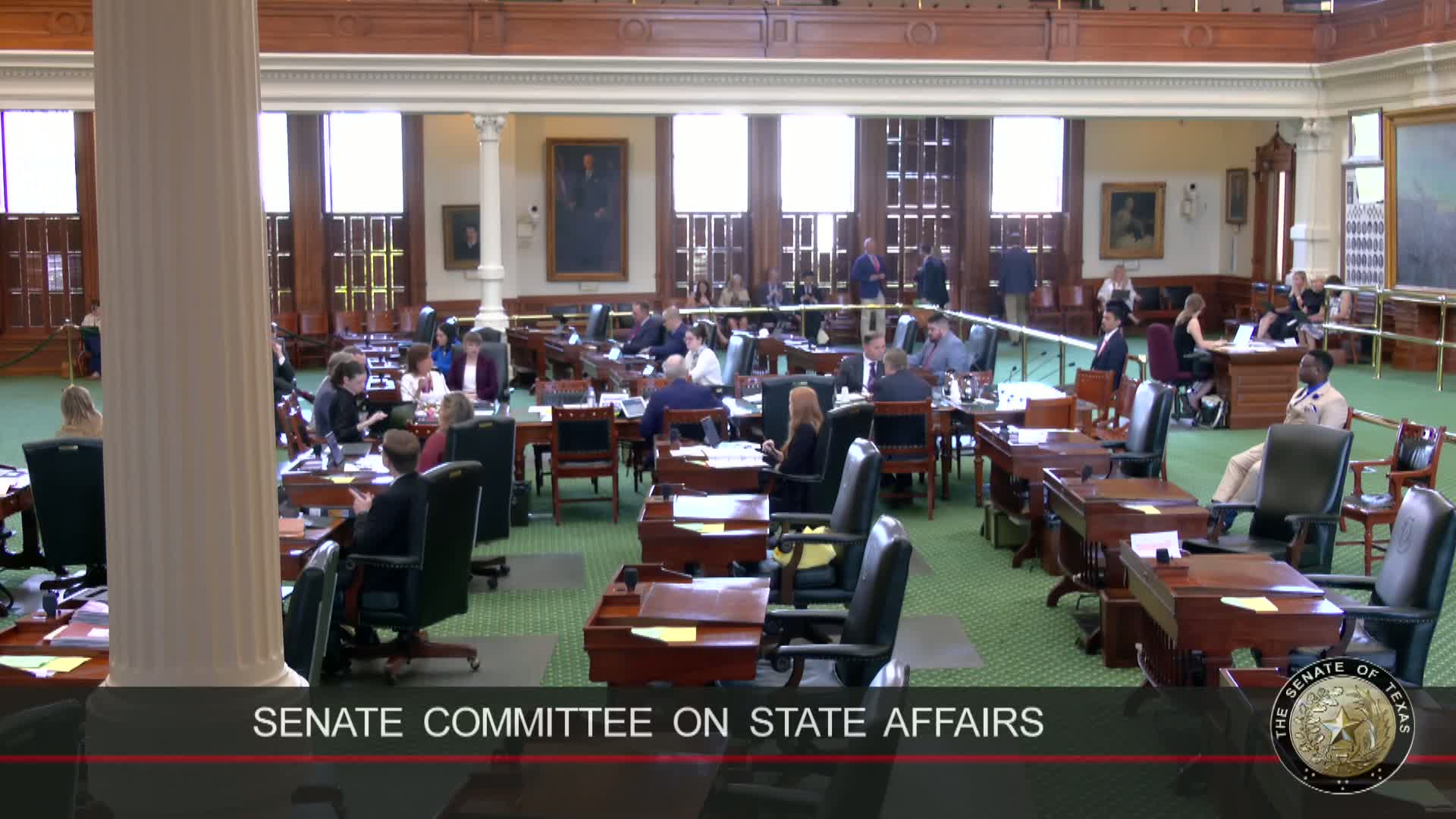
Senators on the Committee on State Affairs heard testimony on House Bill 34, which would prohibit state investment entities from investing in companies based in, owned by or controlled by China, Iran, North Korea or Russia.
Senators on the Committee on State Affairs heard testimony on House Bill 34, which would prohibit state investment entities from investing in companies based in, owned by or controlled by China, Iran, North Korea or Russia and would allow the governor to add other countries of concern.
Senator Hughes, speaking for the bill’s sponsor, said the proposal aims to protect state pensioners and national security. “The Texas permanent school fund lost $250,000,000 when Russia invaded Ukraine,” Hughes said, and HB 34 would prevent similar exposure to adversary states. He told the committee the bill would allow investment entities to delay divestment if an immediate sale would cause “significant financial harm” but that any delay must be reported to legislative leaders and the attorney general.
Supporters from the advocacy group State Armour urged swift action. Kelly Curry, identifying herself with State Armour, said federal pension decisions made on market grounds had left retirement funds exposed to national‑security risk and that Texas and other states — which together manage large sums for retirees — should codify protections. “HB 34 will protect Texas state pension fund holders from the risk of supporting companies that are arming our most dangerous peer adversaries,” Michael Lucci, founder of State Armour, testified.
Witnesses described mechanisms that make some Chinese‑based investments difficult to audit — for example, variable interest entities and holdings routed through offshore shell companies — and argued those structures can complicate fiduciary oversight. Testimony also pointed to financial‑sector incentives: witnesses accused large asset managers of advising higher China exposure when they sought market access.
Committee members asked for data on aggregate exposure and were given a rough estimate by witnesses that state and local pensions’ peak exposure to Chinese securities could have been in the low‑hundreds of billions of dollars (witnesses said roughly $100–$300 billion at peak); witnesses described that estimate as approximate.
The committee did not take a vote; senators signaled they will continue working on a committee substitute to refine timing and reporting requirements. The bill was left pending for further drafting.
Ending: Sponsors asked the committee to leave the bill pending while they prepare a committee substitute and refine the definition of “companies tied to countries of concern.”