Get Full Government Meeting Transcripts, Videos, & Alerts Forever!
Get email alerts on the Ndas Child Abuse topic
No spam. Unsubscribe anytime.
Committee on State Affairs hears emotional testimony on bills to curb nondisclosure agreements in abuse settlements; measures left pending
Summary
Witnesses, including survivors, Catholic Church representatives and child-advocacy professionals, told the Committee on State Affairs that House Bill 748 and Senate Bill 835 would reduce secrecy that shields abusers; the committee left both measures pending after testimony.
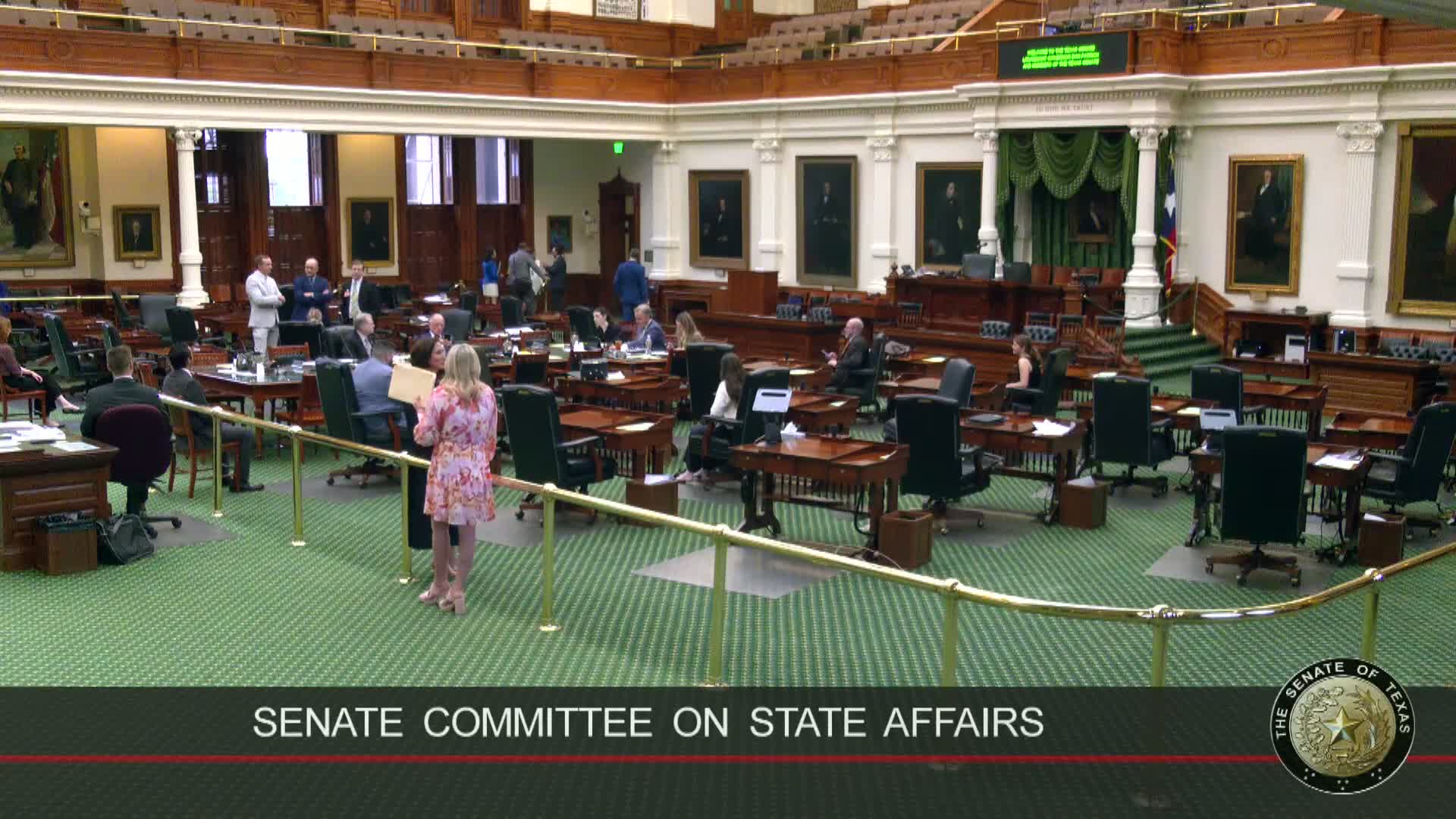
The Committee on State Affairs opened public testimony on House Bill 748 and Senate Bill 835, two measures that would restrict nondisclosure agreements in settlements arising from allegations of child sexual abuse, and left both bills pending after more than two hours of testimony.
Supporters said the bills are designed to prevent organizations and perpetrators from using confidentiality clauses to silence victims and to encourage reporting and full investigation. Jennifer Allman, executive director of the Texas Catholic Conference of Bishops, told the committee the Texas bishops "are committed to using all efforts to end the evil of child sexual abuse," and said the church's current policy is to publish names of clergy with credible allegations while honoring survivors' requests to keep their own names private in limited circumstances. "We will never agree to secrecy of the abuse occurrence," Allman said.
The bills spurred detailed testimony from survivors and professionals who work with abused children. Christina Green, chief advancement and external relations officer for Children's Advocacy Centers of Texas, said her organization represents the state's 70 children's advocacy centers and "we collectively serve over 60,000 new child victims of crime every year." She told senators that secrecy in settlements delays reporting and hinders prosecution and treatment. Survivor witnesses described long-term harm they said nondisclosure agreements aided. Curtis Garrison, who identified himself as both a survivor and a member of the Boy Scouts bankruptcy claimants, said, "Texas needs to pass trade law now and protect children, not predators."
Mental-health professionals and victim advocates framed the bills as a public-safety and therapeutic issue. Dan Powers, a clinical social worker who oversees clinical programs at a children's advocacy center, said nondisclosure agreements reinforce the offender's power and continue victimization by keeping abuse secret. Powers also described removal and reporting procedures used by the Catholic dioceses: an allegation is reported to the Department of Family and Protective Services and law enforcement consistent with chapter 261 of the Texas Family Code, the accused is removed from contact with children pending investigation, and a diocesan review board of professionals makes a credibility recommendation to a bishop.
Senators pressed witnesses on implementation and broader reforms. Several witnesses urged increased funding for investigative staff at agencies such as the State Board for Educator Certification and for full operation of interagency databases established by previous bills to support background and hiring checks. Allman said one legislative gap is funding: she cited an earlier bill that created an interagency "do-not-hire" database but warned it requires full funding for investigators and FTEs to be effective.
Committee discussion focused on bill language about applicability to existing agreements. Committee members and the sponsor debated a provision that would subject agreements entered into before the bills' effective date to different treatments unless a party obtains a declaratory judgment; senators identified and questioned possible retroactivity concerns. No vote was taken; the chair left both bills pending while the committee works with the author and sponsor.
The public record included multiple survivor narratives, organizational perspectives and technical questions from senators. No formal amendments or votes were recorded in the hearing; committee staff and members said they will continue working with the author and sponsor on the bills.