Get Full Government Meeting Transcripts, Videos, & Alerts Forever!
Get email alerts on the Nda Violence Survivor Rights topic
No spam. Unsubscribe anytime.
Senators Hear Harrowing Testimony on Bills to Bar NDAs in Sexual‑abuse Settlements
Summary
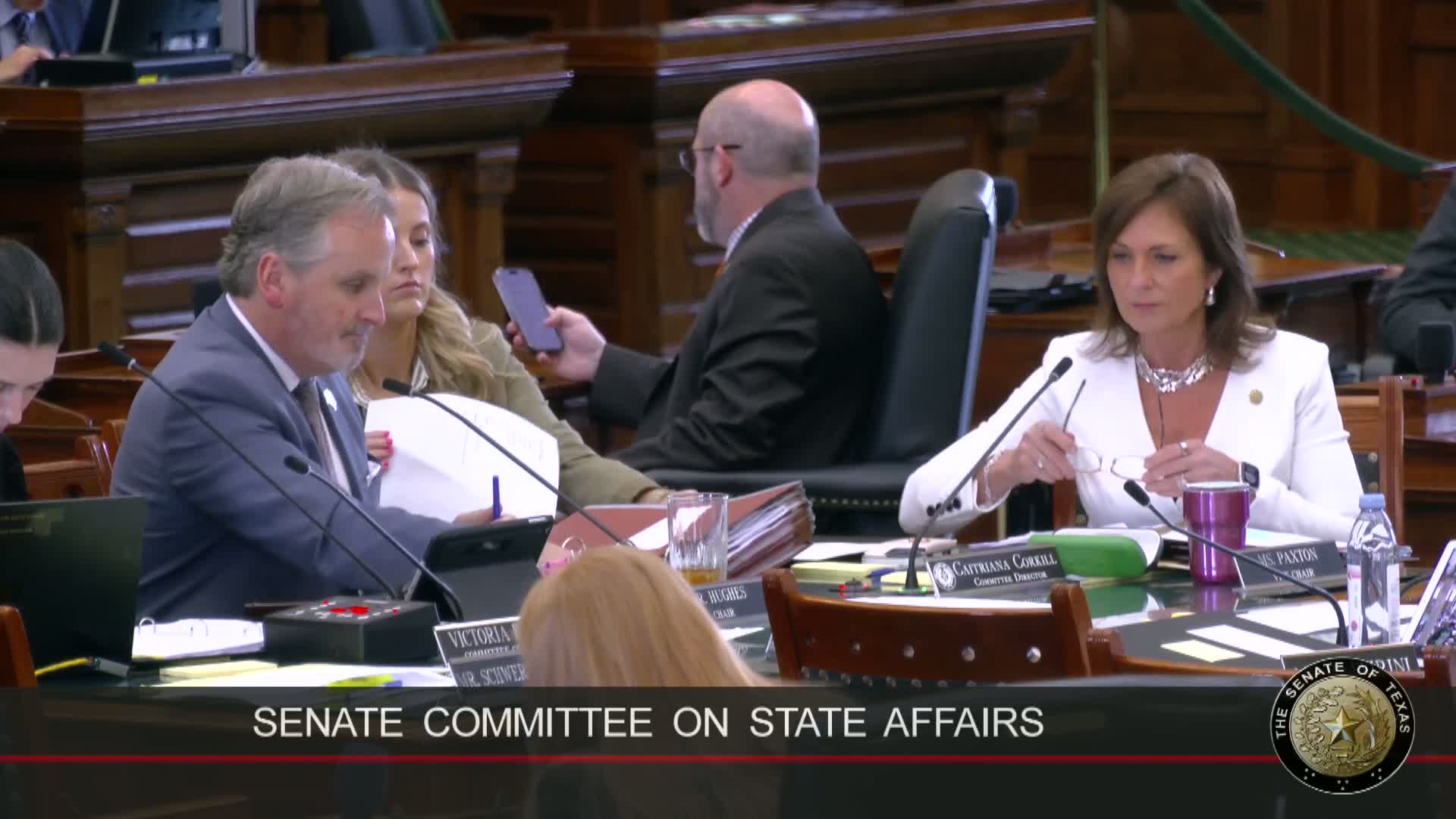
A Senate committee heard emotional testimony Tuesday on legislation — dubbed Trey’s Law — that would bar nondisclosure agreements from being used to silence victims of sexual abuse and child sexual abuse in civil settlements.
A Senate committee heard emotional testimony Tuesday on legislation — dubbed Trey’s Law — that would bar nondisclosure agreements from being used to silence victims of sexual abuse and child sexual abuse in civil settlements.
Sponsor Senator Ken Paxton told the Committee on State Affairs the bill “seeks to eliminate and invalidate the usage of non disclosure agreements to the extent that they force the silence of the voice of a victim in settlement agreements as they relate to the crime of child sexual abuse.” He said the committee substitute clarifies that other settlement provisions (such as payment amounts) may remain confidential while preventing NDAs that conceal abuse.
The bill’s backers framed the change as a public‑safety and victims‑rights measure. “Telling the story is central, essential to the healing journey of victims,” said Elizabeth Phillips, a certified crime‑victim advocate and the sister of Trey Carlock, for whom the bill is named. Phillips said her brother had been silenced by a settlement NDA after alleged abuse at a summer camp and later died by suicide. “NDAs are for trade secrets, not trauma secrets,” she said.
Survivors who testified described seeking accountability, the long ripple effects of abuse on families, and tactics they said institutions used to preserve reputations and silence victims. Cindy Clumashire, who testified she was abused beginning at age 12 and later refused a settlement NDA, said signing an NDA would have denied her a core element of recovery: “Had I agreed to that NDA, [my abuser] would have continued to have power over me.”
Multiple witnesses recounted allegations tied to Kanakuk Ministries and other institutions and said leadership and insurers used confidentiality clauses in settlements. Joe Alarcon, who sued Kanakuk on behalf of his son, described litigation pressure after rejecting an NDA: “They filed motion after motion in federal courts attempting to sanction me personally, to force us into silence.”
Authors of the bills said the legislation preserves victims’ ability to keep identifying information and settlement payment terms private while invalidating provisions that bar victims from disclosing the underlying abuse. Senator Paxton said the House and Senate versions differ: the House bill would apply to victims of any age; the Senate version was focused on child victims but the committee substitute simplifies and clarifies language.
Committee members asked witnesses about choices some survivors make to accept NDAs for immediate financial help. Witnesses said those decisions are often made under duress, while still coping with shame, and that NDAs can be imposed in ways that prevent later changes of heart. “There will be a day when you’re going to need your voice,” testified Joseph Cleveland, who said he withheld abuse for decades and later helped identify dozens of other victims.
The committee did not vote on the bills during the hearing; testimony was extensive and the chair said the measures would be held pending for further work. Several witnesses urged rapid action this session so the legislation could reach the governor.
Ending: Supporters asked the committee to favor the broader House version (HB 748) that would apply regardless of a victim’s age and urged prompt movement toward final passage so survivors could be freed from what they described as secrecy that enables repeat abuse.