Citizen Portal
Sign In

Senate advances bill to bar denial of credit over political or religious views

3247998 · May 8, 2025

Loading...

AI-Generated Content: All content on this page was generated by AI to highlight key points from the meeting. For complete details and context, we recommend watching the full video. so we can fix them.

Summary

The Texas Senate advanced Senate Bill 946, authored by Senator Hughes, to prohibit denial or limit of credit to organizations for reasons other than objective creditworthiness, drawing sustained debate about scope and unintended consequences.

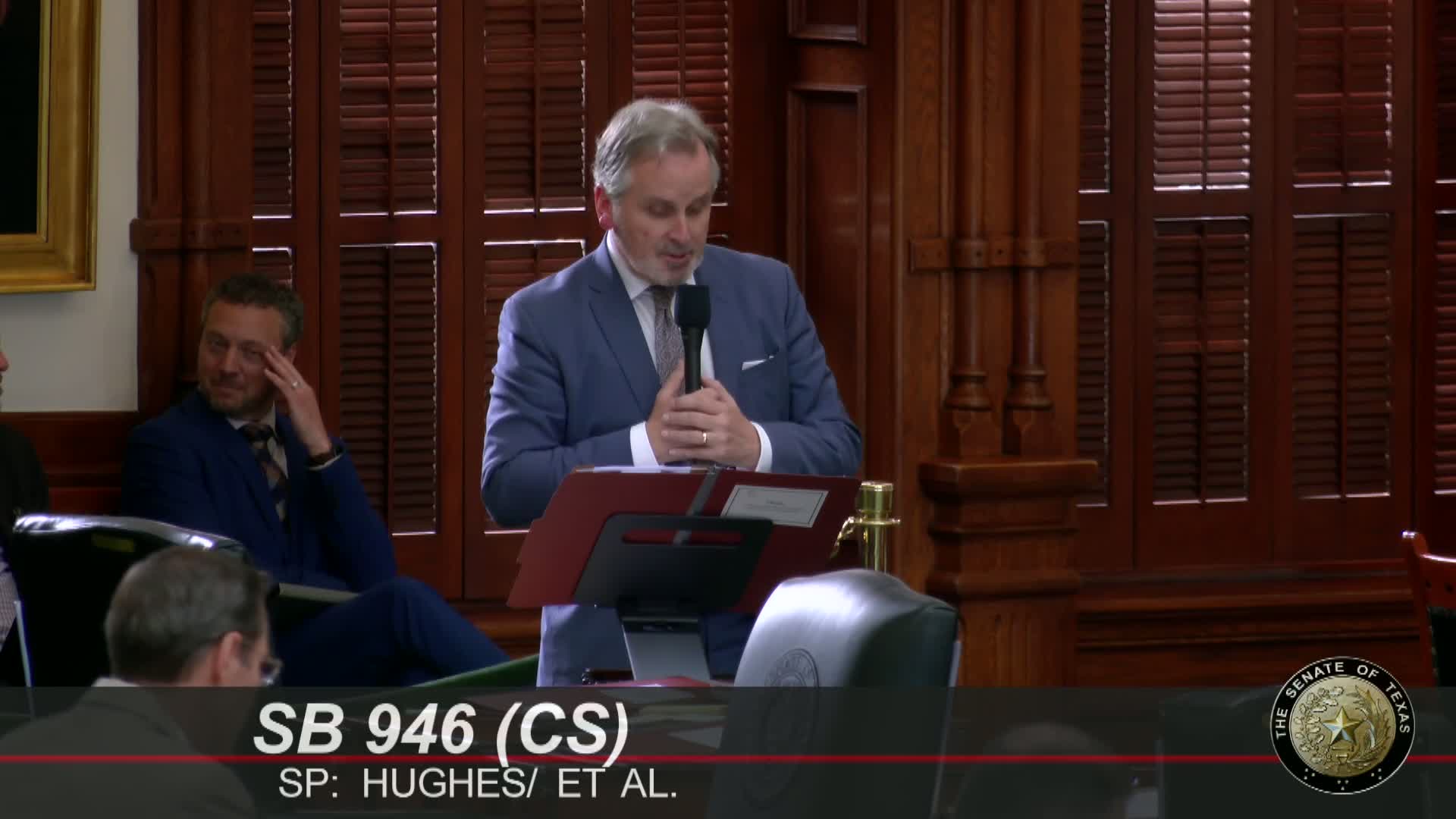
The Texas Senate on May 8 advanced Senate Bill 946, a measure by Senator Hughes that would bar lenders from denying or limiting credit extensions to organizations based on political, religious or social views rather than impartial credit standards.

Senator Hughes, the bill’s author, said, "S. B. 9 46 would protect organizations from being denied an extension of a loan or a limitation to the credit extended for any reason other than failing to meet impartial, non subjective standards that, of course, are established by the lender." He framed the bill as a response to banks and other financial institutions declining transactions tied to political or religious positions, citing cases where lenders said they would not fund oil and gas projects.

The measure drew questions from colleagues about scope and practical effects. Senator Johnson asked, "Are you creating here a fourth protected class that is a nonhuman with certain commercial interests?" and pressed whether the measure would force a small bank to make a loan to an applicant whose activities the bank’s board found deeply objectionable. Senator Hughes replied the statute is aimed at protecting applicants and focusing decisions on creditworthiness, saying the bill "is for the person apply, the person of the entity applying for the loan." Senator Menendez warned that the language could put institutions in the position of being "required to make loans for causes that they find offensive," and pressed the author about interactions with prior state laws that limit contracting with entities that boycott certain industries.

Senators also discussed existing state measures used to pressure financial institutions, and whether the new law would create inconsistent policy signals. Hughes pointed to prior measures, including the state’s approach to banks that decline to finance oil and gas, and said the bill works to keep credit decisions tied to measurable credit standards rather than political tests. Hughes moved the bill to engrossment; the secretary reported the tally as 20 ayes and 11 nays during the engrossment vote.

The bill, as discussed on the floor, applies to organizations applying for credit; sponsors repeatedly said it does not regulate how lenders generally organize their business but aims to prevent credit decisions based solely on noncredit, political or religious considerations. Debate on the floor shows questions remain about how the statute would interact with existing contracting limits and whether protections would extend to small lenders or only to applicants.

Lawmakers left open follow-up by floor amendment and committee staff to tighten definitions and exclusions. The bill was passed to engrossment pending later consideration.