Get Full Government Meeting Transcripts, Videos, & Alerts Forever!
Get email alerts on the Head Start Funding topic
No spam. Unsubscribe anytime.
Federal grant freeze briefly threatened Oregon Head Start programs; state and lawmakers stepped in
Summary
At an informational meeting of the Oregon House Committee on Early Childhood and Human Services on May 8, Head Start leaders told lawmakers a temporary freeze of federal Head Start grant payments earlier this year nearly forced some programs to close.
At an informational meeting of the Oregon House Committee on Early Childhood and Human Services on May 8, Head Start leaders told lawmakers a temporary freeze of federal Head Start grant payments earlier this year nearly forced some programs to close.
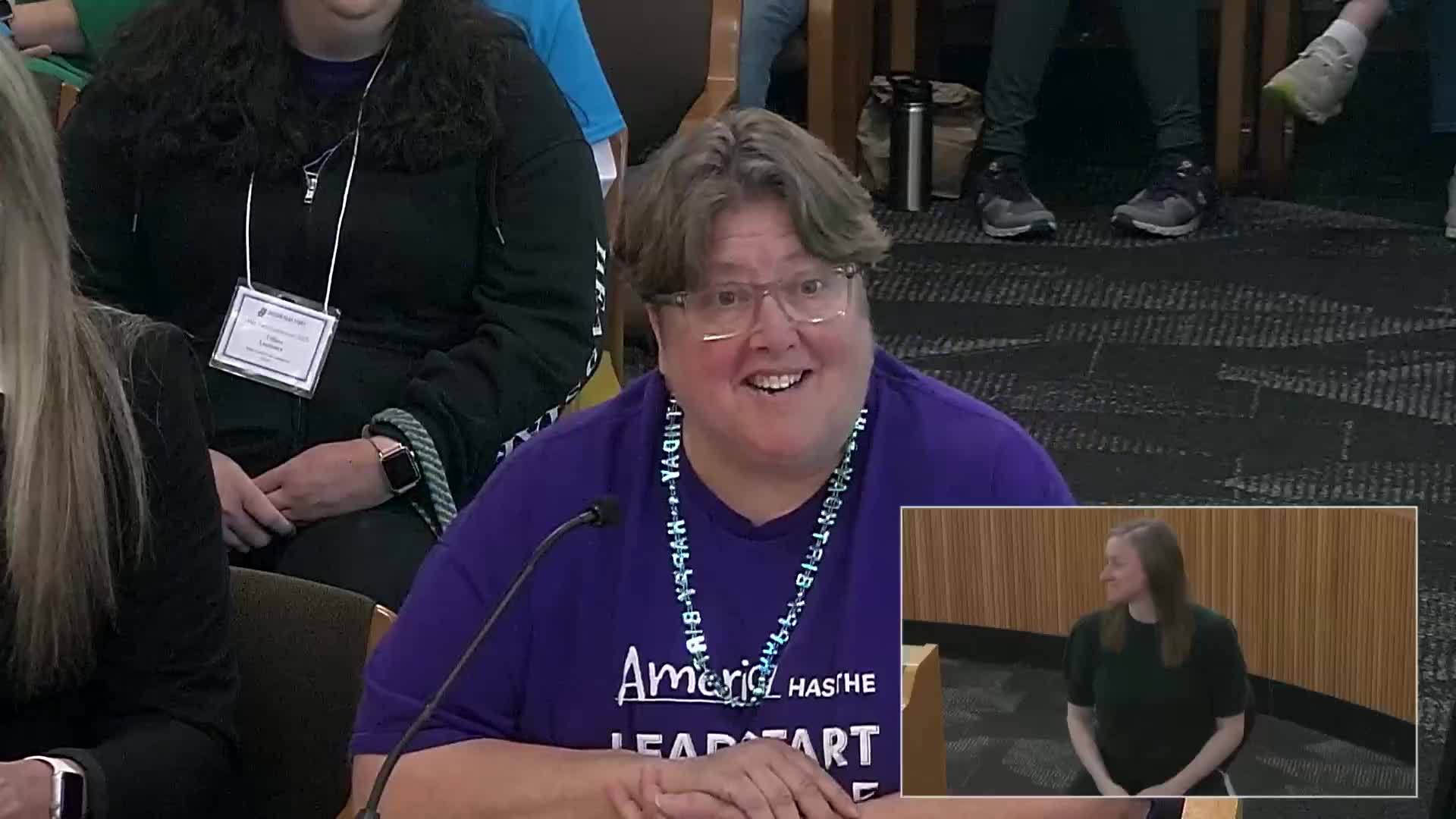
"When our grants were frozen, unable to be able to access fundings," Oregon Head Start President Charlene Stroud said, describing a moment in Washington, D.C., when directors learned they could not access operating dollars. "Directors [were] calling up their sites and closing down sites, talking about laying off people." (Charlene Stroud, Executive Director, Head Start of Lane County; Oregon Head Start president.)
The threat hit programs unevenly. Catherine Clayton, executive director of Southern Oregon Head Start, said a delay would have shut down roughly half her program, leaving about 450 children without services and 193 employees without jobs. "At the eleventh hour, literally 6 hours prior to closure, we were fortunate that our federal funding ultimately came through," she said. (Catherine Clayton, Executive Director, Southern Oregon Head Start.)
Why it matters: Head Start provides early-childhood classroom time, home visiting and family services for low-income households. Stroud told the committee that if the federal program were eliminated, about 5,700 families in Oregon would lose services, roughly 1,700 people would lose jobs, and the state would lose about $118,000,000 in annual economic activity tied to Head Start operations.
State response and partnerships: Witnesses attributed the immediate mitigation to coordinated action by the Oregon Department of Early Learning and Care and outreach to federal lawmakers. Stroud said the department "responded immediately" and that advocacy by Oregon legislators and representatives in Washington helped restore funding access for nearly all sites.
Committee chair Kiara Hartman opened the informational meeting and asked witnesses to describe federal and state interactions. Lawmakers present—including representatives who called members of Congress and the state department—were credited by witnesses with helping preserve operations while federal payments were delayed.
Limits and remaining risks: Witnesses stressed that the fixes were temporary and that uncertainty remains. Stroud and Clayton urged lawmakers to preserve stable federal funding and to maintain state emergency capacity in case of future payment disruptions. The Department of Early Learning and Care was repeatedly credited for coordinating short-term assistance to programs that faced imminent closures.
Discussion vs. formal action: This was an informational hearing; no motions or votes were taken. Committee members and Head Start representatives discussed contingency planning, the economic impact of lost funding and next steps for state support.
Looking ahead: Speakers asked the committee to consider strategies that reduce reliance on last-minute interventions, including stronger state emergency response tools and continued advocacy with federal partners. "We want to keep serving families without fear of sudden closure," Clayton said.