Get Full Government Meeting Transcripts, Videos, & Alerts Forever!
Get email alerts on the Alcohol Regulation topic
No spam. Unsubscribe anytime.
Bill would create retail liquor sales permit, limit minor-decoy checks to once per year
Summary
Supporters say House Bill 2282A would require retail liquor and distillery staff to hold a new retail sales permit, add training, create an administrative fine for sales to minors and move liquor stores and distillery tasting rooms out of the larger randomized minor decoy pool into an annual compliance cycle.
House Bill 2282A would require people who sell distilled spirits in Oregon liquor stores and distillery tasting rooms to hold a new retail liquor sales permit and would limit minor decoy alcohol compliance checks to no more than once per calendar year for permitted individuals.
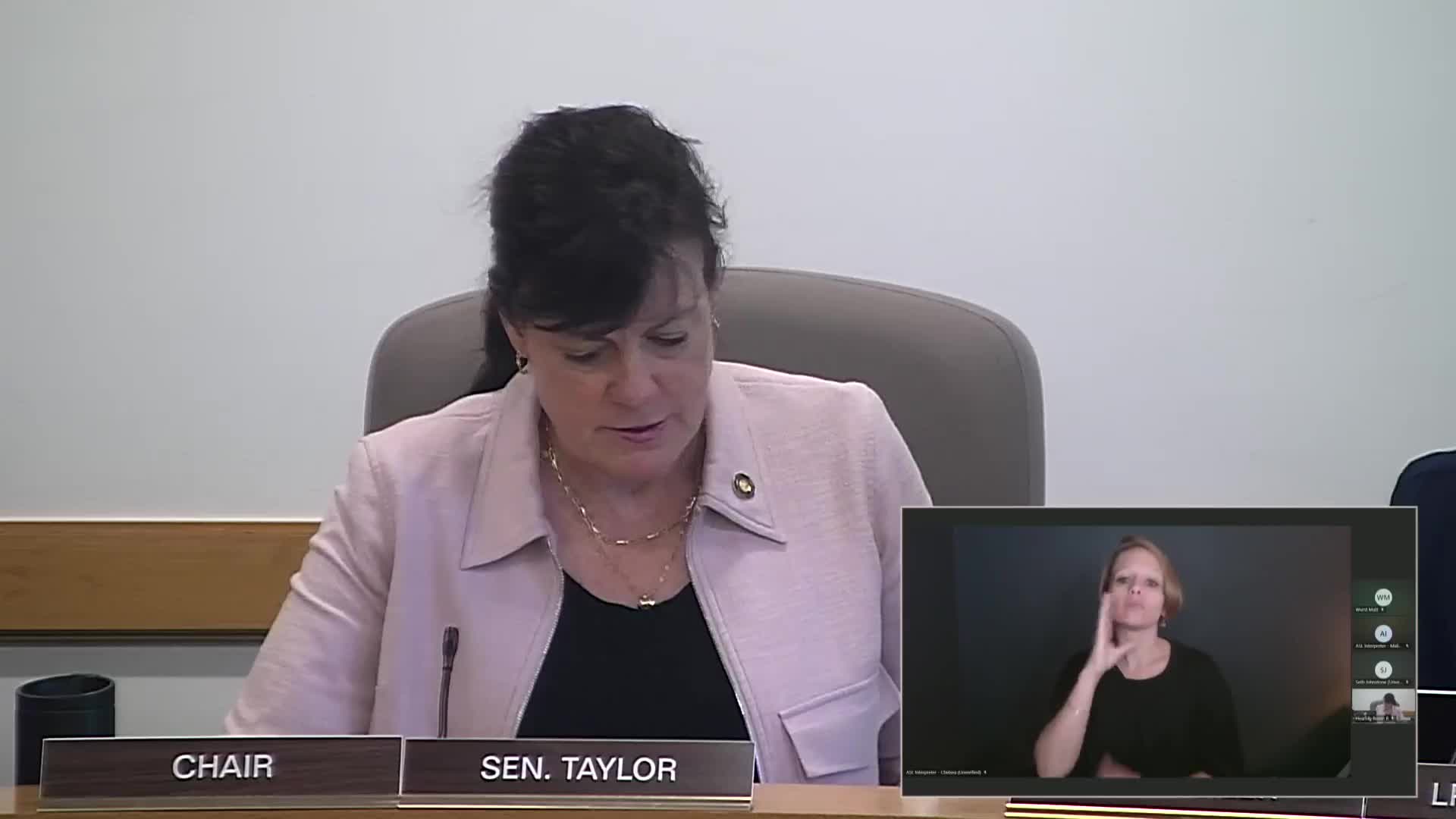
Supporters told the Senate Committee on Labor and Business on May 8 that the change is intended to improve training, target enforcement at state-regulated liquor outlets and give regulators an administrative enforcement tool rather than relying only on criminal citation. The measure is written to become operative Jan. 1, 2027.
The Oregon Liquor and Cannabis Commission’s government relations director, Rosie Shatkin, told the committee the state’s current randomized minor decoy program treats all alcohol sellers as one pool, which she said dilutes enforcement at liquor stores and distilleries. “The minor decoy operation within the liquor control model is a critical tool that the OLCC is used to prevent access to aid restricted products to minors,” Shatkin said.
Oliver Coker, president of the Associated Liquor Stores of Oregon and a liquor store owner, said independently owned liquor stores support the compliance checks and would welcome a permit that includes an educational component and an administrative penalty against individual sellers. Coker testified that, under current practice, fewer than 10% of liquor stores underwent a minor decoy check in 2024 and that distilleries were rarely selected in the random pool; he described the proposal as creating “a separate category for these entities to ensure consistent annual inspections.”
Coker also said retail stores hope to use point-of-sale tools offered by vendors to support ID checks and called on the state to adopt that technology as part of the new system. Both proponents said the measure would not change that liquor stores remain state-contracted outlets in Oregon’s controlled distribution system for distilled spirits.
The bill as described to the committee contains no revenue impact and a minimal fiscal impact, according to the staff explanation. Committee members opened and closed a public hearing on the measure during the session; no formal committee action on the bill was recorded during this hearing.
Supporters said the measure is intended to improve public-health protections for minors while offering a measured administrative penalty for individual sellers who fail a compliance check, rather than immediately resorting to criminal citation.