Get Full Government Meeting Transcripts, Videos, & Alerts Forever!
Get email alerts on the Fire And Ems Funding topic
No spam. Unsubscribe anytime.
Nottoway supervisors open hearings to create countywide fire and EMS districts ahead of possible tax levies
Summary
The Board of Supervisors opened public hearings to establish a countywide fire district and a separate emergency services district as a legal step toward future levies to fund fire and emergency medical services; residents and providers urged action while raising concerns about affordability and service guarantees.
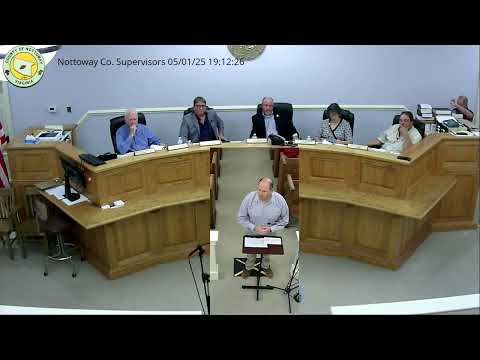
At a meeting of the Nottoway County Board of Supervisors, members opened public hearings to establish a countywide fire district and a countywide emergency services district as prerequisites for possible future tax levies to fund fire and emergency medical services.
The hearings set the stage for a proposal that board members said would let the county levy taxes in future budget years to pay for staffing, equipment and operations for fire and EMS. Supervisor Bowen said the two ordinances are separate by attorney advice: one ordinance for fire and one for EMS, and levies, if set, would be apportioned each year as part of the county budget.
The hearings drew dozens of residents, fire chiefs and EMS providers who described rising costs, shrinking volunteer ranks and frequent high call volumes. Chief Tomer, identified as a fire chief and longtime volunteer, argued the county cannot “continue to survive” on volunteer labor alone: “A simple fire truck is almost three‑quarter million dollars. Outfitting a firefighter is over $5,000,” he said, urging supervisors to consider a levy and a volunteer discount similar to personal property tax breaks.
Several speakers described household hardship if taxes rise. Damien Roe, a pastor, said many residents struggle to afford basic medicines and food: “people are hurting… I just don’t know how much more of the citizens can stand further tax increases.” Lifelong resident Abby Messer said property owners would shoulder most of any levy and urged the board to “think about some more creative ways to try to share the burden across everybody in the county.”
Health care provider Cristy Romano, a certified EMT, warned about uneven 911 coverage and variable levels of prehospital care. Romano said Nottoway County Emergency Services currently operates a single 911‑designated ambulance for the county at times and that staffing and contractual obligations could leave the county without a reliably equipped response: “We deserve to know that when we dial 911, help will arrive timely, equipped, and fully prepared to save lives.”
Multiple speakers representing fire and rescue organizations and longtime volunteers urged the board to act quickly while preserving accountability for how funds would be used. Pete Morrison, an EMS veteran, summarized the tradeoff bluntly: “This is a big crap sandwich and we’re all going to take a bite,” and urged cooperation among providers and the county.
Board members and staff said they are compiling data and options and plan more public discussion. Supervisor Bowen outlined a timeline: a public work session on May 8 to review options and a presentation by a contractor called Emergency Services Solution (ESS), possible public hearings May 22, and a budget adoption timeline that could include action on May 29. Norton said any levy would include both real property and personal property, and cautioned that state law requires the county to provide reliable 911 services.
Discussion versus decision: the board opened and subsequently closed public hearings on the ordinances; no levy rates or budget appropriations were set. Supervisors repeatedly emphasized the hearings were an initial legal step and pledged further public work sessions and a data presentation before any final vote.
The board scheduled additional public work sessions to present financial scenarios and estimates and said it would deliberate allocation details — for example, whether existing general fund appropriations would be reduced if a levy is approved. Supervisors warned the public that proposals would aim to ensure an equipped and timely response to 911 calls and that funding choices will be discussed in forthcoming public meetings.
Next steps: the board will review options at a May 8 work session, receive the ESS presentation and additional data, and hold further public hearings before any tax levies are adopted.