Get Full Government Meeting Transcripts, Videos, & Alerts Forever!
Get email alerts on the Chiropractic Board Budget Fees topic
No spam. Unsubscribe anytime.
Education subcommittee advances chiropractic board budget, ratifies fee increases
Summary
The Education Subcommittee of the Joint Committee on Ways and Means on May 8 voted to move two measures affecting the Oregon Board of Chiropractic Examiners to the full Ways and Means Committee: SB 5507 (the agency's budget) and SB 5544 (legislative ratification of fee increases the board adopted by rule).
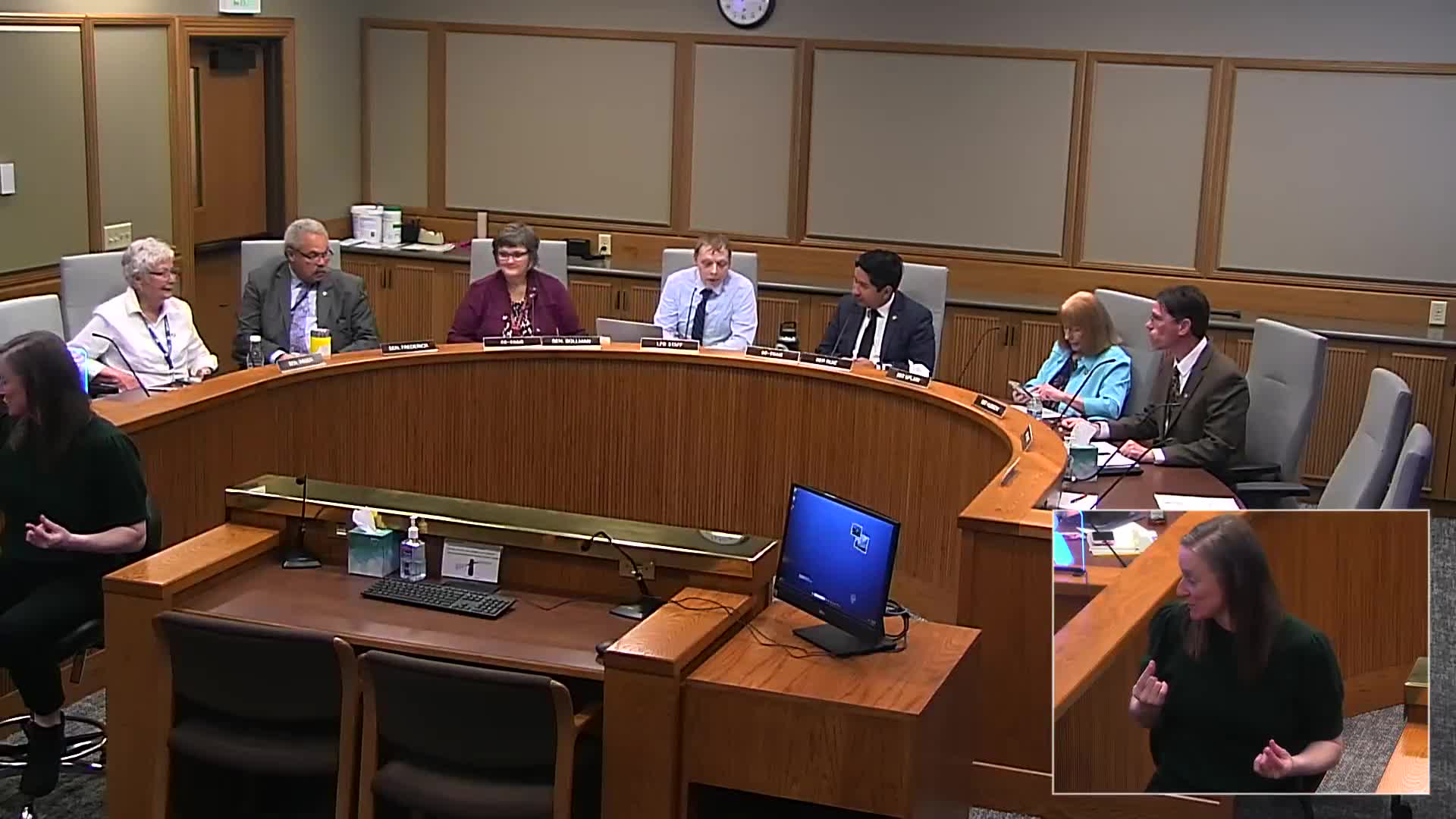
The Education Subcommittee of the Joint Committee on Ways and Means on May 8 voted to move two measures affecting the Oregon Board of Chiropractic Examiners to the full Ways and Means Committee with due-pass recommendations: SB 5507, the board's budget bill, and SB 5544, a legislative ratification of fees the board adopted by administrative rule. Michael, a Legislative Fiscal Office analyst, presented the recommendations to the panel.
Why it matters: The actions change the board’s staffing, fee structure and performance targets. The measures are intended to align spending with available licensing revenue, restore some staff after cuts, and ratify fee increases that the board adopted administratively and that would otherwise lapse without legislative ratification.
LFO recommendation and budget changes: Michael, Legislative Fiscal Office analyst, told the committee the recommended budget for SB 5507 is $2,475,586 in other funds and includes five positions and 4.75 full-time equivalent positions. As he said, “Package 70 is a revenue shortfall package that reduces the board's expenditure limitation by $1,053,269 other funds to balance expenditures with available revenues. This package eliminates 3 positions, 3 FTE and various services and supplies including legal services, information technology, data processing, board member stipends, shift differentials, in state and out of state travel and employee training.”
A restore package (package 101) assumes a 30% fee increase and is estimated to generate an additional $636,898 in other funds revenue in the 2025–27 biennium; that package increases expenditure limitation by $661,643 to restore two positions (2.0 FTE) and most services and supplies that were cut in the revenue shortfall package. Michael said the restore “does not restore an investigator 2 position and IT services.”
Facility, contractor and performance changes: LFO also recommended package 801, which “permanently reduces the board's rental facility costs by $120,087 due to the board no longer renting a physical office, conducting all board meetings remotely and having no plans to hold in person meetings in the future.” That package increases one-time professional services spending by $100,000 to hire an independent contractor investigator to make up for the eliminated investigator position. Because the investigator 2 was not restored, the Legislative Fiscal Office recommended changing key performance measures to allow more time for investigations: KPMs that previously tracked investigative reports and initial decisions within 120 days were recommended to be changed to 150 days.
Fee ratification (SB 5544): Michael explained that SB 5544 would ratify fees the Board of Chiropractic Examiners already adopted through administrative rulemaking. As Michael said, “Under ORS 291.0551 e, all new agency fees or fee increases adopted between the date of adjournment sine die of a regular legislative session and the date of adjournment sine die of the next regular legislative session are rescinded upon adjournment sine die of the of the next regular legislative session unless the fee is authorized by enabling legislation.” He listed the most significant changes legislatively ratified by the dash-1 amendment, including: initial application and background check for chiropractic physicians from $166.25 to $495; initial license from $180 to $234; active annual registration from $510 to $663 (senior active $378 to $491.40; inactive $270 to $351); changes to delinquent renewal and civil-penalty language that remove prior caps (for example, the delinquent fee changed from $125 per week not to exceed $500 to $150 per week with no cap). Michael said these new and increased fees are projected to generate an additional $636,898 in other funds revenue to sustain operations through the 2025–27 biennium.
Questions and discussion: Representative McLean, Senator Weber and Senator Frederick urged caution about extending investigative timeframes and noted the connection between staffing levels and timeliness. Senator Weber said he was concerned that increasing the KPM window would add to a public perception that complaints are not addressed timely. Senator Frederick noted the practical effect of fewer investigators: “You just can't decide, you know, that you're going to get some things done if you don't have the people to do it.” Committee members also discussed the board’s decision to meet remotely and whether Department of Administrative Services space would be available if the board wanted to hold in-person meetings; Michael said DAS would have space available.
Motions and outcome: A motion to adopt the LFO recommendation on SB 5507, including the dash-1 amendment reflecting $2,475,586 other funds and five positions (4.75 FTE), was offered on the record and carried with no objections. The committee adopted the LFO recommendation on the related KPM changes (moving 120-day targets to 150 days) after discussion and with no objection. For SB 5544, the committee adopted the dash-1 amendment to ratify the fee changes and moved the bill to the full Ways and Means Committee with a due-pass recommendation; the record includes a committee comment that the fee increases originated with the Board of Chiropractic Examiners rather than the state.
What’s next: Both measures were sent to the full Ways and Means Committee with due-pass recommendations; committee members volunteered to carry the measures to full committee and, where applicable, to floor consideration.