Get Full Government Meeting Transcripts, Videos, & Alerts Forever!
Get email alerts on the Domestic Wells And Agriculture topic
No spam. Unsubscribe anytime.
Committee adopts amendment and advances bill allowing limited commercial gardening on domestic wells
Summary
The Senate Committee on Natural Resources and Wildfire adopted an amendment and advanced House Bill 3,372 A after public testimony from small farmers, market advocates and conservation districts.
The Senate Committee on Natural Resources and Wildfire adopted an amendment and advanced House Bill 3,372 A after public testimony from small farmers, farmers‑market advocates, conservation districts and residents.
The bill clarifies that domestic wells may be used to irrigate a commercial garden of up to one-half acre using up to 3,000 gallons per day, and it preserves a 5,000-gallon-per-day cap on combined commercial and industrial uses. The committee adopted the dash A11 amendment, which excludes locations where cannabis-family plants are grown unless the grower is licensed under Oregon law and temporarily excludes the Lower Umatilla Basin Groundwater Management Area from the exemption until Jan. 2, 2028.
Supporters — including Alice Morrison of Friends and Family Farmers, Michelle Townsend of the Oregon Farmers Market Association and small-scale growers — said the change fixes a longstanding statutory ambiguity that has led to enforcement actions. Morrison said the Oregon Water Resources Department has “shut down over a hundred gardeners across the state” in recent enforcement actions where agency staff concluded commercial irrigation was not allowed under the existing language. She described HB 3,372 as a “common sense clarification” that would allow small farmers and homestead gardeners to sell surplus produce at markets without risking enforcement.
Opponents and questioners raised concerns about groundwater impacts in areas with shallow aquifers. Aaron Cook, a Jackson County resident, said allowing an additional 3,000 gallons per day on a half-acre could, in some hydrologically vulnerable areas, “run their neighbors out of their homes” by depleting shared groundwater resources. The committee also heard implementation questions from the Oregon Water Resources Department about timing and outreach to water masters and users.
Representative Mark Owens, a House sponsor, said the dash A11 amendment was added to address enforcement and public‑health concerns: it preserves the exemption for licensed hemp and for licensed cannabis producers who already hold water rights, while preventing the exemption from being used to shield unlicensed cannabis grows. Owens said the Lower Umatilla exclusion was requested by local stakeholders and sunsets on Jan. 2, 2028.
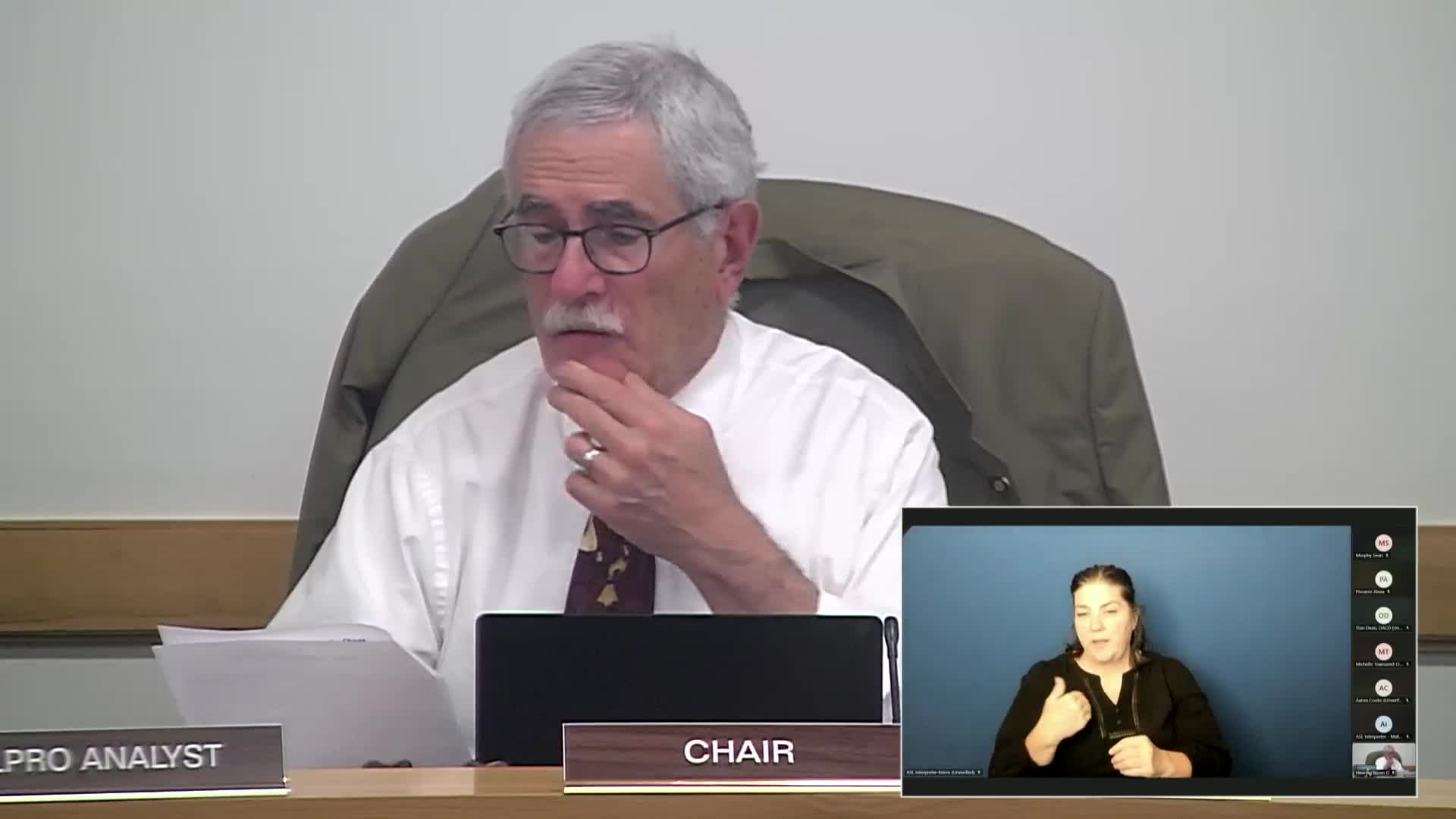
Chair Golden moved to adopt the dash A11 amendment; the committee voted 4–1 to adopt it. Vice Chair Nash moved the bill as amended to the floor with a due-pass recommendation; the committee voted 5–0 to advance HB 3,372 A as amended.