Get Full Government Meeting Transcripts, Videos, & Alerts Forever!
Get email alerts on the Assistive Technology Repair Prior Authorization topic
No spam. Unsubscribe anytime.
Witnesses say prior-authorization delays strand wheelchair users; bill would require 72-hour decisions
Summary
At a May 8 House committee hearing, advocates testified that delays in Medicaid prior authorization for repairs to complex rehabilitation technology leave Oregon residents unable to work or at health risk; Senate Bill 549A would require the Oregon Health Authority or coordinated care organizations to decide repair requests within 72 hours.
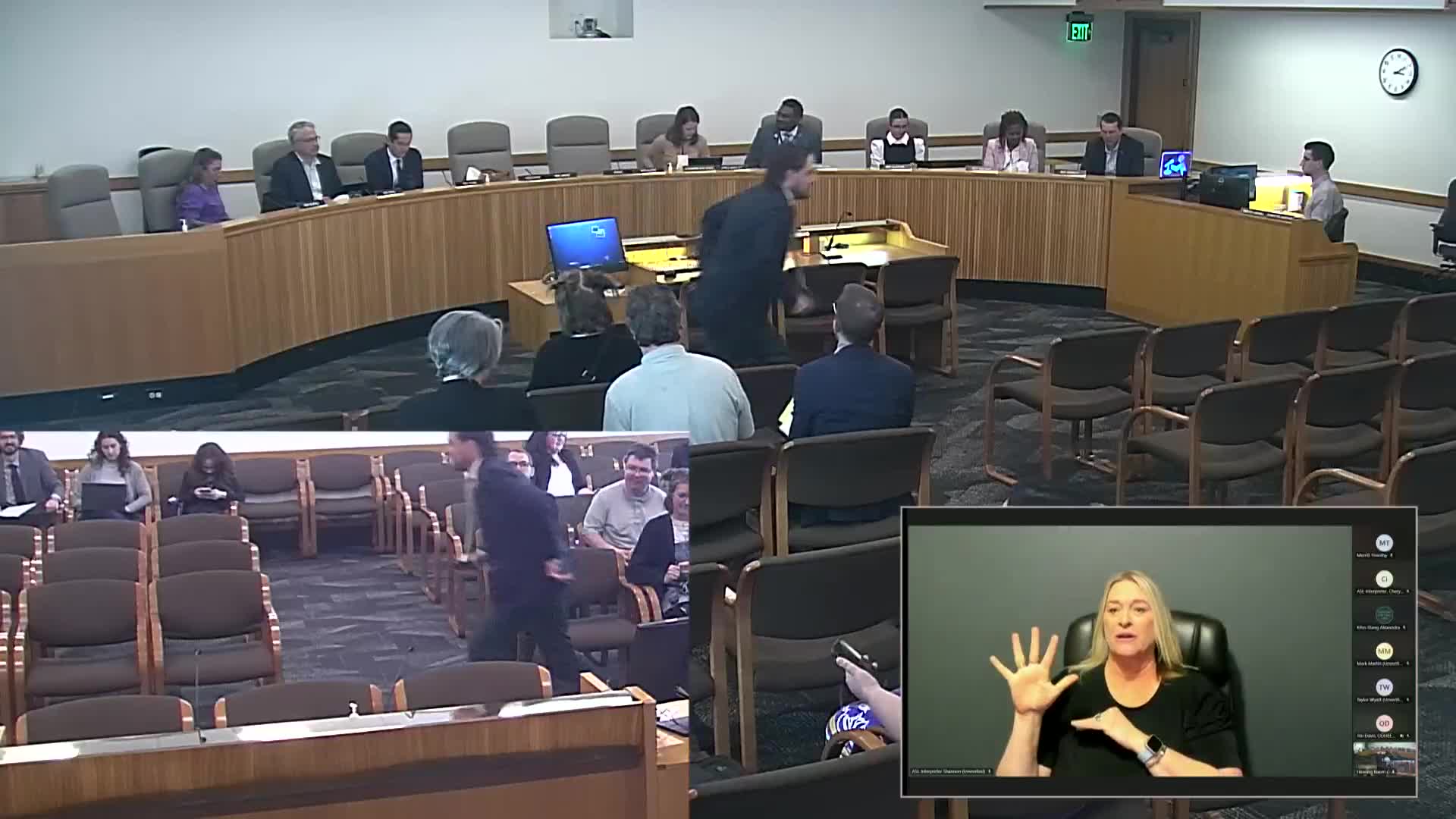
The House Committee on Behavioral Health and Health Care heard public testimony May 8 on Senate Bill 549A, which would require the Oregon Health Authority (OHA) or a coordinated care organization (CCO) to respond to prior-authorization requests for repairs to complex rehabilitation technology within 72 hours.
Advocates said the change is urgent because delays in repairing wheelchairs and other assistive devices can confine people at home, jeopardize safety and cost jobs. "Everyone deserves the tools they need to be fully included in society," Matthew Sears, testifying for the Oregon Developmental Disabilities Coalition, told the committee.
The bill’s backers described repeated, long delays under current practice and testified that faster prior-authorization decisions would reduce harms. Emily Grama, executive director of The Arc Oregon, said she and others have "heard from people that it took over 3 months to obtain prior authorization" and that some repair processes have left people without mobility for months.
Several witnesses gave personal and survey-based examples. Sears asked lawmakers to review video testimony from Kelsey Hargroves, a person with a developmental disability who lives in Klamath Falls and "uses a power wheelchair and works at Burger King. Without her chair, she cannot continue to work," Sears said. He and others said prior-authorization delays left Hargroves without a working chair for nearly six months.
Charlie Fisher, state director at OSPURG, described national survey results his group collected: "93 percent needed their chair serviced in the last year and 68 percent had to wait 4 more weeks for that repair. And some had to wait more than 24 weeks." Jim Davis, co-chair of the Oregon Disability Health and Employment Equity Coalition, said repairs can be required even for "minor repairs" but still face lengthy authorization processes that prevent immediate fixes.
Providers and suppliers described operational inefficiencies. Montana Llewellyn of the National Coalition for Assistive and Rehab Technology said suppliers sometimes have parts on hand but cannot install them until prior authorization clears. Henry O'Keefe, representing a coalition that includes CCOs, said the industry currently has a longer authorization window: "Right now, we have 14 days to authorize a prior auth. We're moving to 72 hours." He added that CCOs must also balance federal fraud, waste and abuse obligations.
Committee members asked several technical questions, including whether the 72-hour requirement would eliminate all delays; witnesses said it would shorten but not entirely remove other sources of delay such as parts availability. Representative Deal described the current process — a technician diagnosing a dead battery but having to leave and return after authorization — as "very, very wasteful." Representative Diehl referenced federal enforcement cases elsewhere as a caution about fraud risks.
There was no formal committee vote during the hearing; the session was a public hearing to gather testimony and questions. Witnesses on both sides said they planned continued negotiation during the interim to address remaining issues, such as immediate on-site repairs when a part is available.
Ending: The committee closed the public hearing on SB 549A after testimony and questions and proceeded to the next bill. No formal action or vote was recorded during the session.