Get Full Government Meeting Transcripts, Videos, & Alerts Forever!
Get email alerts on the Family Law False Allegations topic
No spam. Unsubscribe anytime.
House Judiciary opens hearing on bill that raises penalties for false child abuse reports
Summary
The House Judiciary Committee heard public testimony on SB 385A, which would escalate penalties for knowingly making false reports of child abuse; proponents described family custody disputes and harms to children and accused parents, while lawmakers asked for data on prevalence.
The House Committee on Judiciary opened a public hearing on Senate Bill 385A, which would increase criminal penalties for knowingly making false reports of child abuse, on a motion from the Senate floor that carried 27 yeas and three excused, Sen. Kim Thatcher told the committee.
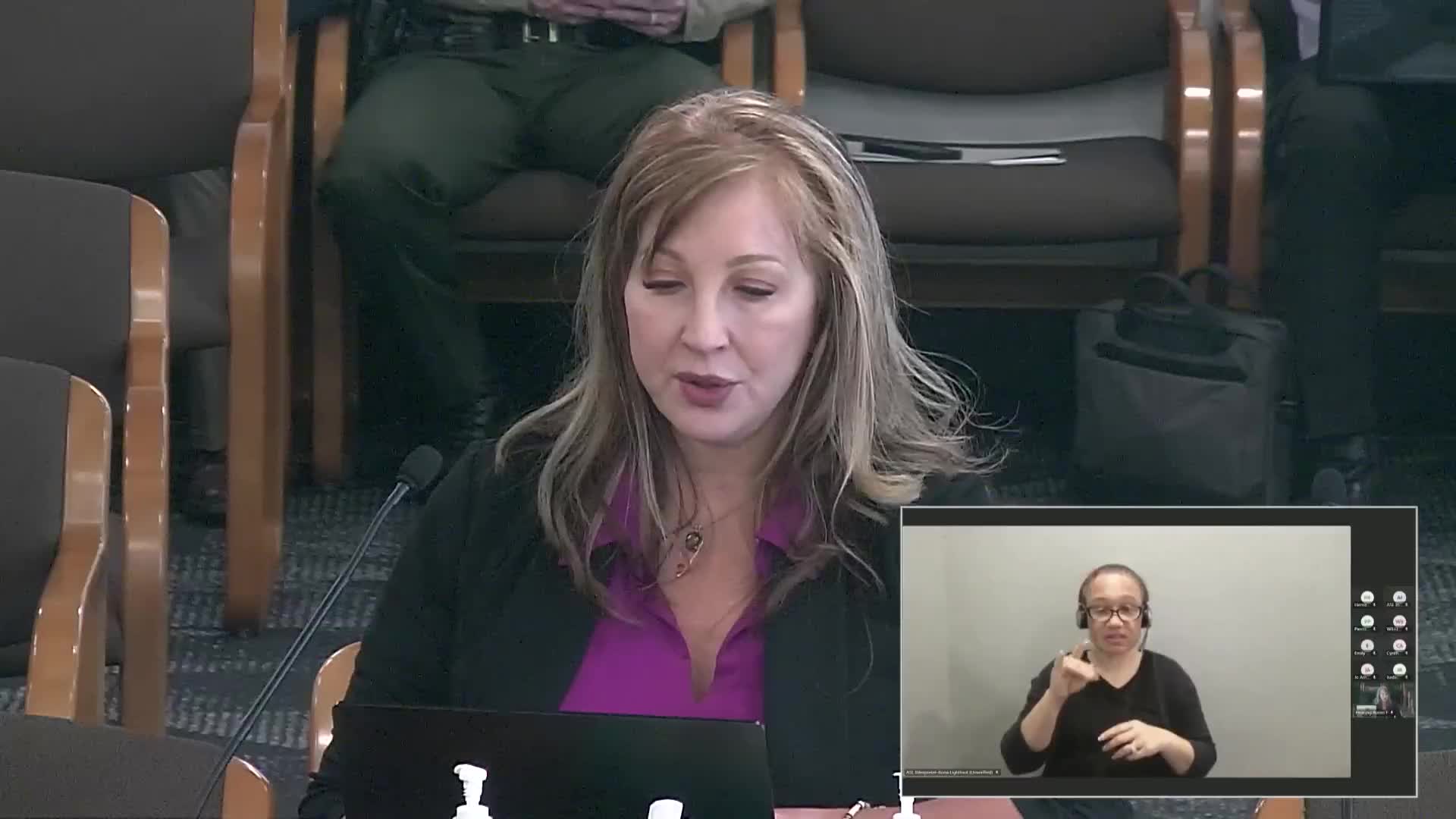
Sen. Kim Thatcher, who presented the bill and identified herself as representing Senate District 11, said the measure would “elevate[] the severity of the offense from a class A violation to a class B misdemeanor for a first offense, a class A misdemeanor for a second offense, and a class C felony for a third or subsequent offense.” She said the measure “takes effect on the 90th day following adjournment sine die.”
The bill’s supporters told the committee that false allegations most often arise in family law conflicts. In written testimony the committee read into the record, Aurora Shull said she and her family had been “negatively affected by false reports of child abuse,” and that false allegations are “usually made in an effort to influence a custody, parenting time, visitation, or child support decision.” Shull added that such allegations “weaponize our judicial system” and can cause “lifelong emotional and psychological consequences” for children and significant harms for the accused.
Shull’s letter also warned of financial costs to the state from investigations and court involvement and urged lawmakers to provide “stronger consequences for false accusers.” Thatcher said she would read Shull’s written testimony into the record because the author could not attend in person.
Committee members asked whether there are reliable statistics on how often false reports occur. Thatcher said she could not find figures from district attorneys and described prevalence as largely anecdotal: “It's really hard to find because even when it's a violation, I could not find numbers from the DAs on how many times this is actually pursued as a violation.” She offered to ask the Oregon Judicial Department or Criminal Justice Commission to pull data on violations filed in court.
No committee vote was taken on SB 385A during the hearing; the public comment portion closed at the end of the session. The measure was described to the committee as having passed the Senate floor vote 27–0 with three excused, but committee members requested follow-up about how often the existing violation is prosecuted and whether civil remedies exist for people who are falsely accused.
Lawmakers and witnesses confined their discussion to testimony and clarifying questions; committee staff and members did not adopt amendments or take formal action at the hearing.
Looking ahead, committee members asked staff to attempt to gather prosecutorial data and other factual materials to better assess the bill’s practical effect if it proceeds to a work session.