Get Full Government Meeting Transcripts, Videos, & Alerts Forever!
Get email alerts on the Professional Discipline topic
No spam. Unsubscribe anytime.
Committee hears bill to limit public display of minor counselor discipline after 3–5 years
Summary
The Senate Committee on Healthcare on May 8 heard public testimony on House Bill 2016 A, which would direct the Oregon Board of Licensed Professional Counselors and Therapists to create a schedule of violations and remove some disciplinary information from public-facing websites three to five years after resolution.
The Senate Committee on Healthcare on May 8 heard public testimony on House Bill 2016 A, which would direct the Oregon Board of Licensed Professional Counselors and Therapists to create a schedule of violations and remove some disciplinary information from public-facing websites three to five years after resolution.
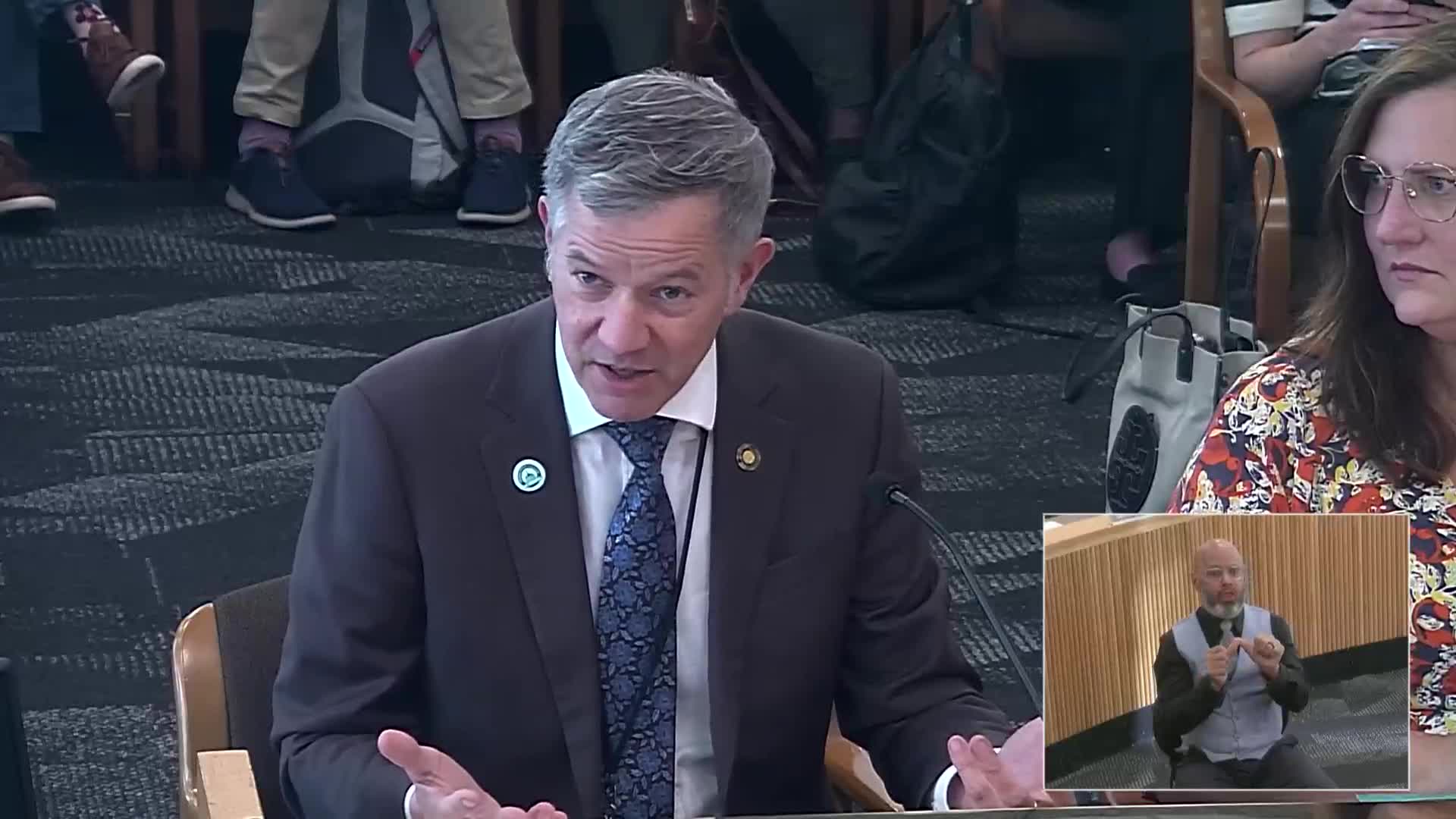
The bill’s sponsor, Representative Rob Nosse, said the measure aims to distinguish “egregious violations that present a danger to the public” from “minor” matters that were resolved through restitution, training or fines and that should not “constantly live on and on on a website.” He said the change would not remove information from a licensure verification database intended to confirm licensure status.
The bill drew direct testimony from counselors and employers who said long-lived public PDFs and search-engine results have harmed clinicians’ practices. Linda K. Burlingen described being listed online in ways that mischaracterized discipline; she said a PDF that appeared in web searches caused cancellations and limited her ability to work with certain client populations. “It’s kind of like having a scarlet letter on your chest,” she said.
Larry Connor, legislative chair for the Oregon Mental Health Providers PAC and a longtime counselor, urged the committee to adopt a model used by other health professions that sets a time limit for public listings of less-serious discipline. “This is not about covering up seriously destructive behaviors; rather it’s focused on the mistakes that licensees can make that can be corrected,” he said.
Practices reported operational harm from misleading online summaries. Patrick Kulzynski, a practice manager, said a formatting error in a board PDF led Google to present a license as “revoked” when it was not; Kulzynski said the error produced cancellations and client loss for the counselor involved. He also said the formatting problem sometimes made serious offenses appear minor and vice versa, misleading the public.
Committee members sought clarity about the bill’s scope. Chair Patterson asked whether “sexual misconduct” would be excluded; Representative Nosse replied “Correct,” indicating the bill targets non‑suspension, non‑revocation infractions. Committee staff explained the bill requires retained public licensure‑verification capability but allows removing some items from broadly indexed, searchable public materials.
Supporters said the bill was negotiated with the National Alliance on Mental Illness and with the board to preserve public access to discipline information through the board’s search tool while preventing indefinite, widely indexed listings for minor matters. Opponents were not a substantial part of the public record during this hearing.
The committee closed the public hearing with the bill remaining under consideration; no formal committee action or vote was recorded during the hearing.
The bill’s next steps would be a work session where committee members may consider amendments or a recommendation to the full Senate.