Get Full Government Meeting Transcripts, Videos, & Alerts Forever!
Get email alerts on the Infrastructure Power Backup Generators topic
No spam. Unsubscribe anytime.
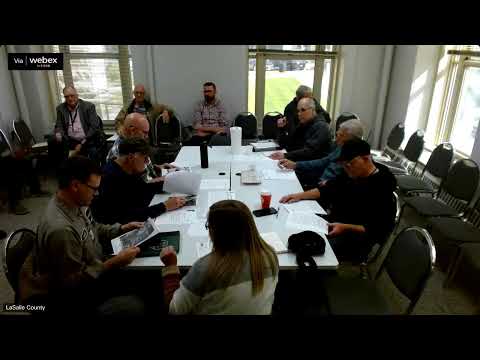
LaSalle County committee votes to apply for city permit to site backup generator; debate centers on size, location and legal risk
Summary
LaSalle County property committee authorized staff to apply to the city for a building permit to install a backup generator for the county complex and courthouse. Committee members discussed generator sizing (smaller unit vs. a 200 kW system), potential off-site siting, budget set‑asides and the likelihood of legal resistance from the city.
LaSalle County property committee members voted to seek a city building permit to install a backup generator for the county complex and courthouse, after an extended discussion about the generator’s size, siting and legal exposure.
Committee members authorized staff to begin the permit process at a meeting where counsel and county staff described legal precedents, technical constraints and budget options. Megan said during the meeting, "I need a motion to authorize, to move forward with the meeting of permit from the city, Mike, and Joe. All in favor?" The motion carried.
The discussion centered on two capacity options: a smaller generator that might fit inside an existing utility room and a full 200 kilowatt (kW) generator to power the entire complex. A staff member summarized legal guidance, saying, "The case law that, generally, there's, some out there, mostly old... the general tenure of the courts is, both, governments have jobs to do. Both governments should cooperate with the shop. It's it's just that... if it's essential items, I think the the county wins." Committee members said that legal cooperation with the city likely would be required and that an appeal could follow if the city denied needed zoning or site approvals.
Participants flagged practical constraints that affect generator sizing and cost. An electrical engineering review noted clearance and OSHA spacing could limit what fits indoors. Kirk cautioned that placing the unit farther from the building can increase required generator size because of voltage drop; he said, "If you order it for that size over there, end up putting it here, it's still be alright," but that parameters must be set before ordering. Committee members also discussed ownership and property rights if the generator were sited off-site, saying the county would prefer to own the land the unit occupies rather than rely on another property owner.
On funding, a committee member said a budget allocation remains available for the project, describing a set‑aside in the county budget "that was, like, 400 hundred thousand" (amount cited in meeting). Staff noted earlier engineering estimates have increased since initial planning: what was once estimated near $250,000 has risen and competitive bidding will determine final cost.
The committee directed staff to begin the permit application process, gather additional engineering parameters (clearances, preferred siting and load specifications), and return with refined cost estimates and a recommended capacity and siting plan. The committee did not make a final decision on generator capacity, on-site vs. off-site siting, or a procurement timeline; staff said ordering could take many months once size is confirmed.
Why this matters: County servers, court proceedings and other public-safety operations rely on continuous power, and a prolonged outage could disrupt court calendars and county services. The committee’s authorization starts a multistep process that may include city review, possible legal appeals and competitive bidding.
Next steps: Staff will file the building/permit application with the city, obtain engineering parameters needed to size the generator, and return to the committee with updated cost and siting recommendations before procurement.