Get Full Government Meeting Transcripts, Videos, & Alerts Forever!
Get email alerts on the Child Welfare Psychiatric Care topic
No spam. Unsubscribe anytime.
Committee adopts substitute splitting short- and long-term psychiatric placements for youth
Summary
The committee adopted a substitute for House Bill 36 that separates statutory authority for long-term residential psychiatric placements from short-term psychiatric hospital care for youth in state custody and establishes notice and review procedures intended to address due-process concerns raised in the Quinnihawk case.
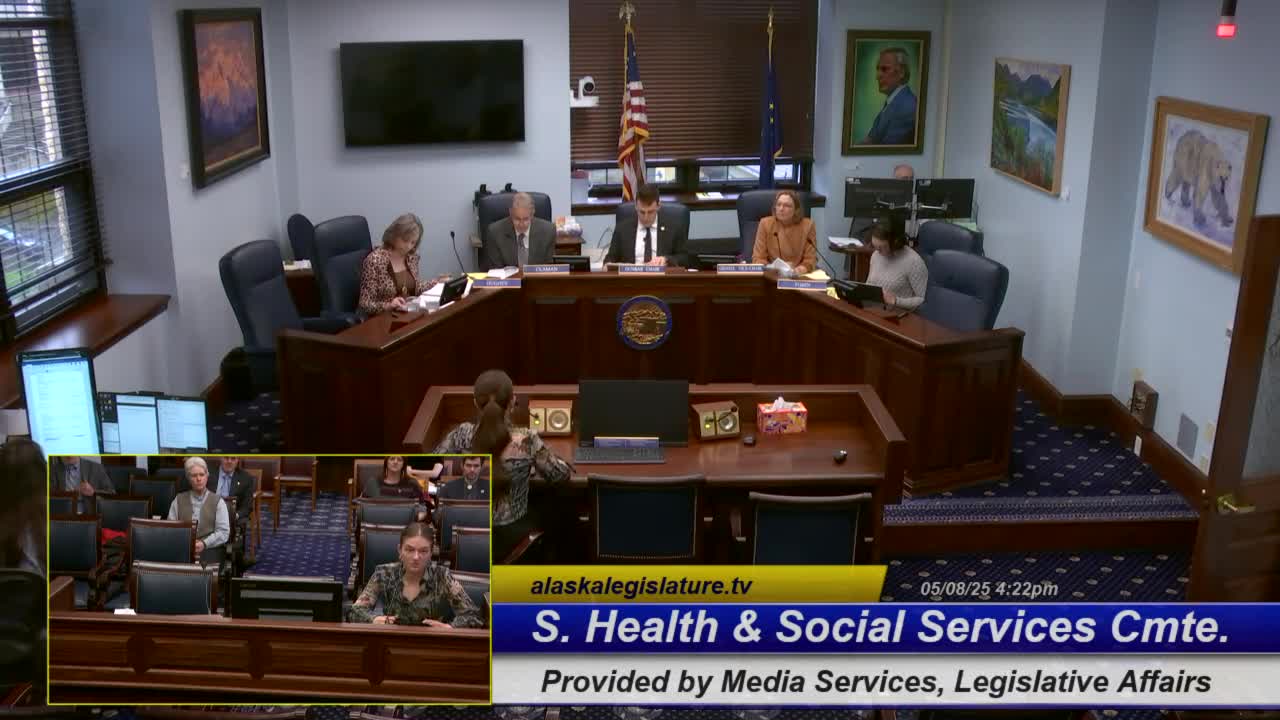
The Senate Health and Social Services Committee adopted a committee substitute to House Bill 36 on Thursday that splits existing statute to separate long-term residential psychiatric treatment from short-term psychiatric hospital care for youth in state custody and clarifies notification and review procedures.
Sponsors and committee members said the change responds to concerns raised by the Alaska Supreme Court's Quinnihawk decision and by advocates who worried that short-term hospital stays were being grouped with longer residential placements that require different legal safeguards. "The committee substitute is largely driven by a careful review of the Quinnihawk case," Senator Klayman said, explaining that the substitute keeps the established court-review process for long-term psychiatric placements while creating a new statutory section for short-term hospital care so that hearings and notice timelines begin promptly when a child is placed in a hospital.
Ariel Wigan, committee aide, walked the committee through the summary of changes: the CS creates a new section (described in the hearing as a new short-term statutory provision), renames and cleans up terminology (replacing references to "acute psychiatric treatment center" with "hospital that is not a residential treatment center"), removes an extraneous use of the word "secure," renumbers subsections for clarity, and expands who must be notified in placements (adding "any other parties" in addition to the child, parents or guardian, and guardian ad litem). The CS also includes a page directing court-rule language related to appointment of counsel for children placed in psychiatric hospitals.
Representative Andrew Gray, sponsor of the bill, and legislators who worked on the substitute said the change was intended to make statutory language consistent with federal Medicaid and other-state terminology for psychiatric residential treatment facilities and to ensure legal review and notice rights start promptly when a child is admitted to a hospital for psychiatric care. "This creates a new section, pulling out short-term psychiatric care from '87 and creating 105," Wigan said while reading the summary.
Committee members pressed for clarifications before finalizing the working document. Senator Tobin asked whether the bill meant "least restrictive" or "less restrictive" settings; Senator Klayman said the drafting team would review that wording to ensure statutory consistency. Senators also questioned the phrase "any other parties" that now appears in notification requirements; sponsors and staff said that language is primarily intended to include tribes or other parties already recognized with standing in ongoing child-in-need-of-aid proceedings, and that they would consult legislative legal counsel on whether to add "as recognized by the court" language.
The Department of Family and Community Services, represented by senior policy adviser Chrissy Voguely, told the committee the department supports the CS and that it expects to absorb small implementation costs. The Alaska Court System's general counsel, Nancy Mead, testified that the court routinely appoints attorneys for children placed in psychiatric hospitals and that the court-rule change included in the CS would make the appointment mandatory in statute but should not create a large new workload or fiscal note for the courts; she did note, however, that the CS could increase the number of hearings compared with the prior estimate and that additional hearings typically create more administrative work for the courts even when they do not generate a discrete fiscal position.
Committee debate also covered custody transitions: staff and the Office of Children's Services described that a child moved from short-term hospital care to a long-term residential facility would trigger an established treatment-team and court-review process before placement in a long-term secure facility. Senator Hughes and others said the substitute reduces ambiguity between short-term hospital stays and long-term placements and makes the statute clearer for practitioners and judges.
After discussion the committee adopted the committee substitute as the working document; the chair removed her objection and the substitute was approved by unanimous consent with no roll-call vote recorded. Members said they will continue to work on drafting details between hearings and invited further input from judicial staff, legal counsel, the Department of Family and Community Services and tribes.