Get Full Government Meeting Transcripts, Videos, & Alerts Forever!
Get email alerts on the Public Safety Animals topic
No spam. Unsubscribe anytime.
Alaska bill would let EMS treat, transport injured police and search dogs
Summary
House Bill 70 would allow licensed EMTs and paramedics, under veterinarian-directed protocols and with owner consent when feasible, to provide emergency care and transport for "operational canines" injured in the line of duty.
House Bill 70 would allow licensed emergency medical technicians and mobile intensive care paramedics to provide emergency care and transport to "operational canines" — dogs used in law enforcement, search-and-rescue or other government operations — when the animal faces an immediate threat of serious harm or death.
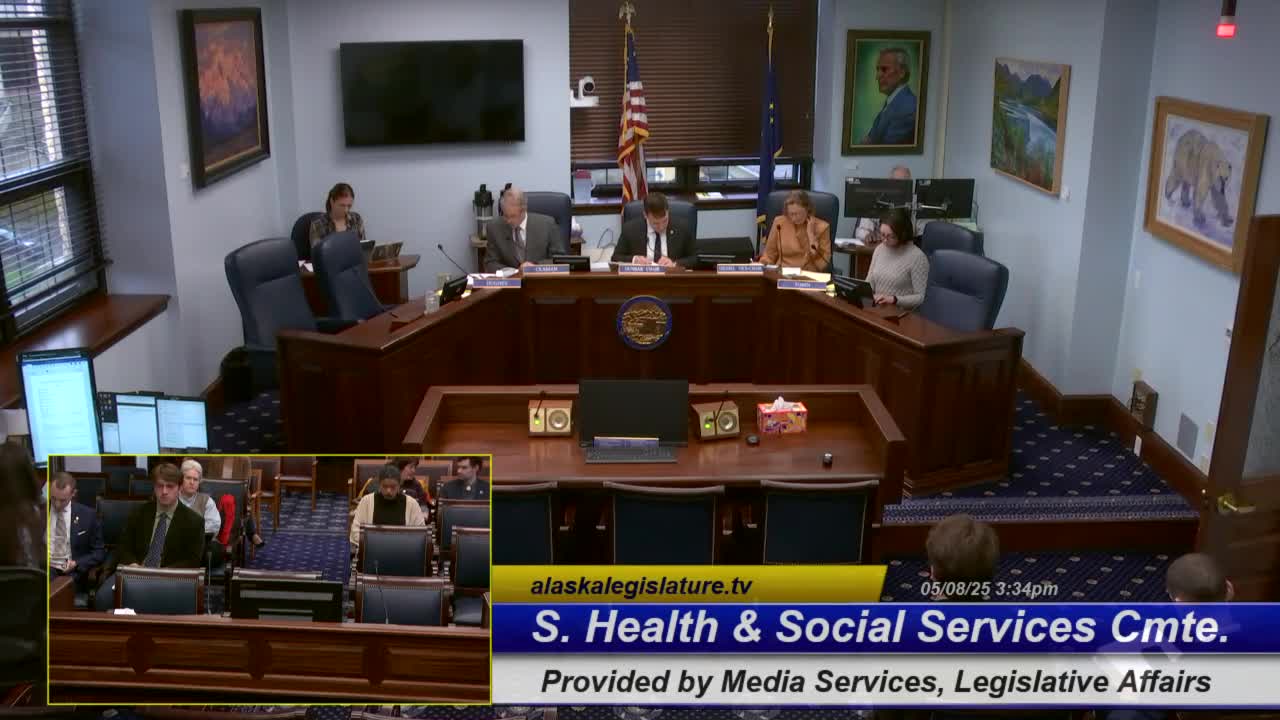
The bill’s sponsor, Representative Calvin Schrage, told the Senate Health and Social Services Committee on Thursday that current Alaska law can make providing on-scene care to injured working dogs a felony because it could be considered practicing veterinary medicine without a license. "House Bill 70 empowers emergency medical services to provide emergency care and transport to operational canines," Schrage said during his introductory remarks.
Supporters, including longtime paramedic Brian Webb and veterinary emergency specialist Dr. Melissa Edwards, told the committee that injured operational canines sometimes die while waiting for transport or definitive care and that EMS clinicians already carry equipment and medications that could be adapted for canine trauma care. "EMS clinicians in Alaska aren't legally allowed to intervene even if we're available," Webb said, urging a voluntary, regulated program for trained EMS agencies to opt in. Dr. Edwards said the bill would create a legal framework enabling veterinarian-directed training, protocols, and medical oversight.
The bill as presented would: - Authorize EMTs and paramedics to render emergency prehospital care to operational canines if they reasonably determine the animal faces immediate danger of serious harm or death and a veterinarian is unavailable soon enough to address the danger; - Require informed consent from an owner or an authorized agent when feasible, or allow treatment under written veterinary-directed protocol; - Require transfer of the canine to a licensed veterinarian at the earliest practical opportunity; - Prohibit canine care when human patients on scene require emergency services that must be prioritized; and - Provide civil-liability protections for EMS providers acting within the authorized scope and protocols.
Proponents described the measure as voluntary for EMS organizations. Webb said the law would permit an application and approval process through the Department of Health so that only agencies with training and veterinary medical oversight would participate. "This bill fixes that. It allows willing and trained EMS agencies to opt in," Webb said. Dr. Edwards recommended that regulations specify veterinary-approved protocols, required training and continuing education, documentation standards and medical-control procedures.
Veterinarians who testified were broadly supportive of the bill’s goals but pushed for stronger guarantees of veterinary oversight, clear documentation, and limits on scope. Dr. Mary Anne Hollick, who has practiced in Alaska for more than 30 years, said: "This bill needs to address limits of care, legal responsibility, training approved by the Alaska Board of Veterinary Medicine, and not some weekend correspondence course." Dr. Nelson Priddy, a board-certified veterinary surgeon, urged keeping training simple and focused on life-saving first aid so first responders can help without fear of discipline.
Committee members asked about the bill’s definitions and scope. Senator Tobin asked whether service animals (such as guide dogs or sled dogs in remote communities) were considered; staff said the current language limits the definition to law enforcement, government and search-and-rescue dogs and that expanding the definition had met resistance during early discussions. Senators also pressed staff on why civil-liability language was included in addition to the statute that would otherwise authorize EMS action. Staff and testifiers explained liability concerns arise when a working dog is privately owned or contracted out to government entities; civil protections would reduce the risk of lawsuits against EMS providers acting under protocol.
The bill’s authors and supporters said medical training for canine-specific skills would be limited to techniques already within the EMS clinicians’ human scope of practice, adapted with veterinarian-led instruction (for example, paramedics who may intubate humans could, with training, intubate a dog; EMTs who lack certain advanced human skills would not be permitted to perform those advanced procedures on animals). The committee heard that serious injuries to operational canines are rare — "at most once or twice a year," according to staff testimony — but that when they occur in rural Alaska, transport times can be many hours and minutes matter.
The committee took testimony from veterinarians, EMS clinicians, and public commenters and discussed regulatory and training details, but did not vote on the bill; Chair Dunbar said the committee would set HB 70 aside and bring it up at a later hearing. "We look forward to working with the committee through the committee process and seeing where this goes," Representative Schrage said in closing.