Get Full Government Meeting Transcripts, Videos, & Alerts Forever!
Get email alerts on the Renewable Portfolio Standard topic
No spam. Unsubscribe anytime.
Committee updates on Renewable Portfolio Standard bill; members pause amendment debate to consult utilities
Summary
At the May 8 House Special Committee on Energy meeting members reviewed progress on House Bill 153 (Renewable Portfolio Standard), said an amendment meant to prohibit ratepayer funds from covering noncompliance fees would in practice block some renewable projects, and agreed to continue work with utilities and the Senate during the interim.
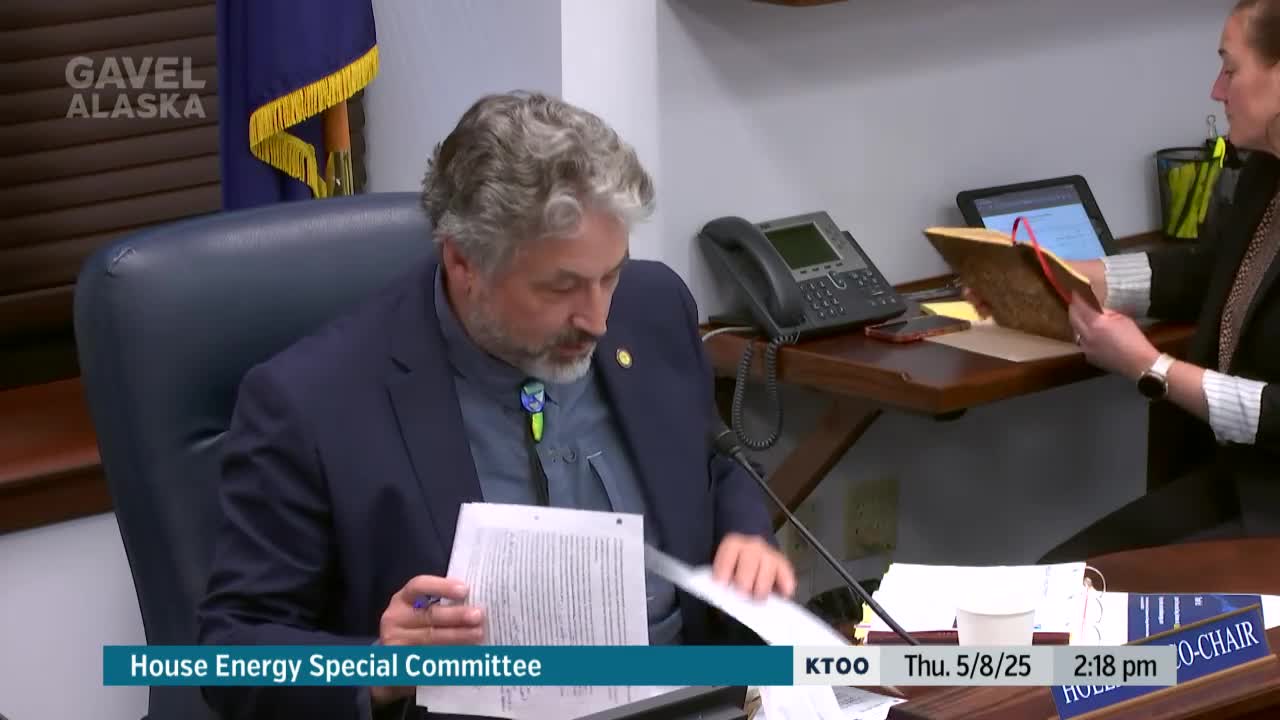
The House Special Committee on Energy used part of its May 8 meeting to update members on the status of House Bill 153, the legislature’s Renewable Portfolio Standard (RPS) proposal, and to explain next steps after committee action last session.
The committee sponsor said the panel had adopted amendment number 2 during a prior session; that amendment bars use of ratepayer dollars to pay noncompliance fees and more broadly prohibits ratepayer funding of any renewable project that would increase customer rates. The sponsor and other members told the committee they suspended further amendment debate after realizing the broader prohibition as written could effectively block many renewable projects from moving forward.
Committee members said they plan to continue discussions with rail‑belt utilities and with the Senate sponsor’s office during the interim to clarify impacts and to identify workable solutions. The committee sponsor said utility executives were working with their boards and were not ready to provide unified testimony to the committee on short notice; senators’ staff and utility input will be part of interim work.
The sponsor framed the pause as an opportunity to reconcile concerns about ratepayer exposure to noncompliance fees with the desire to spur renewable projects and to limit long‑term reliance on imported gas. The committee sponsor also reviewed recent rate pressures: a utility rate filing cited in committee remarks proposed an 8% increase that would raise residential bills by about $100 per year, and members noted projected increases in imported gas costs in coming years.
Committee members reiterated they will continue policy work through the interim with the intent of returning to the Legislature in January with clarified language and related bills. The sponsor said it is their intention to bring the RPS and other legislation ready at the start of the next session.
No floor motions or votes on the RPS were taken at the May 8 meeting; the committee committed to follow‑up work with utilities, the U.S. Department of Energy programs cited in other testimony, and Senate offices.