Get Full Government Meeting Transcripts, Videos, & Alerts Forever!
Get email alerts on the Solar Decommissioning Financial Assurance topic
No spam. Unsubscribe anytime.
Champaign County panel delays decision on Donato Solar request to relax decommissioning-financial rules
Summary
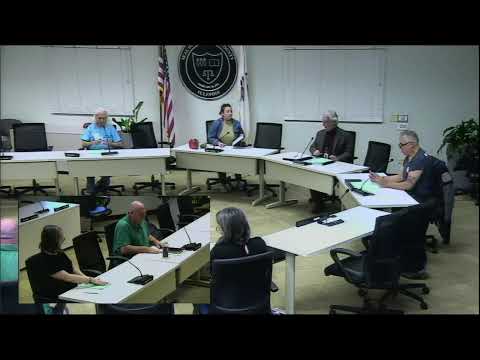
The Champaign County Board Environment and Land Use Committee on Thursday reviewed a petition from Donato Solar asking the county to amend its zoning ordinance to remove a minimum bank‑rating requirement for letters of credit and to allow surety or reclamation bonds and escrow accounts as alternative forms of decommissioning financial assurance.
The Champaign County Board Environment and Land Use Committee on Thursday reviewed a petition from Donato Solar asking the county to amend its zoning ordinance to remove a minimum bank‑rating requirement for letters of credit and to allow surety or reclamation bonds and escrow accounts as alternative forms of decommissioning financial assurance.
John Hall, staff member, gave the committee background on the ordinance’s origin and said the county’s wind‑farm rules were written to require an A‑rated bank letter of credit after consultations with utilities and developers. Hall said the rule now creates a problem for smaller, local solar developers working with local banks.
Michael Beam, vice president of finance for Gale Technology/Donato Solar, told the committee that the company had been able to secure letters of credit for three previous projects but encountered bank‑rating problems on a fourth. “There are 38 banks that have the required ratings,” Beam said. “We’re happy to put the $35,000 for each of these in an escrow account, and the county can be a cosigner.”
Beam said large national banks that meet the ratings generally “don’t want anything to do with the $35,000” letters of credit for small projects, and that bank ratings have shifted for many institutions since COVID. He described solar arrays as substantially easier to decommission than wind turbines, noting that solar mounts typically go “3 to 6 feet into the ground” compared with the deep foundations for turbines.
Committee members pressed for more information. Dr. Stewart and other members said they wanted a legal opinion from the county’s state’s attorney comparing the protections a letter of credit provides with those from a surety or reclamation bond. Hall said staff had already requested the state’s attorney’s comments on an upcoming waiver request at the zoning board.
Chris (committee member) moved the text amendment be considered; JJ seconded. Committee members declined to take a vote on an ordinance change at the meeting and agreed to await the Zoning Board of Appeals (ZBA) decision on a related waiver and the state’s attorney’s written input before bringing a formal amendment back to the committee.
Members discussed handling expiring letters of credit in the meantime. Hall and committee members said the county could consider case‑by‑case administrative waivers to avoid disrupting an applicant whose existing financial assurance is expiring before a permanent ordinance change is adopted. Hall said staff would bring a formal proposal after the ZBA and after work on other pending text amendments was farther along.
Why it matters: the county’s current drafting effectively requires decommissioning letters of credit from banks with a high rating, a rule developers say favors large banks and larger developers and can impede smaller, local solar projects. Committee members said their main concern is ensuring funds will be available to remove equipment if a project fails, not the specific instrument used to secure that money.
Next steps: staff will report back after the ZBA acts on the pending waiver and after the state’s attorney provides a written opinion; the committee plans to consider a revised text amendment or hybrid approach that preserves beneficiary protections while accommodating smaller local developers.