Get Full Government Meeting Transcripts, Videos, & Alerts Forever!
Get email alerts on the Education Funding topic
No spam. Unsubscribe anytime.
Legislature adopts fix to special‑education reimbursement after auditor flagged overpayment
Summary
Senators unanimously approved AM 12-98 to change how Nebraska reimburses school districts for special‑education excess costs. The amendment moves districts to a three‑year rolling average payment up front with a year‑end NDE true‑up so that districts receive the promised 80% of allowable excess costs; the measure was advanced after floor debate,
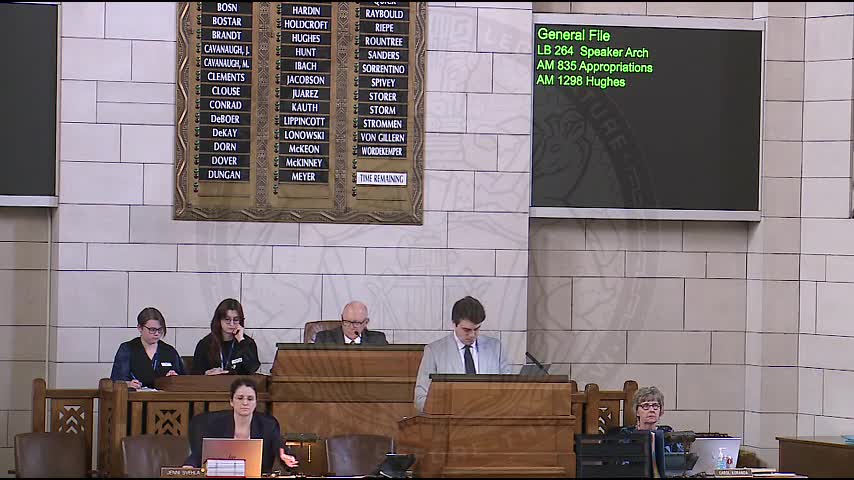
The Legislature adopted AM 12‑98 on the floor to change how the state reimburses school districts for allowable special‑education excess costs after an auditor’s finding that prior payments exceeded the statutory target.
What the amendment does: Sponsor Senator Wendy Hughes described AM 12‑98 as a technical fix requested by the Nebraska Department of Education (NDE) and prompted by an audit by State Auditor Mike Foley. Under the amendment, NDE would pay districts an up‑front amount based on a three‑year rolling average of a district’s special‑education spending; at the end of the reporting period NDE would compare the district’s actual allowable costs and “true up” payments so every district is made whole to the statutory 80% reimbursement for allowable excess costs. Hughes said the change prevents a repeat of the auditor’s finding that NDE reimbursed roughly $7,000,000 more than appropriated in an earlier year.
Why it matters: Senator Hughes said the amendment ensures the state honors the 80% statutory reimbursement level while smoothing timing issues that created overpayments when districts’ early submissions exceeded final audited costs. “This fix… ensures that school districts will receive the true 80% funding for their special‑education kiddos, that the legislature promised,” Hughes said on the floor.
Debate highlights: Senators across the floor described the change as a cleanup measure that the Department of Education drafted after the auditor’s report. Senator Jacobson and Senator Conrad spoke in favor on general policy grounds. Senator Mosher asked whether the state would claw back past overpayments; Hughes and other proponent senators answered that the amendment does not retroactively require districts to repay the prior $7 million overpayment but instead establishes an ongoing timing mechanism so future reimbursements align to 80%.
Vote and implementation: The amendment passed by a recorded voice on the floor; the clerk recorded 34 ayes and no nays at adoption. The committee and NDE said they expect the amendment to be applied to forthcoming fiscal‑year reimbursements and that NDE will perform the year‑end reconciliation to bring districts to the statutory 80% level.
Ending: The amendment reflects a technical but budget‑relevant correction recommended after a state audit, and the Legislature’s action was framed by proponents as restoring the intended statutory reimbursement approach while preventing future over‑ or under‑payments.