Get Full Government Meeting Transcripts, Videos, & Alerts Forever!
Get email alerts on the Student Transportation topic
No spam. Unsubscribe anytime.
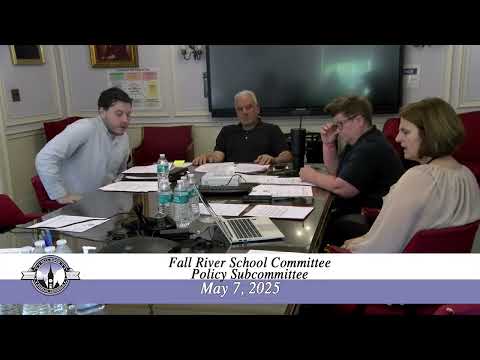
Fall River policy subcommittee refers revised walkers-and-riders policy to full committee
Summary
The policy subcommittee voted to send a draft revision of the district's EEAA "walkers and riders" transportation policy to the full Fall River School Committee after discussion of updated distance measurements, grandfathering and budget implications.
The Policy Subcommittee of the Fall River School Committee voted to refer a draft revision of the district’s walkers-and-riders policy (EEAA) to the full committee, after administrators described changes that would measure eligibility by walking distance rather than "as the crow flies" and a discussion about grandfathering and budget impacts.
The draft would change eligibility for K–5 students from 1 mile (as the crow flies) to more than 1.5 miles walking distance, and for grades 6–8 from the prior 1.4–1.5 miles (as the crow flies) to 2 miles walking distance. Presenters said the new language is intended to preserve transportation for students who currently receive it while aligning district practice with guidance from the Department of Elementary and Secondary Education (DESE).
"We had to start measuring in walking distance — students don't fly," a district staff member explained during the meeting, adding that the proposed language "preserves transportation for students who currently receive transportation, even though these language changes." The presenter said students who currently receive transportation would keep it so long as they do not move or change schools.
Several committee members pressed for data and clarity about how many current or incoming students would be affected. "I would just want to be told that as a school community person... if we have any student walking 1.5 miles to school because they can't get the transportation," one member said. Another member asked for a simple percentage or count of students who would lose transportation if the district did not grandfather them.
Administrators told the subcommittee the district developed a budget assumption tied to the policy decision: if the walking-distance language were not adopted and the district instead used walking-distance measurements under the current radius, the district would expect to request an additional $750,000 to cover increased transportation costs. The presenter said that the proposed draft assumes adoption of the revised language and that the $750,000 estimate would be requested only if the policy change is not approved.
Committee members discussed safety, attendance and practical mitigations such as walking school-bus programs. Superintendent Dr. Bronhart and Assistant Superintendent Ron described ongoing attendance work and said transportation is only one factor in chronic absenteeism; some students with transportation still have high absenteeism rates. A grandfather clause discussed in the meeting was described as beginning with school year '26 for current students in the gray area.
A motion to send the draft policy revision to the full committee passed after a roll call vote in the subcommittee. The record shows a No vote from Mister Dias and a Yes vote from Chairwoman Mimi Lou Larabee; the motion was approved and will advance for full-committee consideration.
The full committee is expected to receive the draft for further review, including the data requests members sought: counts or percentages of current and incoming students who would be affected and clarification on the grandfathering timeline.