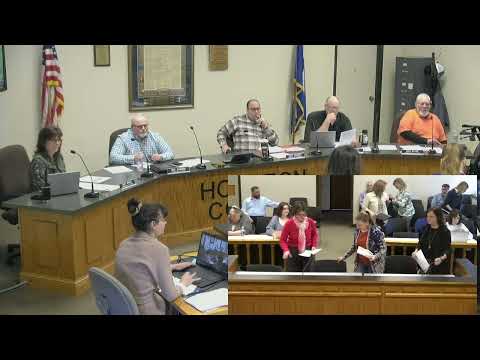
Houston County library directors tell commissioners ARPA and county support kept programs running
Loading...
Summary
Library directors from Houston County and SELCO briefed the county board on how ARPA and county funding supported computer upgrades, programming and building repairs; they asked the board to consider continued county support and noted the SELCO contract with the county expires at year end.
Krista Ross, executive director of SELCO, told the Houston County Board of Commissioners that state law makes the county a member of SELCO and requires county financial support for library services.
"Minnesota statute 134.341, does a couple of things. 1, it makes Houston County a member of SELCO and it also provides for the county to provide for financial support for library services," Ross said, explaining why the libraries appear before the board as the current SELCO-county contract approaches expiration at the end of the year.
The request matters because county funding helps the five Houston County libraries sustain free programming, technology and maintenance that they say serve a wide cross-section of residents. "County funding ensures that library events remain free and accessible to everyone regardless of socioeconomic status," Ross said.
Directors from the county libraries described how one-time American Rescue Plan Act (ARPA) money was spent and why ongoing support matters. Stephanie Eggert of the Caledonia Public Library said her library used ARPA dollars to replace decade-old public computers and to buy craft supplies for popular programs. "First, thank you for those ARPA funds. They went a long ways in each of our libraries," Eggert said.
Jess Witkins, director of the La Crescent Public Library, said circulation and program attendance have ticked up since the pandemic and that staffing levels limit what smaller libraries can accomplish. "Of the five directors in Houston County, I am the only full time director," Witkins said. "When you have new collection materials that are meeting the technology needs and the information needs of your patrons, when you've got the staff there that's full time and accessible, you'll see your community come out."
Other library directors reported similar uses of ARPA funds: Spring Grove and Caledonia purchased new computers; La Crescent spent money on building maintenance and accessibility upgrades; Houston focused on collection development and programs. Directors said some libraries rely heavily on donations and volunteer support and that program demand — summer reading, story times and adult workshops — is large relative to the communities' sizes.
The presentation was framed as the customary step before the SELCO-county contract renewal process. Ross said the contract with SELCO is due to expire at the end of the year and that the libraries traditionally present accomplishments and needs as part of the renewal cycle. "We're coming up to, that contract will be expiring at the end of this year. And so this is traditionally the way the renewal process starts by the libraries coming and telling you everything that they've been doing," Ross said.
County commissioners thanked the directors and acknowledged the role ARPA money played in preventing immediate service gaps — for example, a library whose front door lock needed replacement. The board did not take a formal vote on funding at the meeting; the presentation served as information for the board's upcoming budget and contract discussions.
Directors called for ongoing county investment in three core areas: staffing (preferably converting part-time director positions to full time where feasible), indoor space for programs, and continued funding for digital collections and public computers. "Staffing is a big one. Space is another one that came up," Witkins said.
The county will consider the libraries' reports as part of its forthcoming contract-renewal and budget deliberations.