Peachtree City Council agrees not to appoint replacement for Post 4 before November election
Loading...
Summary
After Mayor Kim Leonard announced Councilmember Frank D’Estadio’s resignation, councilmembers discussed options in light of ordinance 2‑22 and the charter and agreed by consensus not to fill the Post 4 seat before the November 2025 municipal election.
Peachtree City’s City Council declared Post 4 vacant after Mayor Kim Leonard announced Councilmember Frank D’Estadio’s resignation at the May 8 work session and—after discussion—agreed not to appoint a replacement before the November municipal election.
Council members discussed the two statutory paths: appointing under the city’s ordinance (2‑22) or leaving the seat vacant until voters fill it. They cited ordinance text and charter language in weighing options.
Councilmember Brown said she would not support using the appointment process set out in ordinance 2‑22 and described that selection method as a version of ranked choice voting she believes is unsuitable for filling a single vacancy. “The ordinance needs to be revised or replaced by a full 5 member vote of the city council,” Brown said, and she urged leaving the decision to voters in November.
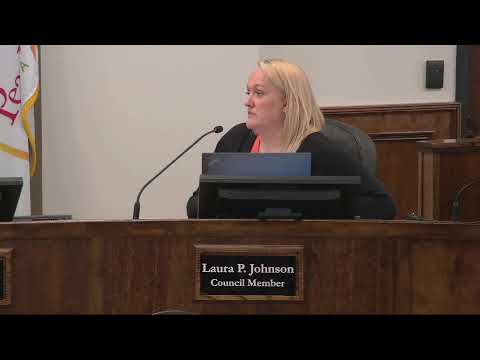
Councilmember Johnson said she was saddened by D’Estadio’s departure and agreed with Brown that the council should allow voters to select the seat in the municipal election rather than use the appointment procedure now. Councilmember Hahn likewise supported leaving the seat vacant and noted the charter (section 2.8) permits the council to decide whether to fill a vacancy.
Council members discussed procedures required if they had chosen to act—motions, special election timing or an appointment under ordinance 2‑22—but ultimately did not make a motion to appoint. City staff told council there is no immediate legal requirement to take further action; without a motion to start appointment or special‑election procedures, the seat will remain vacant.
The council’s discussion identified two governance follow‑ups: reviewing ordinance 2‑22 and other related ordinance provisions (for example, section 12‑18 on agenda placement) and revisiting any ordinance changes when a full five‑member council is seated after the November election. No formal ordinance change was adopted at the work session.