Get Full Government Meeting Transcripts, Videos, & Alerts Forever!
Get email alerts on the Special Needs Programming topic
No spam. Unsubscribe anytime.
Nonprofit and local providers ask Miami Lakes advisory board for space to run after-school, summer programs for children with disabilities
Summary
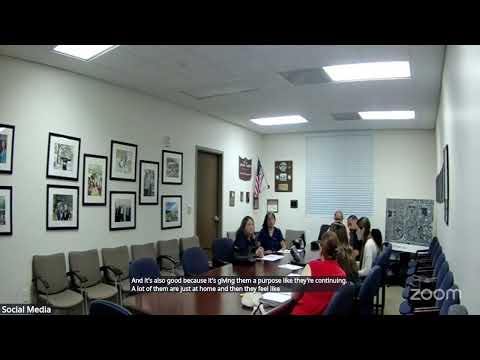
At a Miami Lakes Special Needs Advisory Board meeting, representatives from Angel's Reach Foundation and local clinical partners requested town space and school partnerships to run after‑school and summer programs for children with more intensive autism and behavioral needs.
At a Miami Lakes Special Needs Advisory Board meeting, representatives from Angel's Reach Foundation and a group of local clinicians and students asked the board to help secure space and partnership for after‑school and summer programs for children with more intensive autism and behavioral needs.
The request focused on creating multi‑day, therapist‑staffed programming that combines academic remediation, social skills and sensory supports for children who cannot be served by the town’s existing recreational camps. "We're just requesting this space," the speaker representing Angel's Reach Foundation said, describing a proposal to run programs staffed by educators, behavior analysts and integrated therapists.
The presenters said Miami Lakes has many after‑school and summer options but that those programs typically accept only children who are more independent. The Angel's Reach presenter cited local demographic estimates, saying "roughly about a thousand children" in Miami Lakes have autism or related disabilities and that about "500" of those have emotional or behavioral challenges that make them difficult to place in standard recreation programs.
A separate group calling itself an Emerging Transformational Leadership Program cohort, funded through UHealth, described a pilot design to place a modest cohort (15–20 students) at a school-based after‑school site to reduce transportation barriers and provide group-based interventions from occupational, speech and ABA clinicians. "What we need is to, number one, connect with the education board," said Ivan (cohort member, UHealth ETLP program), urging a joint pitch to the school advisory board so the school administration would consider hosting a pilot.
Presenters described multiple possible funding paths: billing insurance for clinical, one‑to‑one hours where covered; using Step Up scholarships and other scholarship or private‑pay mixes for nonclinical group hours; and a sliding fee or partial billing model when insurance covers only some hours. They said staffing would include experienced RBTs supervised by BCBAs and trained instructors; internal training protocols of three to four months were described as required before staff lead programming.
Board members and presenters discussed next steps: presenting to the town’s parks and recreation counselor and to the Miami Lakes education advisory board, and matching potential program days with facility availability. The board told presenters they are scheduled to report to council in July as part of the advisory‑board reporting cycle; staff and presenters agreed to coordinate a July presentation or a June briefing if the agenda allows.
The request did not include a formal vote. No contract, lease or town funding commitment was made during the meeting; presenters repeatedly said the nonprofit intended to be self‑funded when possible and that the immediate ask was access to space and administrative facilitation to present to schools and to the council.
The proposal drew multiple community partners on Zoom and in person, including occupational‑therapy students, health‑center representatives and nonprofit youth‑service providers who offered to help recruit families, identify candidates and connect to existing school populations for a pilot.
The board and presenters agreed to continue coordination outside the meeting and to seek education advisory‑board support before a formal pilot launch.