Get Full Government Meeting Transcripts, Videos, & Alerts Forever!
Get email alerts on the Alternative Crisis Response topic
No spam. Unsubscribe anytime.
Proponents push City Council to fund Boston People’s Response nonpolice crisis-response pilot
Summary
Dozens of public commenters urged the council to allocate $4 million to a community-led, nonpolice crisis-response pilot called Boston People’s Response (BPR), saying community responders build trust and avert harms that can arise when police respond to behavioral-health or mental-health crises.
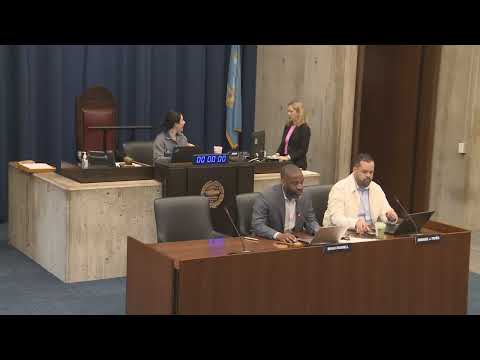
Dozens of public commenters told the Boston City Council’s Ways and Means Committee on May 8 that council should fund Boston People’s Response, a community-led, nonpolice crisis-response pilot, and that $4 million be allocated to scale the program.
Speakers described the BPR model as a free, community-based alternative to police response for mental-health and behavioral-health crises and said it would be more approachable for people who distrust police. “Boston People’s Response is more approachable than the current systems we have because it relies on real relationships and trust,” one commenter who identified herself as a social worker said.
Nut graf: Testimony emphasized community trust, noncarceral de-escalation and expanded behavioral-health capacity. Commenters urged the council to reallocate police funds for a pilot and noted the lack of respondent organizations that could run the pilot immediately, prompting city staff to pursue a community-led procurement path.
Several youth workers, students and community organizers recounted that people in crisis are frequently more frightened than dangerous and that armed police responses can escalate situations. Testimony included requests that the council fund BPR, invest in training and ensure that any program is staffed by culturally competent, trauma-informed responders. Several speakers asked the city to use existing nonprofit providers with local experience; councilors and administration officials said the city issued a request for information and is evaluating options.
Ending: Councilors heard community proponents and said they will pursue next steps. The administration told the committee a prior RFI did not identify an immediate contractor for a city-run program and that the city prefers a community-led partner to manage the pilot; councilors asked for a procurement and funding timeline.