Get Full Government Meeting Transcripts, Videos, & Alerts Forever!
Get email alerts on the Ems Operations topic
No spam. Unsubscribe anytime.
Boston EMS outlines staffing, call volume and a $86.8 million FY26 budget request to council
Summary
Boston EMS told the City Council committee it handled more than 140,000 clinical incidents in 2024, is expanding staffing and alternative response units, and projects a FY26 operating budget of $86.8 million largely driven by wages and collective bargaining.
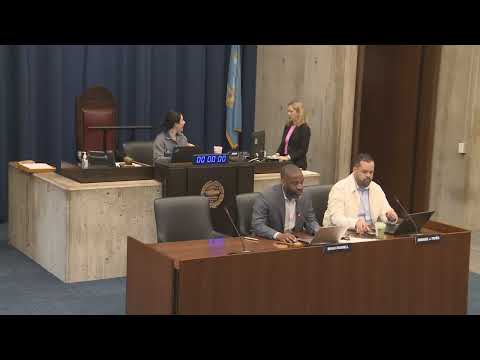
Boston Emergency Medical Services Chief James Hooley told the City Council Committee on Ways and Means on May 8 that Boston EMS responded to a high volume of calls in 2024, is expanding recruitment and retention efforts and requested $86.8 million for the FY26 operating budget.
“We are 1 of the busiest, if not the busiest, municipal ambulance services in all of New England,” Chief Hooley said, describing the department’s staffing, training and alternative-response programs.
The chief told councilors Boston EMS comprises about 440 uniformed members and 32 non-uniformed personnel, and that the department answered “over 140,000 clinical incidents in calendar year 02/2024,” which resulted in 93,774 patient transports. He said EMS operates approximately 22 basic life support and five advanced life support frontline ambulances during peak times and has deployed alternative-response units pairing EMTs with behavioral-health clinicians: those units recorded 1,978 patient encounters since startup and facilitated 210 transports to alternative destinations.
Nut graf: Chief Hooley urged continued investment in personnel, training and facilities, saying wages and benefits account for more than 86% of the bureau’s budget and that nearly half of EMS costs are offset by patient-transport revenue from Medicare, Medicaid and private insurers.
Hooley described retention and recruitment efforts: a cadet program and scholarships for EMT training (more than 100 scholarships offered), apprenticeships funded in part by federal CDC grants and an increase in hires (98 uniformed hires in the 2024 period cited). He said nonretirement attrition among uniformed staff fell by 35% year over year.
Council members questioned response times and geographic coverage after the closure of Carney (Kearney) Hospital. Chief Hooley said transport times from Dorchester have increased and that Boston EMS has worked to add a regularly staffed ambulance in the Dorchester area on all three shifts to mitigate longer transports and to re-evaluate deployment as more recruits graduate. He also described a commitment to a new Seaport station (two-bay facility) and radio-infrastructure upgrades funded through an approved capital program.
Ending: The chief asked the council to sustain investments in staffing, training and stations to maintain response capacity across neighborhoods while the commission and councilors continued to pursue data-driven deployments and outcome metrics for transport times and unit availability.