Get Full Government Meeting Transcripts, Videos, & Alerts Forever!
Get email alerts on the Harm Reduction topic
No spam. Unsubscribe anytime.
Boston Public Health Commission details harm-reduction, shelter and opioid-settlement spending as part of FY26 budget review
Summary
Boston Public Health Commission staff told the City Council’s Ways and Means Committee that the commission is expanding harm-reduction services, syringe-collection efforts and shelter-to-housing placements and has begun deploying opioid-settlement funds to family supports, community grants and clinical services.
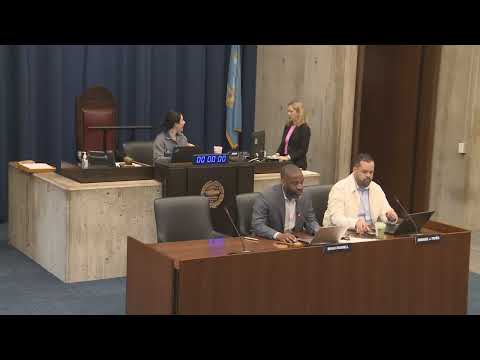
Boston Public Health Commission staff told the City Council’s Ways and Means Committee on May 8 that the commission is expanding harm-reduction services, increasing syringe collection, and directing opioid-settlement funds toward family supports, community grants and clinical services.
Commission staff framed harm reduction as one component of a continuum of care and cited recent program statistics and new outreach efforts. “Harm reduction is 1 vital component to keep people who use drugs alive,” the presenter said, describing AHOPE (Access Harm Reduction Overdose Prevention and Education), mobile outreach and enhanced syringe-collection work.
The commission said it distributed 768,481 syringes in fiscal 2025 through April 1 and collected 1,023,245, a ratio of 1.33 collected for every syringe distributed. Staff described expanded syringe-collection teams that respond to 311 requests and a new workforce-development pilot hiring clients in early recovery for neighborhood cleanup and syringe collection.
Nut graf: The commission told the committee it is using the first tranche of opioid-settlement dollars to support families, increase naloxone distribution, and fund community organizations and clinical services—while acknowledging that shelter demand and the need for permanent housing remain high.
Officials said the settlement money has funded the overdose family support fund (one-time assistance of up to $5,000 per immediate family for burial, therapy, childcare and legal fees), a $1,000,000 request-for-proposals that awarded grants to five community-based organizations focused on Nubian Square, and a $745,000 award to Boston Healthcare for the Homeless to provide harm-reduction clinicians at emergency shelters. Staff also said they will use future settlement dollars to cover operational costs at one existing low-threshold site (the Envision Hotel) and to fund case management contracts with partners such as Elliott Human Services.
Commission staff described residential-treatment placements and specialized programs: the Transitions Program on the Mattapan campus (62 admissions through April 1) and Entre Familia, a program focused on women and children (59 admissions through April 1). They also noted a doula pilot added at the women-and-children program and a low-threshold methadone provider colocated at the Finland Building (774 Albany Street).
On homelessness, staff said demand for emergency shelter remains high: the commission’s two emergency shelters served 3,341 individual guests through April 1 in fiscal 2024 and the commission was on track to meet or exceed the prior year’s total of 4,040 individuals. Staff described a “90-day challenge” undertaken in winter 2025 that increased housing placements to permanent housing by 226 placements and stated that shelters offer food, workforce development and housing navigation in addition to beds.
Councilors asked for additional detail on how opioid-settlement funds will be allocated over time and how outcomes will be tracked. The presenter and the budget director said the commission conducted community engagement—about 600 people via focus groups and surveys in 2023—to prioritize settlement spending and that detailed budget schedules would be provided to council offices on request. The commission also described workforce-development partnerships and partnerships with community clinical providers to increase treatment access and to place clinicians in low-threshold settings.
Ending: The commission emphasized continuing investment in harm reduction, shelter services and treatment access while warning that permanent supportive housing resources remain limited. Councilors requested breakdowns of proposed spending by line item and additional outcome measures for tracking rehousing and treatment engagement.