Get Full Government Meeting Transcripts, Videos, & Alerts Forever!
Get email alerts on the Municipal Budgeting topic
No spam. Unsubscribe anytime.
City finance official warns FY26 budget will be tight as nondiscretionary costs outpace revenues
Summary
City finance staff told a joint meeting on May 7 that Beverly expects $7.7 million in new revenue for fiscal 2026 but faces roughly $9.9 million in built‑in non‑discretionary cost increases, leaving a funding gap the administration plans to close through vacancies, reduced capital equipment purchases and a free‑cash transfer for paving.
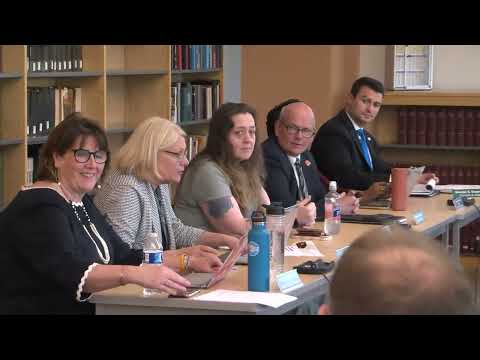
City finance staff on Wednesday told a joint meeting of the Beverly City Council and the Beverly School Committee that the city expects new revenues of about $7.7 million for fiscal 2026 but faces roughly $9.9 million in largely non‑discretionary spending increases, producing a gap the administration must close before submitting a balanced budget.
Ken Ailes, presenting the city’s FY26 budget landscape for the Cahill administration, said property tax growth would provide the largest share of new revenue — approximately $5.6 million — composed of an estimated $1.25 million in new growth, a 2.5% levy increase and about $750,000 of unused levy capacity. State aid increases, motor‑vehicle excise adjustments and higher interest income account for additional revenue in Ailes’s projection, totaling an estimated $7.7 million and a proposed operating budget of $173.65 million.
"It is one of the more challenging ones that I've faced in my role here, over the past 12 years," Ailes said, describing the fiscal pressures facing the city as department heads and school leaders finalize requests.
Ailes told the joint meeting that major, largely fixed cost increases from recent bargaining agreements, pension schedule adjustments and health insurance will drive most of the added spending. His summary of preliminary figures included a $1 million increase for city‑side salaries, $575,000 for pension liabilities, and a $676,000 rise in city‑side health‑insurance costs; the presentation also carried a preliminary, unvoted school‑side increase of about $7.1 million and a $386,000 rise in the Essex Tech assessment. Taken together, he said, roughly 85% of the city’s spending is concentrated in categories growing at an average rate of about 7.2% between FY25 and FY26.
To close the projected gap between new revenue and unavoidable increases, Ailes said the administration plans multiple steps: rely on staffing vacancies and partial‑year funding for some roles, reduce capital equipment and some vehicle purchases, realize a modest debt‑service reduction from lower interest on existing debt, and ask the council to transfer free cash to the operating budget to cover paving needs that were carried in FY25. Ailes said the administration expects to ask the council to transfer an amount to cover FY26 paving work from free cash and that current estimates assume a free‑cash floor of $2.7 million.
Ailes also highlighted revenue changes: motor‑vehicle excise estimates were raised by about $350,000 toward typical actuals, cannabis excise receipts were shown as roughly $110,000 in FY26, and interest income was budgeted $375,000 higher than in FY25, reflecting current yields. He cautioned that revenues tied to consumer spending are sensitive to economic shifts and tariffs, and that federal grant flows remain an important but uncertain component of funding for some projects.
Council members and school committee members used the presentation for extended questions about health‑insurance negotiations, the use of free cash for paving, the overlay reserve, the contract timeline for trash collection and the potential need for a future override. Ailes and Mayor Cahill said policy choices remain for elected officials: the administration can model options and provide data, but decisions such as seeking an override or changing benefits design would rest with the council, unions and other stakeholders.
No formal budget votes were taken at the joint session. The mayor is expected to present a formal FY26 budget to the council later in May; the presentation at the joint meeting was described as a preview and scenario planning by administration staff.