Get Full Government Meeting Transcripts, Videos, & Alerts Forever!
Get email alerts on the Education District Improvement topic
No spam. Unsubscribe anytime.
Beverly schools outline equity, attendance and civics goals in district improvement update
Summary
Beverly Public Schools leaders presented a third-year progress update on a three-year district improvement plan that keeps equity and belonging as central goals, highlights attendance interventions, expands professional development and pilots a new senior civics elective.
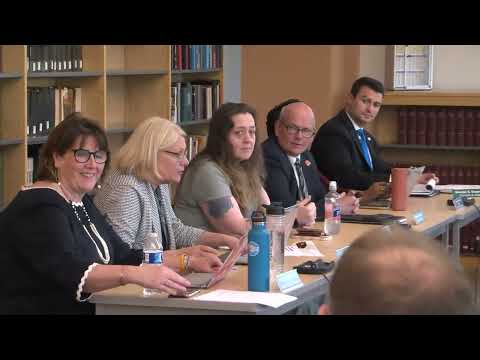
Beverly Public Schools leaders on Wednesday told a joint meeting of the Beverly City Council and the Beverly School Committee that the district will carry forward its existing three‑year improvement plan, with a continued focus on equity, chronic absenteeism, high‑quality professional development, expanded civics instruction and climate education.
The update, presented by Dr. Suzanne Choroczek and Dr. Dorothy Flaherty, summarized work the district says it has completed in year two of the plan and described items that will continue into the plan’s third year. The presenters said the district’s emphasis remains moving students and staff from “diversity” to “belonging” and then toward “inclusion” and “equity.”
The district framed equity work around a DBIE (diversity, belonging, inclusion, equity) continuum developed with consultant Dr. Amante Jackson. "Belonging is really where you get to the stage where you're creating a culture where folks feel welcome across difference," Dr. Choroczek said, and the district identified belonging as its present stage.
District leaders described five focus areas beneath the plan’s goals. On attendance, the district highlighted a program called BPS CARES (Chronic Absentee Reduction Efforts) and more coordinated family support through a local version of the City Connects model. The presentation included attendance outreach events, in‑school “tardy” signage intended to reduce late arrivals and school‑level campaigns that use recognition ("brag tags") and community kickoff events to encourage on-time attendance. The presentation included an example banner slogan used in an outreach period: "attendance is everyone's superpower."
On professional development, Dr. Dorothy Flaherty said the system provided summer and in‑year training for teachers and administrators, including graduate credit courses funded by the district and a BevEd grant with the Cummings Center that paid for some staff to attend external programs. Flaherty said a literacy grant (more than $200,000) supported K–5 implementation of a writing curriculum and related teacher training.
The district also described a pilot senior elective at Beverly High School called "Preserving Democracy." The presenters said the year‑long course will teach digital literacy, research methods and the distinction between fact, opinion and misinformation, and will culminate in a capstone civics project. Dr. Choroczek said the course started as a pilot this year and is intended to be refined over two pilot years and, if adopted, to become a graduation requirement for the class of 2027.
Student leadership and input were cited repeatedly: the presentation said a student ambassador cabinet and a school‑level advisory group had substantial influence on the civics course design and other initiatives. The district also said students led presentations on sustainability projects — hydroponics, worm composting, food recovery and community pumpkin‑compost events in collaboration with Green Beverly.
School officials told the joint meeting that the district has one year left on the current improvement plan and intends to continue the same goals into the final year while the new superintendent, Dr. Peter J. Cushing, prepares to begin his July 1 start date.
No formal policy changes or school committee votes were taken at the joint meeting; the session was used to present progress and answer questions.
Officials to contact for follow‑up included Dr. Suzanne Choroczek and Dr. Dorothy Flaherty, who delivered the presentation, and Paul Casey, the district’s director of humanities, who worked on the civics rollout.