Get Full Government Meeting Transcripts, Videos, & Alerts Forever!
Get email alerts on the Immigration Enforcement topic
No spam. Unsubscribe anytime.
Nashville officials, residents demand answers after coordinated immigration enforcement in South Nashville
Summary
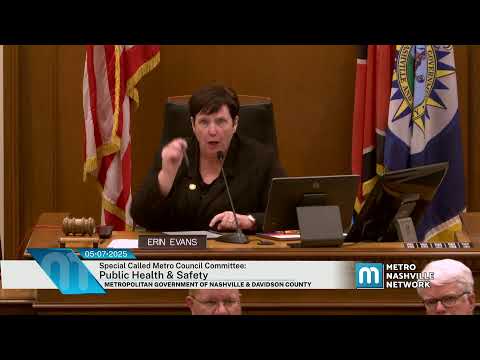
At a special Metro Nashville Public Health & Safety Committee meeting, community members and city officials pressed state and federal authorities for records and explanations after coordinated enforcement activity in South Nashville earlier this month that community members say led to widespread detentions and family separations.
A special Metro Nashville Public Health & Safety Committee meeting on reports of coordinated immigration enforcement earlier this month drew dozens of resident speakers and multiple city officials who demanded transparency, records and new safeguards to protect immigrant families.
Community members said state and federal officers conducted operations in South Nashville — including on Nolensville Pike, Brick Church Park Drive and other neighborhood streets — and that people were detained and moved out of the area without clear public notice. “This is not public safety. This is another attack on working class people,” said Sagmitia Vargas, speaking for a grassroots group. Luis Mata, government relations manager for the Tennessee Immigrant Refugee Rights Coalition, said organizers received “761 phone calls with 75% of the calls being about this enforcement activity.”
Why it matters: Speakers described family separations, children missing parents and a chilling effect on everyday life — parents worried about driving children to school and workers afraid to leave home. Committee members pressed Metro agencies for immediate steps to identify detained people, produce documentation and prevent future undisclosed operations.
Officials’ findings and next steps
Metro Legal Director Wally Dietz and MNPD leadership told the committee they had begun pressing state and federal partners for records. Dietz said he had reviewed available information and that “the Tennessee Highway Patrol confirmed that the Metro Nashville Police Department was not involved in their coordinated activities” and that, after checking video and departmental records, he “found no evidence at all that contradicts that.” Dietz said he had sent letters to the Tennessee Highway Patrol, the Brick Church ICE field office, the New Orleans regional ICE office and ICE leadership in Washington D.C., and that he would file public-records requests if necessary to obtain the names and locations of people arrested or detained.
Deputy Chief Gilder of the Metro Nashville Police Department told the committee that MMPD “had no knowledge of or participation in the ICE operation that took place last weekend,” and said the department’s role after the fact was public-safety support at the ICE facility until other agencies relieved them.
Emergency Communications Director Steve Martini described how a call about extra patrols was handled and how the department is changing procedures: an April 30 or May 1 call from a federal protective service official requested “extra patrol for every hour on Sunday” at 501 Brick Church Park Drive; the request appeared in the dispatch queue and was sent to North Precinct personnel on Sunday morning. Martini said his office handles high volumes of similar requests and reported, “We've handled 33,000 calls of this nature type since January of 2024.” He also announced immediate technical changes: automated notifications for specific federal facility addresses and keyword alerts (for terms such as “immigration” and “ICE”) that will route messages to senior staff so similar calls are less likely to be missed.
Disputed numbers and open questions
There were inconsistent public statements about how many stops were made. Committee members cited a Tennessee Highway Patrol communication claiming 50 traffic stops and another published statement that referenced 350 stops; Dietz said he would press THP for clarification and arrest records. Public commenters and volunteer monitors described stops away from major state routes and on side streets and private property in South Nashville.
Volunteers and monitors reported eyewitness accounts of MNPD-style uniforms and vehicles at some stops; Tristan Call, a volunteer monitor, said witnesses reported being pulled over by people wearing MNPD-style uniforms and a white car with blue Metro lettering and then handed to ICE. Call urged a full, transparent MNPD investigation asking every officer whether they had contact with ICE or THP during the operation.
Community demands and committee directions
Speakers pressed the committee and the mayor’s office for concrete steps: immediate production of names and locations of those detained, funding for legal assistance, and a community safety plan co‑created with neighborhood groups. “We demand answers. We demand accountability,” said Sagmitia Vargas. Several speakers asked the council to reallocate Metro funds to provide more legal aid for affected families.
Officials described immediate administrative actions and promised follow-up. Dietz said he would continue to demand names and locations and to press for documentation of charges. Martini said dispatch automation was being updated that day and committed to further standard operating procedure changes. MNPD committed to providing public records under state law and to review any internal communications filed under the mayor’s executive order about contact with federal immigration authorities.
Planned follow-up
Chair members said the Public Health & Safety Committee will receive a progress update at its June 30 meeting, and Metro Legal said it would provide records and follow up with state and federal partners. Dietz told the committee he would pursue FOIA/public‑records pathways and litigation as needed and urged community groups to use legal partners to represent detained people.
Ending
Speakers left the meeting with several clear requests: the names and locations of detainees; an independent investigation or transparent report of MNPD and other agencies’ roles; more legal support for families; and a formal community safety plan developed with neighborhood groups. Officials pledged record requests, dispatch procedure changes and continued inquiry with THP and ICE, and the committee set a June 30 check‑in to report on progress and outstanding records requests.